Pain-Free Dentistry · Promenade Dental Care, Murrieta
Pain-Free Dentistry in Murrieta: The Techniques That Keep a Visit From Hurting
Pain-free dentistry isn't a product or a machine. It's a handful of habits done in the same order every time: numbing gel given real time to work, anesthetic delivered slowly, a tooth tested before I start, a stop signal I honor instantly, and fewer, shorter visits. Done that way, most treatment feels like pressure and vibration. I'll also tell you plainly where it can still be uncomfortable, because that's part of keeping your trust.

The honest version
What does pain-free dentistry actually mean?
It means nothing sharp happens until the area is numb and you've confirmed it, and that you can stop me at any point. It doesn't mean you feel nothing at all. Once a tooth is numb you still feel pressure, vibration, water, and the sound of the instruments, and a few hours later the area can be sore. People who expect zero sensation get rattled by the pressure. People who know it's coming usually find it's nothing like what they'd braced for.
Most of the pain my patients remember came from rushing: a dentist who started before the tooth was numb, pushed the anesthetic in too fast, or kept going after the patient flinched. Those are habits, not the limits of modern dentistry. The Cleveland Clinic's overview of dentophobia lists painful past experiences among the main causes of dental fear, and in my chair that's the story I hear most often.
- What you'll feel
- Pressure, vibration, water, and noise once you're numb
- What you shouldn't feel
- Anything sharp; if you do, raise your hand and I stop
- Afterward
- Mild soreness for a day or two after bigger work is normal
- If you're very nervous
- Nitrous oxide can be added
The shot
Why doesn't the numbing shot have to hurt?
Because most of the sting comes from technique, not the needle. Here's what I do differently from the rushed version most people remember:
1Dry, then gel
I dry the spot and put a topical numbing gel on it, then actually wait for it to work. Thirty seconds of gel does very little.
2Warm, then slow
Anesthetic straight from a cold tray stings. I keep it at a comfortable temperature and push it in slowly, because pressure in the tissue is what burns.
3Wait, then test
I give it time, then test the tooth before I start. You tell me it's numb; I don't just assume it.
The American Dental Association's patient guide describes local anesthetic simply: it blocks the nerves that carry pain from that part of your mouth. The drug works. What changes the experience is how patiently it's given. If you want the play-by-play of what each procedure feels like once you're numb, the Is It Going to Hurt? article walks through fillings, crowns, root canals, and extractions.
The exceptions
What if a tooth is hard to get numb?
Some teeth are harder, and I'd rather you hear that from me now than discover it in the chair. An infected tooth sits in inflamed tissue that resists anesthetic. Lower back teeth have thick bone around the nerve. And a very anxious patient genuinely feels more. None of those means you have to put up with pain.
What I do when numbing is slow to take: more time, a second injection placed closer to the tooth, and sometimes treating the infection first and coming back once it has calmed down. What I won't do is start anyway and ask you to tough it out. If you've had numbing fail before, tell me at the start, because it changes how I plan the appointment.
Laughing gas
When does laughing gas help with pain?
Laughing gas helps most when tension is making everything feel worse. It takes the edge off within a few minutes, you stay awake and able to talk, and it wears off quickly once you switch to plain oxygen. It isn't a substitute for numbing. The Cleveland Clinic's nitrous oxide page puts it the same way I do: it dulls pain without removing it, which is why it's always paired with local anesthetic.
For people whose fear is bigger than laughing gas can handle, I refer to an office that provides deeper sedation. How nitrous works, who needs it, and when you don't are all on the sedation dentistry page.
Staying in control
How does a stop signal keep a visit from hurting?
It changes what your nervous system expects. Lying back with your mouth open and no way to speak is half of what makes dentistry feel threatening. So before anything starts, we agree on a signal, usually a raised left hand, and when it goes up I stop. Not after I finish this part. Stop. Then we figure out what you felt and fix it, usually with more anesthetic or a short break.
If a patient raises a hand, my hands come out. Every time. That's how trust gets rebuilt with someone who's been hurt before.
I pair the stop signal with tell-show-do: I tell you what's next, show you the instrument, then do it. Nothing in your mouth is a surprise. Patients who are anxious about a particular step can also ask me to skip the narration; some people would rather not know, and that's fine too. The dental anxiety page covers how a first visit runs when you're nervous.
Fewer visits
How do fewer appointments mean less pain?
Every appointment is another numbing, another drive, and another week of dreading it. Cutting the count matters. A crown is the clearest example: the old way meant a temporary crown, two to three weeks of waiting, and a second visit with a second round of numbing. With same-day CEREC crowns, I design and mill the crown here while you wait, so it's one visit and one numbing. A same-day crown is $1,200 without insurance.
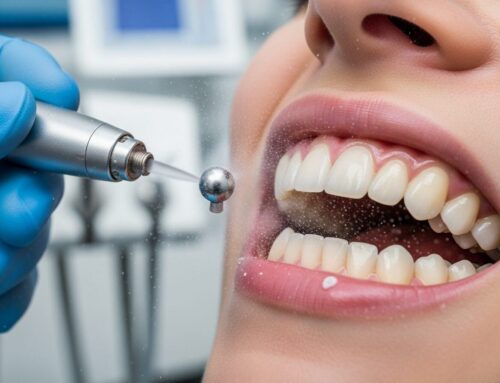
Cleanings follow the same idea. An ultrasonic cleaning uses a vibrating tip and a water spray to break tartar loose instead of long stretches of hand scraping, which is easier on sensitive teeth and gums. And when several things need doing, I'd rather plan them into fewer, well-paced visits than spread you across a dozen short ones.

Afterward
What keeps you comfortable after the visit?
A plan you leave with, not a guess. You get written aftercare instructions for anything bigger than a cleaning, and for most procedures an over-the-counter pain reliever, taken as the label directs, handles the soreness. The ADA's patient guide notes that non-narcotic medicines are the ones most commonly used for pain after dental treatment, and that's what I recommend for routine work.
Soreness should ease a little each day. Call (951) 412-0127 if it's getting worse instead of better, if swelling is spreading, or if your bite suddenly feels high. A bite that's a fraction too tall makes a tooth ache, and it's a quick adjustment. If a toothache comes on suddenly, the emergency dentist page explains how weekday same-day care and weekend emergencies by arrangement work.
Cost
What does a comfortable first visit cost?
The comfort techniques on this page don't carry a fee; they're how every visit runs. A new patient starts with the $20 exam with digital X-rays, and a routine cleaning is $95, both without insurance.
New-patient exam with digital X-rays
$20
Without insurance
Ultrasonic teeth cleaning
$95
Healthy gums, without insurance
Anything else gets a written price before it starts, including sedation if you want it. I accept PPO plans and I'm in network with Delta Dental PPO, Cigna, MetLife, Guardian, Aetna, and United Concordia. I don't quote insured fees here because they depend on your plan. I take cash, Visa, Mastercard, American Express, Discover, and CareCredit.
Your dentist
Who does the numbing?
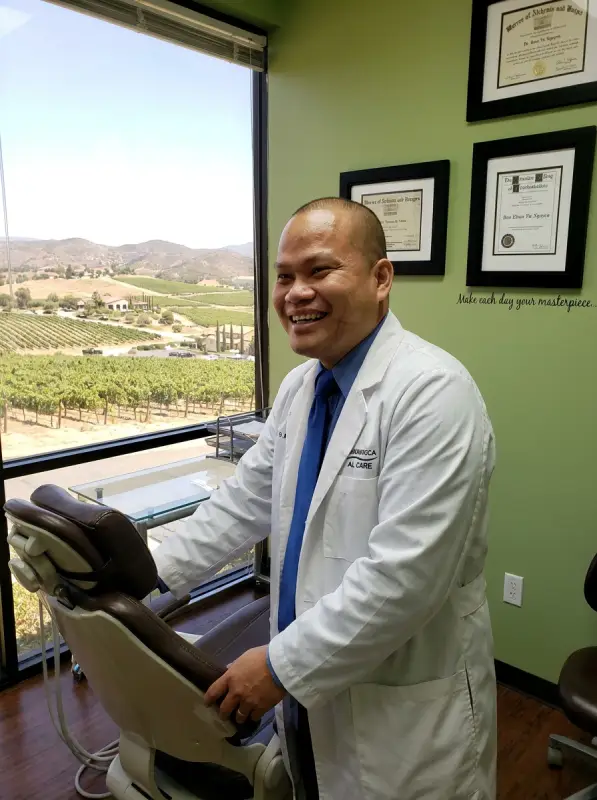
I do, every time. I'm Dr. Bao Nguyen, and Promenade Dental Care is my one-dentist office at 26957 Date St, Suite B4, in Murrieta. I trained at the UCLA School of Dentistry and spent ten years as a U.S. Navy dentist, including an Advanced Education in General Dentistry residency at Naval Hospital Camp Pendleton. A lot of the sailors and Marines I treated had never seen a dentist and expected the worst, and that's where I learned to slow down instead of speeding up.
I've had my own practice since 2010, and patients come from Temecula, Menifee, French Valley, Winchester, Wildomar, and Lake Elsinore. The office speaks English, Spanish, and Vietnamese.
Patient reviews
What do patients say about the pain?
The Best and quickest dentist I have found. He is painless and very affordable with no insurance needed. My whole family goes to him now and won’t go to anybody else. Definitely a five star. He never makes anything a big deal. He just handles it right away. Will even come in on Saturdays if you need him.
— Linda Luoma · Google review
Very friendly, professional atmosphere. Doctor is gentle and very quick. Great experience.
— Bette Boulware · Google review
Dr Nguyen is very quick but very gentle, he has more practical experience than most others, so my wife and I recommend his fine dentistry.
— Blue Sheppard · Google review
Absolutely the best care! I became a patient in July of last year and needed some emergency dental work. I was able to get in the same day and have a crown and root canal done with zero pain! I recently had another toothache and was again provided a prompt same day appointment. Hands down the best dental experience I’ve had! Zero pain, zero wait time and very quick care. Pricing is always up front and affordable also. I used to dread making dentist appointments and coming in but coming here has completely shifted my experience. 100% recommend!!
— Alicia Alvarado · Google review
FAQ
What else do people ask about pain-free dentistry?
Is pain-free dentistry realistic, or is it just marketing?
It's realistic for nearly all routine work, as long as you define it honestly: nothing sharp once you're numb, and the visit stops when you need it to. You'll still feel pressure and vibration, and bigger procedures can leave you sore for a day or two. Anyone promising you'll feel absolutely nothing is overselling.
Why does it take a few minutes for the numbing to kick in?
The anesthetic has to spread through the tissue and reach the nerve, and that takes a few minutes, longer for lower back teeth where the bone is thicker. Starting before it has fully taken is the most common reason people remember a dental visit as painful, so I wait and test first.
Does warming the anesthetic really make a difference?
It helps, and so does the speed. Cold anesthetic pushed in quickly is what produces the burning sting people remember. At a comfortable temperature and delivered slowly, most patients feel a small pinch and a few seconds of pressure.
If my tooth is numb, why can I still feel pressure?
Local anesthetic blocks pain, not every sensation. Pressure and vibration travel through different nerve fibers and through the bone around the tooth, so you'll still notice them. Pressure is normal. A sharp or hot feeling isn't, and if you feel one, raise your hand so I can add more anesthetic.
A dentist kept going when it hurt before. How do I know it won't happen here?
Because the stop signal is agreed before anything starts, and the first time you use it you'll see it works. Most people test it once early on, then rarely need it again. Tell me what happened last time; it tells me exactly which part to handle differently.
What should I take for soreness after dental work?
For routine work, an over-the-counter pain reliever taken as the label directs is usually enough, and your written aftercare instructions will say which one. If you can't take common pain relievers because of a health condition or another medication, tell me before treatment so the plan fits you.
Does comfort-focused care cost extra?
No. The gel, the slow injection, the testing, the stop signal, and the breaks are just how visits run here. The only comfort option with its own fee is sedation, and you get that price in writing after the exam, before anything is scheduled.
Ready for a visit that doesn't hurt?
Start with a $20 exam and a conversation. Tell the front desk you're nervous, and we'll plan the visit around it.
What the $20 exam coversPromenade Dental Care · Dr. Bao Nguyen, DDS
26957 Date St, Suite B4, Murrieta, CA 92563
Mon, Tue, Thu 9 AM–5 PM · Wed, Fri 9 AM–3 PM · no regular weekend hours