Patient Education • Promenade Dental Care, Murrieta
Daily Oral Hygiene Routine: A Murrieta Dentist’s Guide to Lifelong Oral Health
Written by Dr. Bao Nguyen, DDS — UCLA-trained, ten years as a U.S. Navy dentist, treating Murrieta and French Valley families since 2010.
You brush twice a day. You have done it for thirty years. And you still leave your cleaning with a new cavity, a bleeding gum reading, or a lecture you did not expect. The problem is almost never effort — it is three or four small, fixable gaps that no one ever pointed out. This oral health guide walks through exactly where those gaps are and how to close them, in about seven minutes a day.
The honest starting point
Where a Daily Oral Hygiene Routine Quietly Falls Short
Almost every patient who sits in our chair believes they brush correctly. Most of them are wrong about one specific thing, and it is rarely the thing they expect. Published brushing-behavior research puts the average adult well under the two minutes dentists recommend — often closer to forty-five seconds. Nobody sets out to shortchange it. It simply feels longer than it is.
Here is why that matters more than it sounds. Plaque is a living bacterial film that rebuilds on your teeth within hours of every cleaning. While it is soft, a brush and a strand of floss remove it completely. Left in place, it begins mineralizing into tartar in as little as twenty-four to seventy-two hours — and at that point no toothbrush, no rinse, and no amount of scrubbing will touch it. Only an instrument in a hygienist’s hand will.
So a routine does not fail dramatically. It fails at the margins: the last thirty seconds you skipped, the two back molars you rush, the gum line you brush across instead of into, the floss you meant to use last night. Those margins are where nearly all adult decay and gum disease begin.
Technique, not effort
Brushing and Flossing Habits That Actually Protect Your Teeth
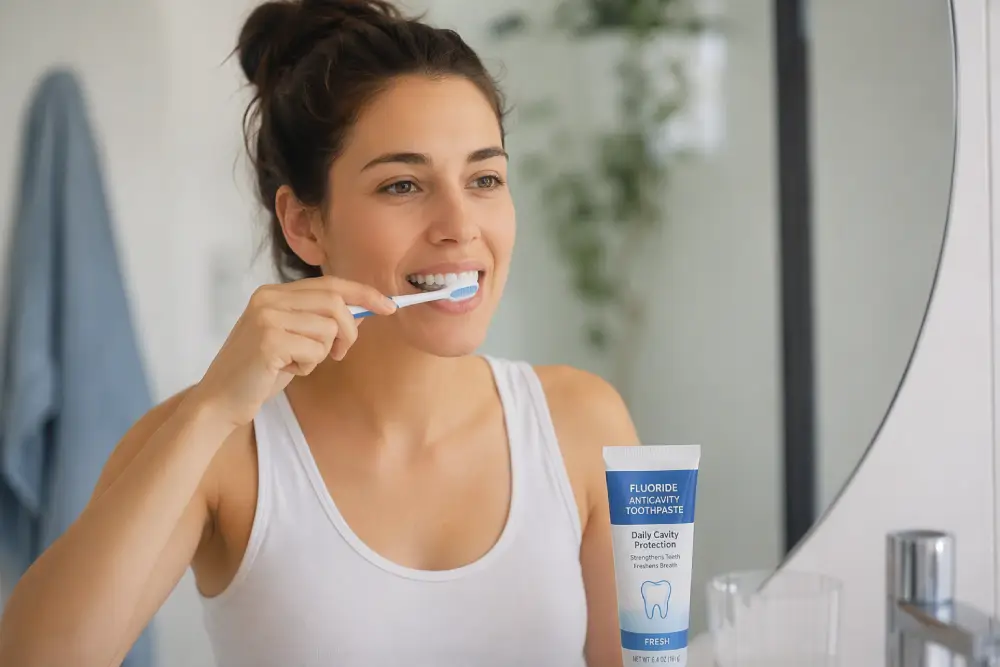
If you change only one thing after reading this oral health guide, change your angle. Nearly every technique correction we make at the chair comes down to where the bristles are pointed.
Getting the brush right
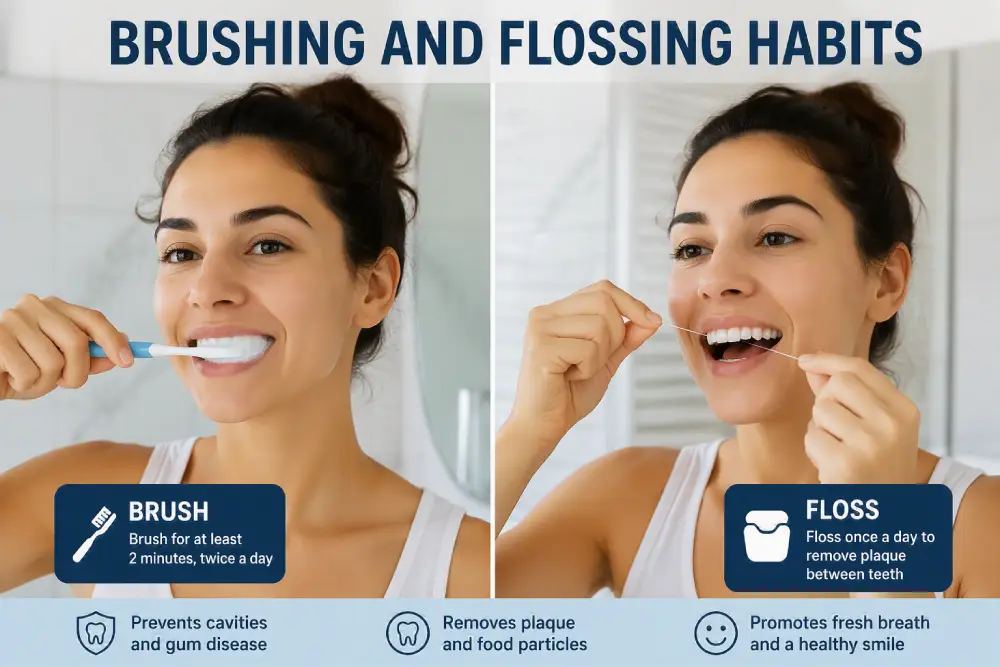
Tip the bristles forty-five degrees into the gum line rather than flat against the tooth face. That junction of enamel and soft tissue is where bacteria establish first, and a flat horizontal sweep glides right past it. Use short, gentle, overlapping strokes — pressure damages gums without cleaning better.
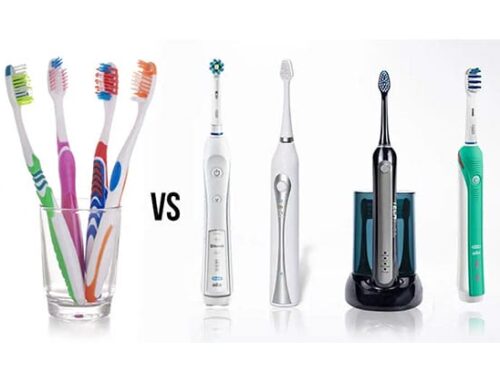
Two more details most people have never been told: use a soft-bristled brush regardless of how stubborn your stains feel, and when you finish, spit out the toothpaste but do not rinse with water. That thin fluoride film left behind keeps remineralizing enamel for another half hour. An electric toothbrush with a pressure sensor and a built-in timer solves the angle and the clock in one purchase.
Flossing is the single most abandoned step in American bathrooms, and the numbers show it. The CDC reports that close to half of adults over thirty carry some form of gum disease, and it very nearly always begins in the contact points between teeth — the exact surfaces a brush head cannot physically enter.
Getting the floss right
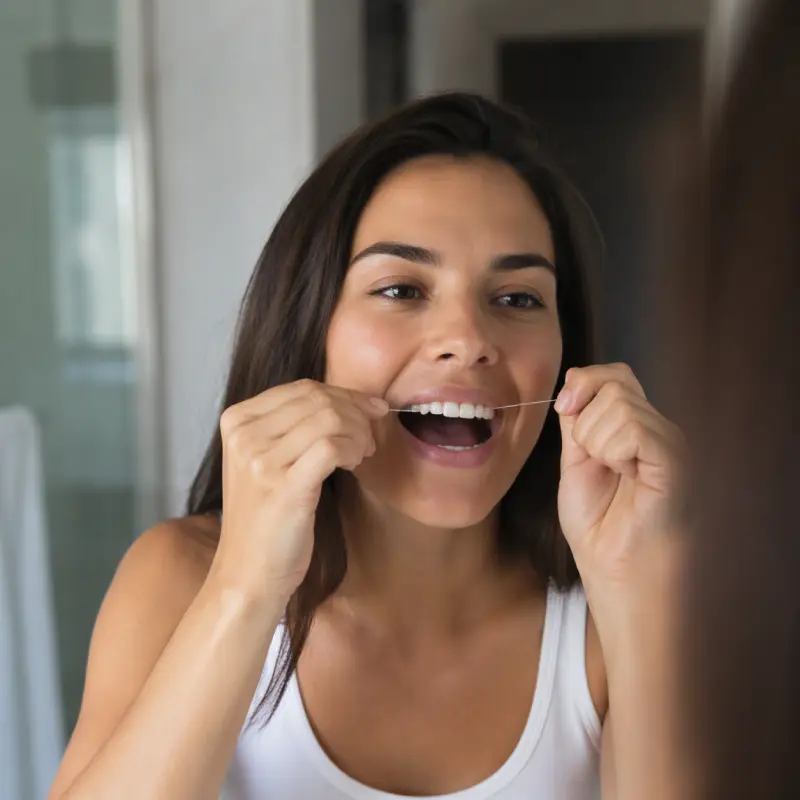
Wrap the floss into a C-shape around one tooth, hug the side of it, and slide gently one to two millimeters below the gum line. Then repeat on the neighboring tooth before moving on — one gap, two surfaces. Advance to a clean section of floss as you go so you are not redepositing what you just removed.
A quick snap straight down and back up accomplishes almost nothing; it clears food but leaves the bacterial film intact. Floss before your nighttime brushing so the fluoride you are about to apply can reach the spaces you just opened.
Beyond the toothbrush
The Tools Most People Skip — and What Each One Actually Does
The dental aisle is designed to make you feel behind. You are not. None of the following replaces brushing and flossing; each one closes a specific gap. Match the tool to the gap you actually have and ignore the rest.
Dental Floss
Removes plaque and debris from the contact surfaces between teeth — the zone a brush head cannot enter. Once daily, ideally before your nighttime brushing.
Water Flosser
Flushes around braces, implants, bridges, and very tight contacts. The strongest option when arthritis, limited dexterity, or extensive dental work makes string floss impractical.
Antibacterial or Fluoride Rinse
An antibacterial rinse reduces bacterial load along the gum line; a fluoride rinse adds remineralization for cavity-prone patients. Genuine add-ons, never substitutes.
Tongue Scraper
Bacteria colonize the surface of the tongue and drive persistent bad breath in a way brushing alone does not resolve. Ten seconds each morning.
| Tool | Tooth surfaces | Between teeth | Below gum line | Tongue & breath |
|---|---|---|---|---|
| Manual or electric toothbrush | Yes | No | Edge only | Partial |
| Dental floss | No | Yes | Yes | No |
| Water flosser | No | Yes | Yes | No |
| Mouth rinse | Surface only | Surface only | No | Yes |
| Tongue scraper | No | No | No | Yes |
| Professional cleaning | Yes | Yes | Yes, including tartar | Yes |
What you eat matters
How to Improve Oral Health With Diet and Hydration
What you drink and eat sets the chemistry your enamel lives in for the rest of the day. Sugar is the primary fuel for the bacteria that cause decay; as they metabolize it they release acid that dissolves mineral out of enamel. Acidic foods and drinks skip the middleman — citrus, soda, sports drinks, and vinegar-forward foods erode enamel directly, no bacteria required.
Hydration is the variable nobody talks about. Saliva is your mouth’s built-in defense system — it clears debris, delivers minerals back to enamel, and neutralizes acid. When you run dry, whether from medication, mouth breathing, or simply not drinking enough, bacteria gain ground fast.
Frequency beats perfection
This is the part most patients find liberating: how often you eat matters at least as much as what you eat. A soda finished in ten minutes is far gentler on enamel than the same soda nursed across three hours, because each sip restarts the acid clock. Grazing all afternoon keeps your mouth in near-continuous demineralization.
You do not have to give anything up. Drink water after meals and snacks, keep sweets to mealtimes rather than spreading them out, and let saliva do the rest.

Reach for these more often
Go easy on these
- Soda, sports drinks, and energy drinks
- Citrus juices sipped over long stretches
- Sticky candy and dried fruit that cling to grooves
- Starchy snacks like chips and crackers, which break down into sugar
- Sweetened coffee nursed through the morning
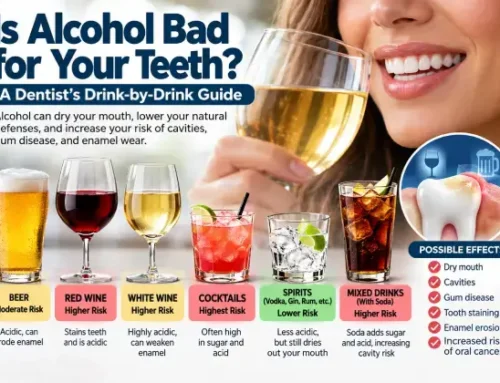
- Alcohol, which dries the mouth and raises oral cancer risk
The part home care cannot do
What Happens When You Put Off Dental Checkups
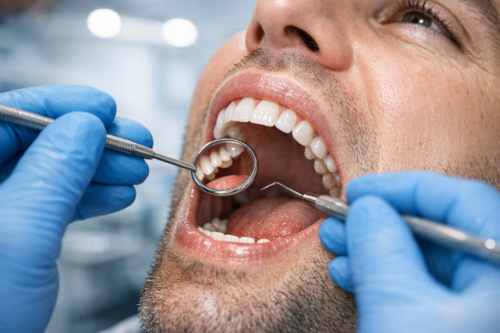
No routine at the bathroom sink lets you see below the gum line, between molars, or at the back of your own mouth. That is the entire point of a checkup. A routine visit covers cavity detection on surfaces you cannot inspect, a gum health assessment with actual pocket measurements, a bite and jaw evaluation, an oral cancer screening, and a cleaning that removes tartar no home tool can reach.
The stakes are lopsided
Gingivitis — early gum disease — is fully reversible with a cleaning and better daily habits. Ignored, it advances into periodontitis, which destroys the bone anchoring your teeth and does not come back. A small cavity is a twenty-minute filling; the same cavity a year later is a crown or a root canal.
That asymmetry is the whole argument for showing up on schedule. Early is cheap and easy. Late is neither.
Why people wait — and why they should not
Three reasons come up over and over: cost, dental anxiety, and the assumption that no pain means no problem. That last one is the most expensive misconception in dentistry. Decay and gum disease are typically silent until they are advanced — by the time something hurts, the inexpensive window has usually closed.
On cost and comfort, this office was built around both: published prices with no surprises, a deliberately gentle chairside approach, and kid-friendly visits so the whole family can be seen in one place.
$20
New-Patient Exam + Digital X-Rays
A full exam, X-rays, and a straight answer about what you need — and what you do not.
$95
Ultrasonic Teeth Cleaning
Removes hardened tartar home care cannot touch. Cash or card; no insurance required.
$20 Exam & X-Rays
Every good routine starts with a baseline. See exactly where your enamel and gums stand today.
$95 Ultrasonic Cleaning
The professional reset for plaque that has already mineralized into tartar.
Laser Gum Disease Treatment
For gums that bleed persistently or pockets that have deepened — periodontal therapy without cutting or stitches.
Same-Day Emergency Care
Tooth pain does not keep office hours. Same-day appointments for urgent problems.
Put it all together
Your Complete Daily Oral Hygiene Routine, Morning to Night
Here is the full daily oral hygiene routine Dr. Bao recommends to his own patients, assembled from everything above. Total investment: roughly seven minutes a day.
1Morning — about 3 minutes
Scrape your tongue front to back with one or two gentle passes. Brush two full minutes with fluoride toothpaste, bristles angled into the gum line. Spit, do not rinse. If you eat breakfast first, wait about thirty minutes after anything acidic before you brush.
2Through the day
Drink water after meals and snacks, keep grazing to a minimum, and chew sugar-free gum with xylitol when you cannot brush after lunch. Replace your brush — or your electric brush head — every three to four months, or sooner once the bristles splay.
3Night — about 4 minutes
Floss first, hugging each tooth in a C-shape and sliding gently below the gum line. Brush two full minutes, giving the gum line direct attention. Add an antibacterial or fluoride rinse if your dentist recommended one. Nothing but water afterward — saliva flow drops while you sleep, so whatever you go to bed with stays put.
4Every six months
A professional cleaning and exam. Home care handles the soft plaque; this handles the tartar, the surfaces you cannot see, and the early problems that have not started hurting yet. More often if you are cavity-prone or managing gum disease.
Consistency beats intensity. A plain soft brush used properly for two minutes will outperform a four-hundred-dollar brush used for forty-five seconds — every single time.
To go deeper on specific pieces of this, read our guides to strengthening tooth enamel and reversing early gum disease.
Murrieta patients
What Patients Say About Promenade Dental Care
Found Dr Bao years ago when I needed emergency care on a weekend. Started going to him while I still lived in the area. Moved a few years ago, but recently felt like I was being scammed by my new dentist (new insurance), drove over an hour to get a second opinion from Dr Bao. He is as straight forward, efficient, and affordable as ever. Work was still needed but not nearly to the extent and cost as was being told to me by the other dentist.
— P Hooper · Google review
Gone are the days of dreading dental appointments! With Dr. Nguyen, you can rest assured you're in kind, gentle, dental care hands. His state-of-the-art equipment and technology makes the entire experience efficient, comfortable, and dare I say, enjoyable. I’ve been going to Dr. Nguyen for years. I called him very early this Saturday morning with an emergency tooth repair and he fit me in first thing. I watched him use a computer to create a new tooth. It was fascinating to watch! Whether you're in need of routine dental care, or require urgent attention, you can trust Dr. Nguyen to deliver exceptional service.
— Jenny Somers · Google review
This is a great place to go take care of your teeth. The team was very professional examining and providing with solutions by priority. I felt that I was in good hands. Very gentle and kind to me. They explained very well what was going on. The best dental care I have ever experienced! Will be coming back for all my future dental needs!
— nancy ramirez · Google review
The doctor very good. I've been going to him and he does a great job getting my teeth clean in and out.
— noy b · Google review
Ready to Reset Your Oral Hygiene Routine?
Start with an honest baseline. The $20 new-patient exam with digital X-rays shows exactly where your teeth and gums stand — straight answers, no upselling. Most PPO plans accepted; CareCredit available.
See What the $20 Exam Includes
26957 Date St, Suite B4, Murrieta, CA 92563
Serving Murrieta, Temecula, Menifee, French Valley, and Wildomar
Questions patients actually ask
Daily Oral Hygiene Routine: Frequently Asked Questions
How long should I brush my teeth, and how often?
Twice a day for two full minutes each time. Most adults brush for under a minute, which leaves plaque behind along the gum line and between teeth. A timer, or an electric toothbrush with a built-in two-minute timer, makes it easy to hit the mark.
Should I floss before or after brushing?
Flossing first works slightly better. It loosens plaque and food debris so the fluoride in your toothpaste can reach between your teeth. That said, the most important thing is that you floss once a day at a time you will actually stick with.
My gums bleed when I floss. Should I stop?
No. Bleeding gums are a sign of inflammation, which is the earliest stage of gum disease, and stopping allows it to progress. For most people the bleeding settles down within one to two weeks of daily flossing. If it continues past that, or if you notice loose teeth, receding gums, or persistent bad breath, schedule an exam.
Do I really need to floss every day if I brush well?
Yes. A toothbrush cannot reach the tight spaces between teeth or just below the gum line, and that is exactly where gum disease and many cavities begin. The CDC reports that nearly half of adults over 30 have some form of gum disease, and skipped flossing is a leading factor.
Is mouthwash necessary if I brush and floss?
Mouthwash is a helpful add-on, not a replacement. An antibacterial rinse reduces bacteria along the gum line, and a fluoride rinse strengthens enamel for people prone to cavities. Ask your dentist which type fits your situation, or whether you need one at all.
Should I rinse with water after brushing?
No. Spit out the excess toothpaste but skip the water rinse. Rinsing washes away the thin layer of fluoride that would otherwise keep remineralizing your enamel for another half hour. It is one of the easiest upgrades in this entire routine and it costs nothing.
How can I improve my oral health quickly?
Start with the highest-impact fixes: brush a full two minutes twice a day, floss once daily, swap sugary drinks for water, and schedule a professional cleaning to remove hardened tartar that home care cannot touch. Most people see healthier gums within two to three weeks of consistent care.
Why do I still get cavities even though I brush twice a day?
Brushing only cleans the surfaces a brush can reach. Cavities often start between teeth, in deep grooves, or along the gum line, which are areas that need floss, good technique, and fluoride. Frequent snacking and acidic drinks also keep enamel under constant attack no matter how well you brush.