
Gentle Teeth Cleaning • Murrieta, CA
Dental Air Polishing in Murrieta, CA
A softer, faster way to lift stains, plaque, and biofilm — no scraping.
I’m Dr. Bao Nguyen. For more than fifteen years I’ve cleaned teeth here on Date Street, and dental air polishing is one of the biggest comfort upgrades I’ve added for patients who dread the “scrape.” It uses a controlled jet of air, water, and a fine powder to clean gently — ideal for stained smiles, braces, implants, and anyone with a low tolerance for the dentist’s chair.
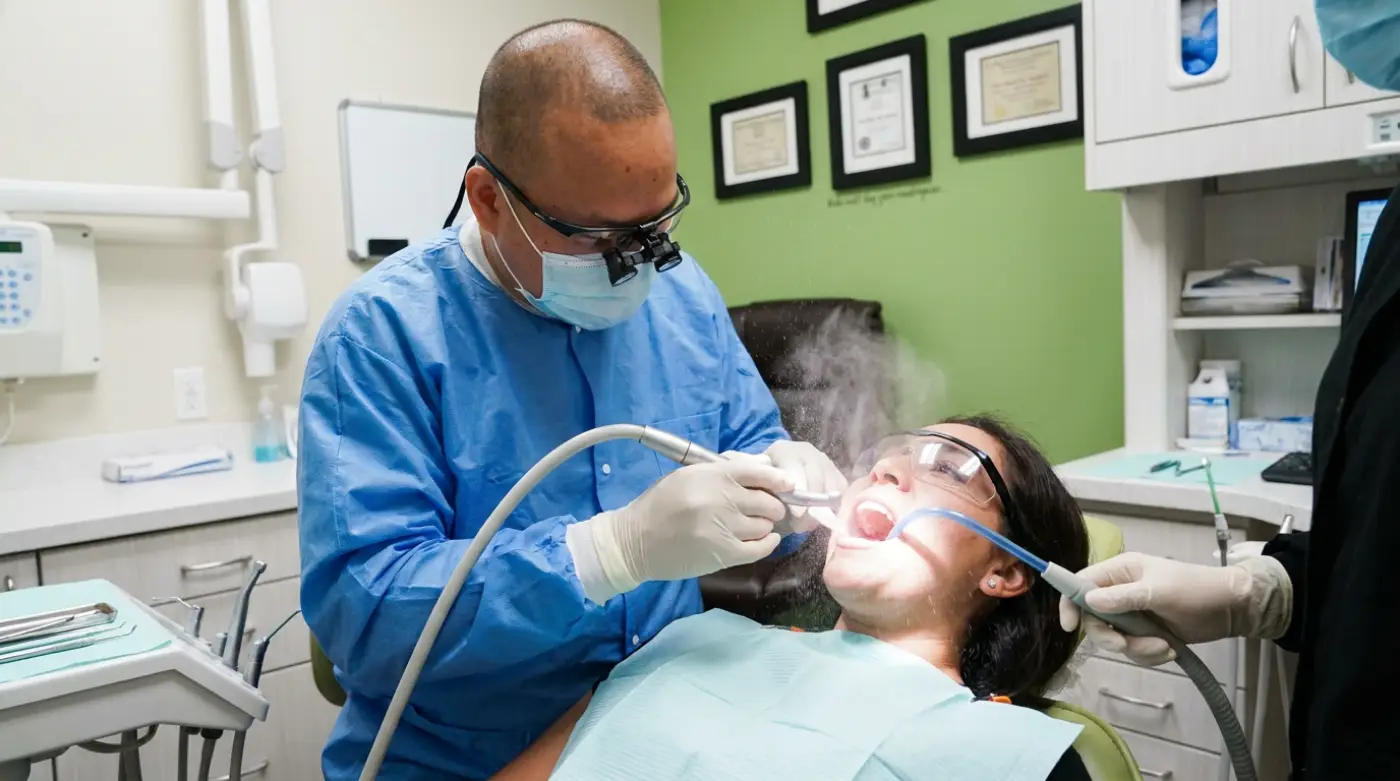
Air Polishing Teeth Cleaning
What Dental Air Polishing Actually Does
Most people picture a hygienist “scraping” when they think of a cleaning. Dental air polishing works differently. A small handpiece delivers a controlled spray of compressed air, water, and a soft powder — usually sodium bicarbonate, glycine, or erythritol — that lifts surface stains, soft plaque, and sticky bacterial biofilm off the enamel. There’s no metal-on-tooth contact, which is exactly why patients who tense up in the chair tend to relax through it.
Because the spray is directed rather than dragged, it reaches places a rubber cup or hand scaler struggles with — around orthodontic brackets, along implant collars, into pits and fissures, and just under the gumline. In my chair here in Murrieta, I mainly reach for it during routine hygiene visits, on smokers and heavy coffee drinkers, and for patients keeping implants or veneers looking their best. It’s a companion to our ultrasonic teeth cleaning, not a replacement — more on that below.
Why patients ask for it by name
Comfort. No scraping sensation means far less of the wince that comes with sensitive teeth and exposed roots.
Stain removal. It clears extrinsic stains from coffee, tea, wine, and tobacco better than a paste-and-cup polish, often restoring natural brightness without any whitening.
Biofilm control. It disrupts the bacterial film that drives cavities and gum inflammation more thoroughly than manual polishing — which matters most for gums.
Gentle on enamel. The powder is softer than enamel, so it cleans without the slow abrasion that years of hand-scaling can cause.
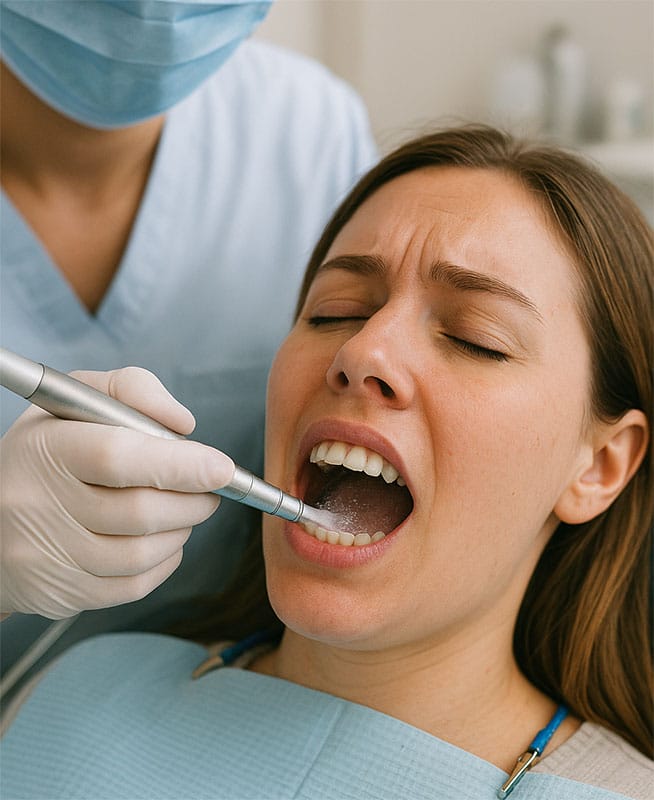
Air Polishing vs Traditional Polishing
How It Compares to the Old Rubber-Cup Polish
Traditional polishing scrubs the tooth with a rubber cup and gritty paste. It works on the surfaces the cup can reach, but it can feel rough and misses tight spots. Air polishing is faster, gentler, and reaches further. Here’s the honest side-by-side I show patients:
| What matters | Traditional polishing | Dental air polishing |
|---|---|---|
| Method | Rubber cup + abrasive paste | Jet of air, water & fine powder |
| Contact with tooth | Direct — can feel like friction | Non-contact — no scraping |
| Stains & biofilm | Surface stains only | Surface stains and biofilm |
| Comfort | Can trigger sensitivity | Usually more comfortable |
| Reach | Accessible surfaces | Braces, implants & gum pockets |
| Time in the chair | Longer | Faster |
The Science, Simply
Which Powder We Use — and Why
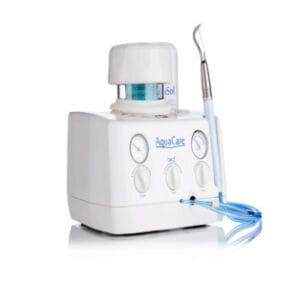
The powder is where technique matters most, and it’s chosen per patient:
Sodium bicarbonate (baking soda). Great for heavier stains. Its slightly alkaline pH helps neutralize acid in the mouth. We keep it off delicate restorations.
Glycine. Gentler and fine — my go-to below the gumline and around implants and sensitive teeth.
Erythritol. The finest, least abrasive option, ideal for frequent periodontal maintenance and orthodontic patients.
Matching the powder to the patient is the difference between a cleaning that’s safe and comfortable and one that isn’t — a judgment call trained clinicians make every visit. You can read the peer-reviewed background on glycine air polishing on the National Library of Medicine (PMC).
Paired with ultrasonic scaling
Ultrasonic scalers use high-frequency vibration (roughly 25,000–50,000 Hz) plus a cool water spray to break apart tartar and flush debris, including subgingival biofilm. Scaling handles the dense, calcified buildup; air polishing handles the soft deposits, stains, and film. Used together, they cover the whole job comfortably. If your gums need more than a routine visit, we also offer laser periodontal treatment for gum disease.
Air Polishing Murrieta
Why Temecula Valley Patients Choose Promenade
Promenade Dental Care sits at 26957 Date St, Suite B4, a few minutes from the 215 and easy to reach from Temecula, French Valley, Menifee, Wildomar, and Winchester. I trained at UCLA and served ten years as a U.S. Navy dentist — including an Advanced Education in General Dentistry residency at Camp Pendleton and deployments to Kuwait and Iraq — before putting down roots here in 2010.
What that means for you is simple: transparent, published pricing and no upselling. New patients start with a $20 exam and digital X-rays, and we’ll tell you honestly whether air polishing, a standard cleaning, or a deeper periodontal visit is what your mouth actually needs. We accept all PPO plans and offer CareCredit — and if it’s an urgent problem, we keep room for same-day emergency appointments.
Ultrasonic Teeth Cleaning
$95 gentle, thorough cleaning that pairs perfectly with air polishing.
Learn more →Gum Disease Laser Therapy
Minimally invasive periodontal care when cleaning alone isn’t enough.
Learn more →What patients say
Murrieta patients on their cleaning visits
“I love coming to Promenade Dental Care. Dr. Nguyen and Edith are the best. They’re friendly and I love that I’m taken care of right away. Dr. Nguyen is thorough and efficient. He answers any questions I have and explains things clearly. I actually look forward to my biannual dentist visits now because they’re the best. Can’t recommend a dentist more!”
Kamilah C. · Google review
“Extremely helpful! Went in for a cleaning and to repair a cavity. Quick and painless. Would definitely recommend to everyone. The Doc and his staff were nothing short of wonderful! Thanks so much for the procedure. And very reasonably priced!!!”
Aaron D. · Google review
“Absolutely love this dental office. me and my family all come for our 6months cleanings and check ups. Dr. Nguyen is super friendly to my children they even have cute stickers for the kids and little toys.”
Valeria M. · Google review
Answers
Dental Air Polishing FAQ
What is dental air polishing?
How is air polishing different from traditional polishing?
Does air polishing hurt?
Is air polishing safe for my teeth and gums?
Can air polishing clean around braces or implants?
Can air polishing remove coffee, tea, or tobacco stains?
Does air polishing whiten teeth?
How often should I have air polishing teeth cleaning?
Does air polishing help prevent gum disease?
Do you combine air polishing with ultrasonic scaling?
Can air polishing damage enamel or restorations?
How much does air polishing cost in Murrieta?
Is air polishing safe if I have asthma or other health conditions?
Ready for a Cleaner, More Comfortable Smile?
New patients are always welcome. A $20 exam with digital X-rays is all it takes to get an honest answer about your teeth — from a Murrieta dentist who won’t upsell you.
(951) 412-0127 Book Your Visit