
Teeth Grinding & Clenching · Murrieta, CA
Custom Night Guards for Teeth Grinding in Murrieta, CA
Sore jaw in the morning, a molar that cracked on nothing, front teeth that look shorter than they used to: your teeth are absorbing a force every night that they were never built to take.
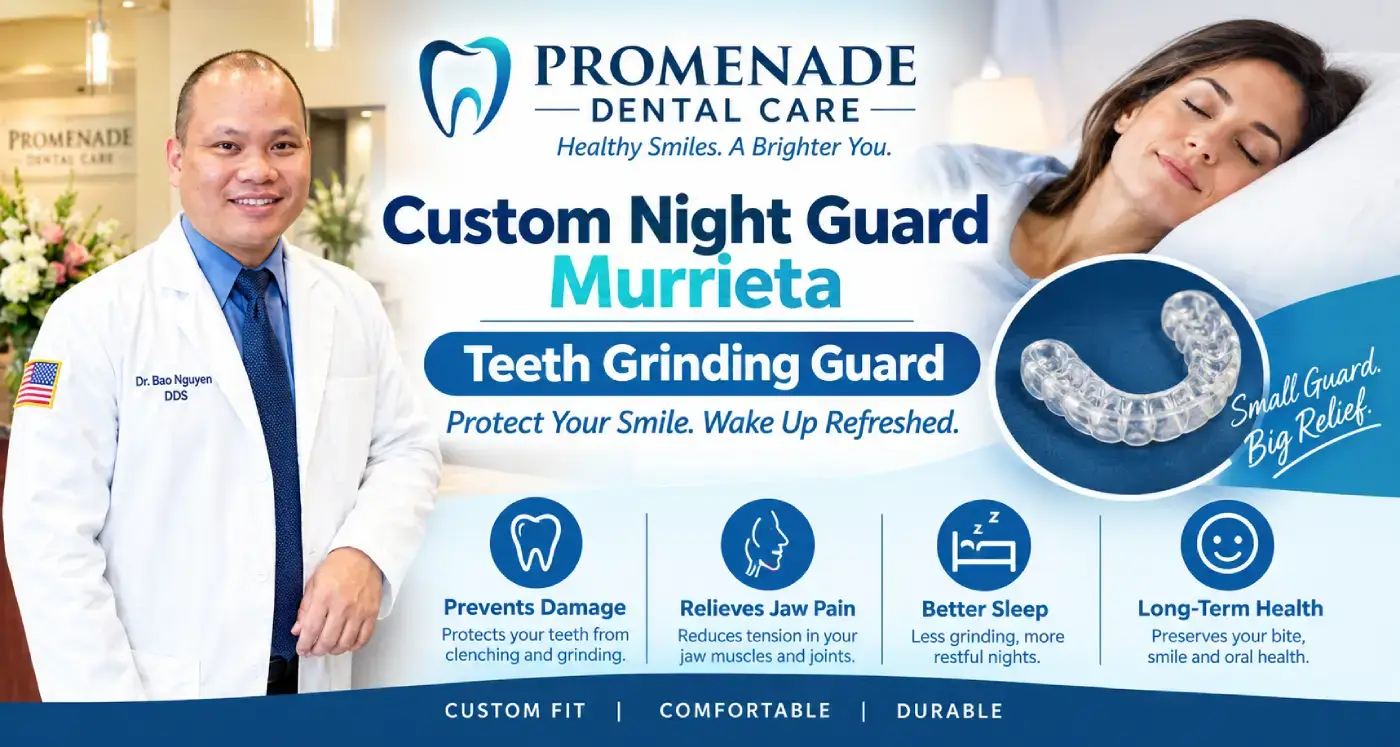
A custom night guard is the single most effective thing I can put between your teeth and the several hundred pounds of pressure a sleeping jaw can generate. It does not stop the grinding. Nothing reliably does. What it does is take the wear off the enamel, the load off the fillings and crowns, and the strain off the jaw muscles, so the damage stops accumulating while we deal with whatever is driving it. I make hybrid acrylic guards from a digital scan of your teeth, fit them by hand at the Date Street office, and quote the fee in writing before the scan is taken. Custom-fitted night guards purchased directly through my office run $505.
Start Here
How to Tell Whether You Grind Your Teeth at Night
Almost nobody knows they grind. Sleep bruxism happens in the lighter stages of sleep, it leaves no memory, and unless someone shares your bed and is a light sleeper, the first person to notice is usually a dentist looking at the wear on your molars. The Cleveland Clinic separates bruxism into two conditions, awake and asleep, and the distinction matters here because a night guard only addresses the second one. Daytime clenching, the kind you catch yourself doing in traffic or at a keyboard, needs awareness and habit work more than an appliance.
Here is what I look for at the exam, and what you can check in the mirror tonight. Two or three of these together usually means you are a grinder whether you have heard yourself or not.
Plain Mechanics
What a Custom Night Guard Actually Does
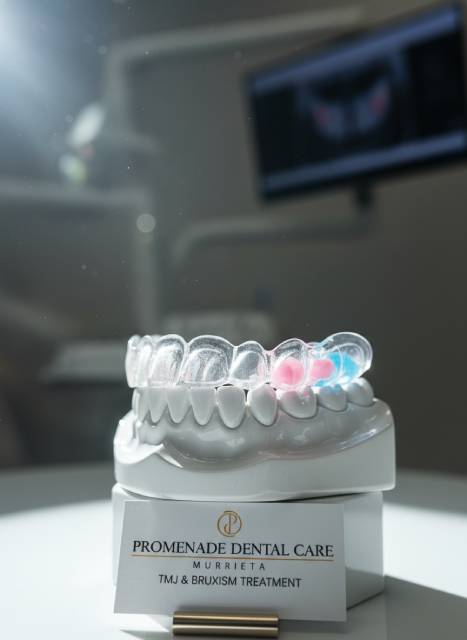
A night guard, also written as one word, nightguard, or called an occlusal guard or occlusal splint, is a removable appliance that covers the biting surfaces of one full arch of teeth, usually the upper. The one I make is a hybrid: a hard, clear acrylic shell on the outside where your teeth grind, over a softer layer on the inside that hugs the teeth, and it puts a smooth, even plane between the upper and lower arches while you sleep.
I want to be exact about what that accomplishes, because the marketing around these devices tends to overpromise.
On the evidence: a 2023 systematic review in BMC Oral Health concluded that occlusal splint therapy is a viable treatment for sleep bruxism, and the American Dental Association's patient guidance on teeth grinding lists a custom guard as the standard protective measure. At the same time, a 2021 review in the Journal of Dentistry found the trials too small and too biased to prove that guards beat doing nothing at reducing the grinding itself. Both are true. The guard is very good at the one job I am asking it to do, which is to be the thing that wears down instead of your teeth. Anyone who tells you it will stop your grinding is selling past the evidence.
- What it is
- A custom hybrid appliance, hard acrylic outside and a softer liner inside, covering one full arch and worn during sleep.
- What it protects
- Enamel, fillings, crowns, veneers, bridges, and implant restorations from grinding and clenching forces.
- What it does not do
- Stop bruxism, straighten teeth, or treat sleep apnea. It is a shield, not a cure.
- Turnaround
- Scan at the first visit, delivery and adjustment about two weeks later, a short follow-up after that.
Why I Only Make One Kind
Hybrid vs. Soft Guards vs. Drugstore and Mail-Order Guards
The guard I make is a hybrid, sometimes called dual-laminate: a hard acrylic shell on the outside where your teeth grind, and a softer layer on the inside where it touches your teeth. Patients ask why I don't offer a fully soft guard, since soft ones feel nicer in the hand and some offices sell them as the cheaper option. My reason is the muscle data. In a study published in the Journal of the American Dental Association, a hard splint reduced nighttime jaw muscle activity in eight of ten grinders, while a soft splint reduced it in only one and actually increased it in five. A soft, rubbery biting surface gives the jaw something to chew on. Many patients clench harder against it, and it wears through in months. The hybrid keeps the hard biting surface that study supports, so it can be balanced precisely and it lasts, and the softer inside makes it easier to seat and more comfortable to wear all night.
The store-bought and mail-order categories are a different problem. A boil-and-bite guard from the pharmacy is a thick, soft blank that you soften in hot water and bite into. It has no even contacts, it holds the jaw wherever it happens to land, and it is bulky enough that many people quietly stop wearing it after a week. Mail-order guards are better fitting because they are made from an impression you take at home, but they skip the two things that make a guard safe: an exam to confirm your teeth can carry one, and a chairside adjustment so the bite on the guard is even. A guard with a high spot loads one tooth all night. I have seen that crack a molar, which is the exact thing the guard was supposed to prevent.
| Factor | Drugstore boil-and-bite | Mail-order custom | Custom hybrid (my office) |
|---|---|---|---|
| Fit | Rough approximation; bulky | Good, if your home impression was accurate | Made from a digital scan; snaps into place |
| Bite balance | None | None; nobody checks your contacts | Adjusted chairside with marking paper until every tooth touches evenly |
| Exam first | No | No | Yes; decay, cracks, loose teeth, and gum disease are found before the guard is made |
| Material | Soft thermoplastic | Soft, dual-laminate, or hard, your choice without guidance | Hybrid: hard acrylic biting surface over a softer inner liner |
| Lifespan | Weeks to a few months | Varies with material | Typically three to five years, longer for light grinders |
| Insurance | Not covered | Rarely covered | Often partially covered by PPO plans; verified before fabrication |
One more design note. My guards are full-arch, meaning they cover every tooth in the arch. Small front-teeth-only appliances exist and are sometimes marketed for headaches, but a partial guard lets the back teeth drift and can change the bite over time, and I do not want to trade a wear problem for a bite problem.
Three Visits
How a Custom Night Guard Is Made and Fitted
1Exam and X-rays
The $20 new-patient exam with digital X-rays is the starting point. I confirm the wear pattern, check for cracks, active decay, loose teeth, and gum disease, and look at the jaw joints and muscles. A guard over an untreated cavity traps bacteria against it, and a guard on a loose tooth can lever it further, so anything urgent gets handled first. You leave with a written quote for the guard.
2Digital scan
A small intraoral scanner records your teeth and how they meet. No trays of impression material, no gagging. The scan goes to the lab that fabricates the guard in hybrid acrylic. The lab turnaround is about two weeks.
3Delivery and balancing
The guard should snap on and off without effort. I have you close and slide on marking paper, then grind the acrylic down wherever a tooth is hitting harder than its neighbors, until the contacts are even across the whole arch. This step is the difference between a guard that protects and a guard that concentrates force on one tooth.
4Follow-up and checkups
I see you again a few weeks in to re-check the contacts after the muscles have settled, and I look at the guard at every cleaning afterward. The wear pattern on the acrylic tells me how hard you are grinding and whether anything in the bite has shifted.
Getting used to it takes most people a week or two. Expect extra saliva and some awareness of it the first few nights. If you are still taking it out in your sleep after two weeks, or waking with new soreness, that is a fit or bite issue and it needs an adjustment, not more willpower. Call and I will see you.
Money, Plainly
Night Guard Cost and Insurance in Murrieta
Custom-fitted night guards purchased directly through my office cost a flat $505, and you will see that number in writing before the scan is taken. If you have no dental insurance, that is the whole fee, with nothing added later. If you do, what you pay out of pocket depends on your plan, and we verify it before anything is made.
On insurance: a custom hybrid guard is billed under a dedicated dental code for a hybrid, full-arch occlusal guard, and most PPO plans that cover it do so at a percentage, often with a limit of one guard every few years. Plans generally require a documented grinding diagnosis, which the exam provides. Promenade Dental Care accepts all PPO plans and is in-network with Delta Dental PPO, Cigna, MetLife, Guardian, Aetna, and United Concordia. We verify coverage before fabrication so your out-of-pocket cost is known, not estimated.
The way to think about the fee is against what grinding costs when it is not stopped. A single crown on a cracked molar costs more than the guard that would have protected it. A root canal and a crown together cost several times more. I have patients whose guards are the cheapest piece of dental work they have ever had done and the one that saved them the most.
Making It Last
Caring for Your Night Guard, and When to Replace It
Hybrid acrylic is durable but not indestructible, and most guards that fail early fail because of hot water or a dog. A few rules keep one working for years.
When it is time for a new one
A hybrid acrylic guard typically lasts three to five years, longer for light grinders, less for heavy clenchers who wear through the biting surface. Replace it when the acrylic has worn through in any spot, when it cracks, when it no longer snaps into place, or after dental work that changes the shape of your teeth. A new crown, a filling on a biting surface, or an extraction will all change the fit, so tell me about the guard when we plan that work. Sometimes the guard can be relined; sometimes it is faster and cheaper to make a fresh one.
Honest Limits
When a Night Guard Is Not the Right Answer
I would rather tell you a guard will not help than sell you one that sits in a drawer. These are the situations where I slow down or point you somewhere else.
Who Wrote This
About Dr. Bao Nguyen, DDS
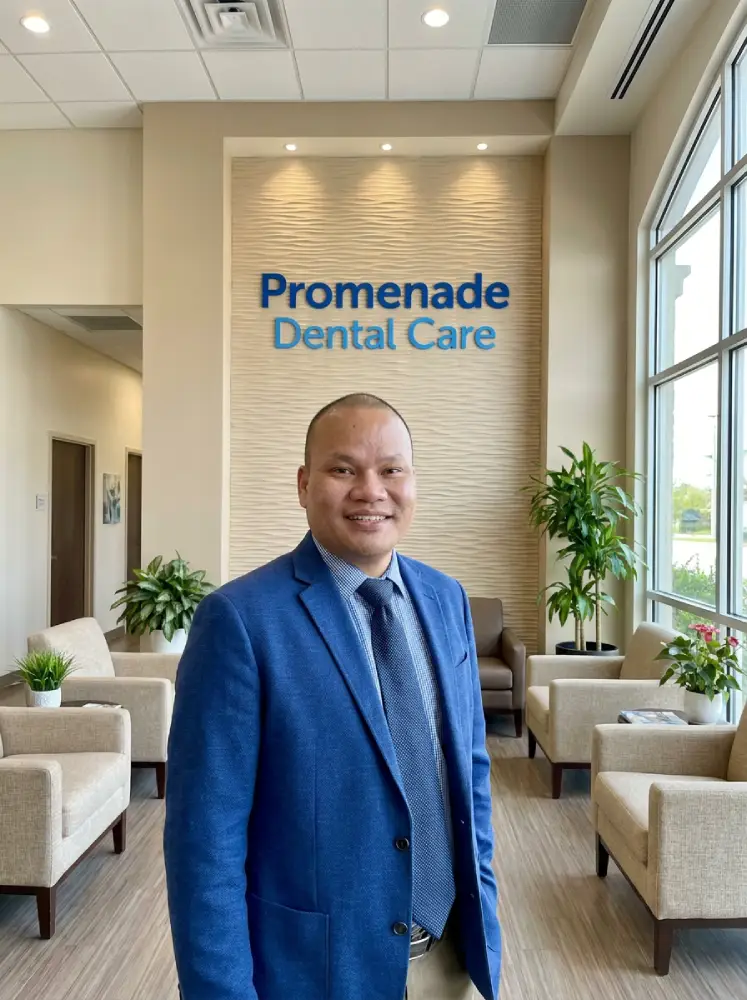
I trained at the UCLA School of Dentistry and then spent ten years in the U.S. Navy Dental Corps, including an AEGD residency at Camp Pendleton. Sailors and Marines grind their teeth at a rate that would surprise you, and I fitted and adjusted more occlusal guards in those years than most dentists do in a career. The thing the Navy taught me about guards is that the adjustment is the appliance. An unbalanced guard is not a slightly worse guard; it is a different device with a different effect.
I have practiced in Murrieta since 2010, and the reason a guard from this office is worth more than a mail-order one is that I am also the person who will do the crown if a tooth cracks. I read wear facets, failing restorations, and bite interferences every day, because I repair them every day, and I would much rather protect the tooth than rebuild it.
What you get here is one answer, not a menu. If you need a guard, I will tell you so and quote it. If you do not, I will tell you that too.
Related Care
Pages That Connect to This One
TMJ Evaluation
Jaw pain, clicking, headaches: finding out whether the joint, the muscles, or the bite is the problem.
Same-Day Crowns
When a grinding-cracked molar needs to be rebuilt in one visit.
Chipped Front Tooth
Smoothing, bonding, or a crown for an edge that broke.
Emergency Dentist
A tooth that split overnight does not wait for a scheduled visit.
From Our Google Reviews
What Patients Say
"I am completely terrified of the dentist. I neglected getting anything done for years and years because of bad experiences and just general fear and anxiety. Well I got sick of having an aching jaw everyday so I came in and got a x-ray and consultation and they told me what work needed to be done. The price was pretty much half of what comparable dentists wanted and they were really really nice to me. The doctor gave me some anxiety meds which completely relaxed me and I can honestly say I have way less fear and anxiety about going back to the dentist. So if you have any anxiety about going to the dentist, this is the place for you."
"I saw doctor Bao Nguyen at Promenade Dental Care on three occasions. In these visits, Dr Nguyen took time to carefully examine my dental concerns and explained very clearly to me what my conditions are, and what treatment options available. He advised me against immediate treatments for conditions that can be improved or maintained with good oral hygiene. He was very gentle with treatments, especially with the local anaesthetic injections. Greatly appreciate his professional care."
"Great dentist. No upselling, easy to make an appointment, and he told me exactly what was going on without trying to scare me into unnecessary work. The pricing was fair and upfront. I finally found a dentist I actually trust."
"This is a great place to go take care of your teeth. The team was very professional examining and providing with solutions by priority. I felt that I was in good hands. Very gentle and kind to me. They explained very well what was going on. The best dental care I have ever experienced! Will be coming back for all my future dental needs!"
Questions I Hear Every Week
Night Guard FAQs
How much does a custom night guard cost in Murrieta?
A custom-fitted hybrid acrylic night guard purchased directly through my office costs $505, quoted in writing at the $20 exam before the scan is taken. Many PPO plans cover part of the fee, which we verify before the guard is made, and CareCredit financing is available for qualified applicants.
Does insurance cover a night guard?
Often, in part. A custom hybrid guard has its own dental billing code, and many PPO plans pay a percentage of it, usually once every few years and usually with a documented grinding diagnosis. Promenade Dental Care accepts all PPO plans and verifies your specific benefit and frequency limit before fabrication, so you know your out-of-pocket cost in advance.
Will a night guard stop me from grinding my teeth?
No. Sleep bruxism is driven by the nervous system during sleep, and no appliance turns it off. A night guard makes the grinding harmless by putting a replaceable layer of acrylic between your teeth, spreading the force evenly, and giving the jaw muscles a smooth surface that most people clench against less hard. It protects your teeth; it does not cure the habit.
Is a hard or soft night guard better for grinding?
Hard on the biting surface, which is why the guard I make is a hybrid. A fully soft guard gives the jaw a rubbery surface to chew on, and research has found soft splints can increase nighttime muscle activity in many patients while wearing through in months. A hard acrylic biting surface can be balanced precisely and usually reduces muscle activity. My hybrid keeps that hard outer shell and adds a softer layer against the teeth for comfort, and it is the only kind I make.
Are drugstore or mail-order night guards any good?
A boil-and-bite drugstore guard is bulky, soft, and unbalanced, and most people stop wearing it within weeks. Mail-order guards fit better but skip the exam that rules out problems a guard would hide and the chairside adjustment that makes the bite even. A guard with one high spot loads a single tooth all night, and I have seen that crack the tooth it was meant to protect.
How long does a night guard last?
A custom hybrid acrylic guard typically lasts three to five years, longer for light grinders and less for heavy clenchers who wear through the surface. Replace it when the acrylic wears through, cracks, stops snapping into place, or after dental work that changes the shape of your teeth. I check it at every cleaning.
How do I clean a night guard?
Rinse it with cool water every morning, brush it gently with a soft toothbrush and mild soap, let it air dry, and store it in a ventilated case away from pets. Soak it weekly in a denture cleaning tablet or diluted white vinegar. Never use hot water or toothpaste: heat warps the acrylic and toothpaste scratches it.
Should the night guard go on the top or bottom teeth?
Usually the top. An upper full-arch guard is the standard design because it is stable, covers every tooth, and is easy to balance. I make a lower guard when a patient has a strong gag reflex, extensive dental work on the upper arch, or another reason the upper will not work well. Either way it is one guard, not two.
Do I need a TMJ evaluation before getting a night guard?
If your main complaint is worn or cracked teeth and morning jaw soreness, the standard $20 exam is enough to confirm grinding and quote the guard. If your jaw clicks, catches, locks, or hurts in front of the ear, the joint needs to be evaluated first, because the treatment has to match the cause. The TMJ evaluation page explains how that exam works.
Can a night guard help with headaches?
Often, when the headaches come from jaw muscle tension. Morning headaches in the temples are usually the temporalis muscle after a night of clenching, and most grinders report those ease within a few weeks of consistent wear. A guard will not help migraine, sinus, or tension headaches from other causes, which is one of the things the exam sorts out.
Can my child get a night guard for grinding?
Rarely. Grinding is common in children and most outgrow it as the adult teeth come in, and a guard made for a mouth that is changing month to month stops fitting quickly. I watch children's wear at their checkups and consider a guard only for older kids with heavy wear or symptoms.
Can a night guard make my grinding or jaw pain worse?
A poorly fitted one can. A guard with uneven contacts, a soft guard, or a bulky drugstore guard can increase clenching or load one tooth. A custom hybrid guard that is balanced at delivery and re-checked at follow-up should not. If you develop new soreness or find yourself removing the guard in your sleep, call for an adjustment rather than pushing through it.
Protect the Teeth You Have Before You Have to Rebuild Them
Start with a $20 exam and digital X-rays. If you grind, you will leave with a written quote for a custom hybrid acrylic night guard. If you do not, you will leave knowing that too.
(951) 412-0127 Request an Appointment OnlinePromenade Dental Care · Dr. Bao Nguyen, DDS
26957 Date St., Suite B4, Murrieta, CA 92563
Serving Murrieta, Temecula, French Valley, Menifee, Wildomar & Winchester