
Extraction Recovery · Murrieta, CA
Bleeding After a Tooth Extraction: What's Normal and How to Stop It
Some oozing for the first day is normal. Bright red bleeding that soaks fresh gauze after a few hours isn't.
The evening after an extraction, a little blood mixed with a lot of saliva can look alarming on a pillowcase or in the sink. Most of the time it's exactly what a healing socket should do. This page explains how to tell normal oozing from real bleeding, the steps that stop it at home, and when to call me or go to an emergency room.
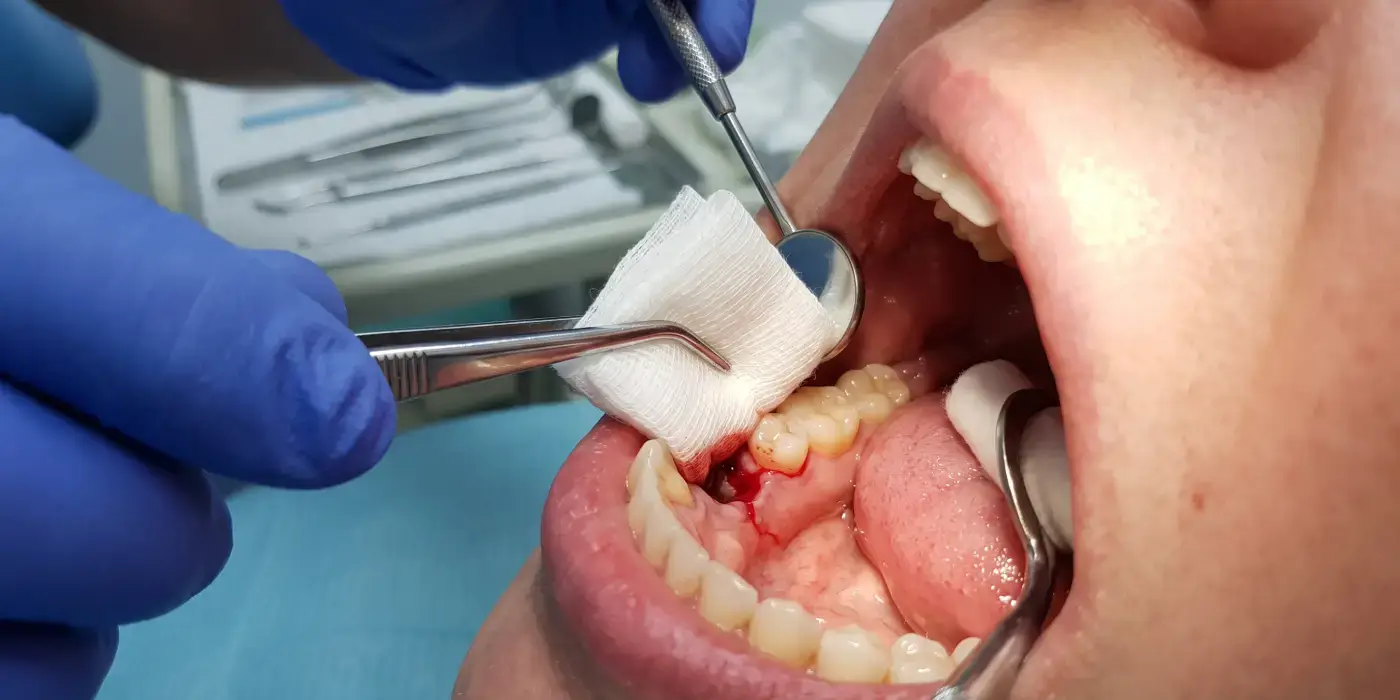
The short answer
Is it normal to bleed after a tooth extraction?
Yes. Light oozing that tints your saliva pink is normal for the first 24 hours, and a little can show up for a day or two after that. To stop it, fold clean gauze into a firm pad, place it directly over the socket, and bite down hard without checking for 30 to 45 minutes while sitting upright. Call your dentist if bright red blood keeps soaking through fresh gauze after two rounds of that, and go to an emergency room if you're bleeding heavily and feel faint or dizzy.
This page is about the bleeding. If the problem is pain that's getting worse on day three or four, read about dry socket instead. If you haven't had the extraction yet, the tooth extraction page explains the visit.
What's normal
How much bleeding is normal, and for how long?
A socket is an open wound in bone, and it's going to seep. What matters is the trend: it should be getting lighter, not heavier. Cleveland Clinic notes that a little oozing the first night is expected, and the University of Michigan's oral surgeons point out that a small amount of blood in a lot of saliva looks like far more than it is.
| When | What's normal | What isn't |
|---|---|---|
| First hour | Gauze soaked red when you remove it; that's why it's there | Blood pooling in your mouth faster than you can swallow |
| First evening | Pink saliva, a dark clot visible in the socket, a few streaks on the pillow | Bright red flow that soaks a fresh gauze pad in under 30 minutes, again and again |
| Day 1 to 2 | Faint pink tinge after eating or brushing nearby | Steady bleeding that returns every time you stop biting |
| Day 3 to 10 | Usually none | New bleeding after it had stopped, especially with swelling or a bad taste |
The clot itself can look strange. It's dark red to almost black at first, can bulge slightly above the gum, and may look like a loose jelly. Leave it alone. That clot is the plug, and wiping or rinsing it away is the most common reason bleeding starts again.
How to stop it
How do I stop bleeding after a tooth extraction?
Do these in order. Most bleeding stops at step two.
1Clear the old clot gently
If there's a big, loose, jelly-like clot hanging out of the socket, wipe it away gently with gauze. Don't rinse hard or spit to get rid of it.
2Pressure, done right
Fold two or three gauze squares into a thick pad, dampen it slightly, and set it directly over the socket, not on the teeth beside it. Bite down firmly and steadily for 30 to 45 minutes. No peeking.
3Sit up and stay still
Sit or recline with your head above your heart. Lying flat and walking around both keep it going. Skip the gym, the yard work, and bending over.
4Try a tea bag
If gauze isn't enough, wet a plain black tea bag, squeeze it out, and bite on it the same way for 30 minutes. The tannins in black tea help the blood clot. Herbal tea doesn't do the same thing.
5Cool things down
Hold a cold pack on the cheek, 20 minutes on and 20 off. Avoid hot drinks, hot food, and alcohol for the rest of the day.
6Call if it won't settle
If you've done two full rounds of firm pressure, about an hour, and it's still bright red and flowing, call (951) 412-0127.
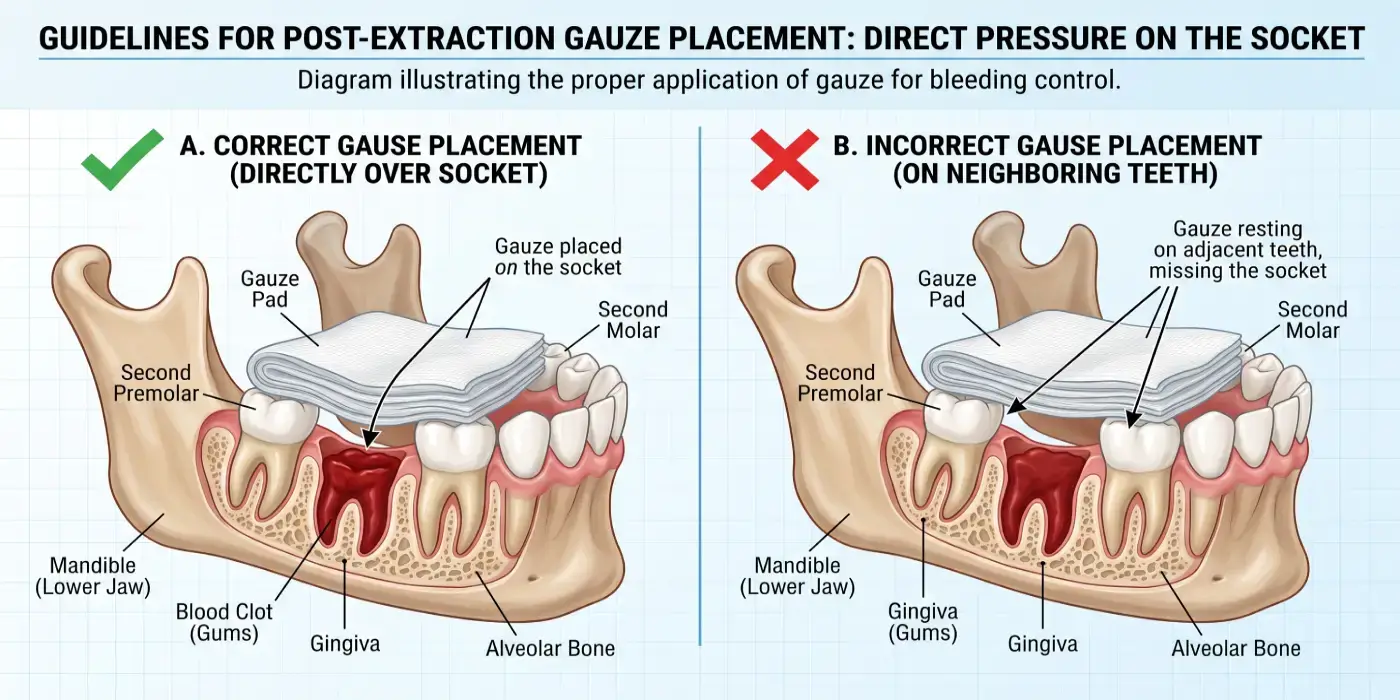
What not to do: don't keep rinsing to "see if it's stopped," don't drink through a straw, don't smoke, and don't keep swapping gauze every few minutes. Each of those disturbs the clot that's trying to form.
When to worry
When is bleeding after an extraction a problem?
| What you're seeing | What it usually means | What to do |
|---|---|---|
| Pink saliva, slowing down | Normal healing | Nothing, other than leaving the clot alone |
| Bleeding restarts after eating or exercise | The clot was disturbed but is still there | Gauze pressure for 30 to 45 minutes, sit up, rest |
| Bright red, soaking fresh gauze after two rounds of pressure | The clot isn't holding | Call the office; I'll likely want to see you and recheck the socket |
| Bleeding returns days later with swelling or a bad taste | Possible infection irritating the healing tissue | Call the office for a same-day visit |
| Large bruise on the cheek or neck | Blood spread under the skin, more common in older adults and on blood thinners | Usually harmless; call if it's growing or painful |
| Heavy bleeding with dizziness, fainting, or a racing heart | Significant blood loss | Go to an emergency room or call 911 |
Bleeding that won't stop is not the same problem as pain that gets worse. A dry socket usually doesn't bleed much at all; it looks empty and hurts. The Mayo Clinic's description is a good comparison if you're not sure which one you have.
Why it bleeds
Why does an extraction site keep bleeding?
When a patient calls me about bleeding that won't stop, it's almost always one of these:
- The gauze isn't on the socket. It's sitting on the teeth beside it, so the bite never presses on the wound. This is the most common cause by far.
- The clot keeps getting disturbed. Rinsing, spitting, sucking on a straw, poking with the tongue, or checking the gauze every five minutes.
- Activity too soon. A workout, heavy lifting, or a lot of bending raises blood pressure in the head and restarts the flow.
- Heat and alcohol. Hot drinks, a hot shower right away, or a glass of wine the first night all open up small blood vessels.
- Blood-thinning medications. Warfarin, apixaban, rivaroxaban, clopidogrel, and daily aspirin all make bleeding last a little longer. Usually manageable; see the next section.
- Inflamed gum around the socket. Gum that was already infected or inflamed before the extraction bleeds more. That's one reason I'd rather treat gum disease first when the extraction can wait.
- High blood pressure. Uncontrolled blood pressure makes small vessels harder to seal.
- A small vessel in the bone or gum. Occasionally a little artery keeps going despite good pressure. That's a quick fix in the chair.
Bleeding that comes back several days later, after it had stopped, is a different situation. It usually means the tissue around the socket is irritated or infected, and it's worth having me look.
Blood thinners
Should I stop my blood thinner before a tooth extraction?
Usually not, and please don't stop it on your own. Blood thinners are prescribed because a clot in the wrong place can cause a stroke or a heart attack. A socket that oozes a bit longer is much easier to deal with.
The American Dental Association reviewed the evidence and concluded that for most patients, it isn't necessary to change anticoagulant or antiplatelet therapy before dental procedures, including for the newer drugs, where the evidence is more limited but bleeding rates were low whether the drug was continued or paused. That matches what I see in practice.
What I do for patients on blood thinners
- Ask for the full list. Prescription anticoagulants, antiplatelet drugs, daily aspirin, and supplements like fish oil and ginkgo all go on the list.
- Check warfarin numbers. If you take warfarin, I ask for a recent INR test, taken close to the extraction date.
- Talk to your physician when it matters. If you've had a recent stent, a recent clot, or take two blood thinners at once, I coordinate with the doctor who prescribes them. Any change to the medication is their decision, not mine and not yours alone.
- Plan the extraction to bleed less. Fewer teeth per visit, the gentlest technique the tooth allows, stitches to close the socket, and a clotting plug in the socket when it's useful.
- Schedule it early. A morning appointment early in the week leaves the whole day, and the office open, if anything needs attention.
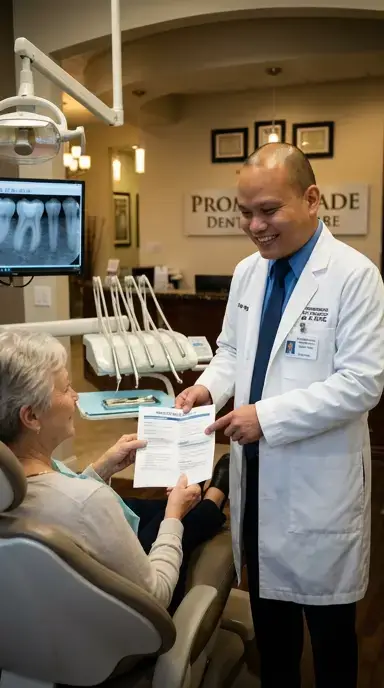
What I check
What happens if you come in for bleeding?
A bleeding visit is short and, for most people, a relief. Here's what I do:
- Find where it's coming from. I clear away the loose clot and look. Bleeding from the gum edge, from inside the bone, and from a small vessel each get handled a little differently.
- Numb the area. So I can work on the socket without it hurting.
- Close it. Usually a dissolving stitch or two across the socket, sometimes with a small absorbable clotting sponge placed inside.
- Firm pressure in the chair. I watch it for a while before you leave, so you're not going home to the same problem.
- Look for a reason. I review your medications and blood pressure. If the bleeding seems out of proportion, I may recommend blood work through your physician.
If the bleeding started days later with swelling, I check for infection and treat that. The best bleeding visit is the one that never happens, so most of my bleeding control is planned before the tooth comes out: the medication review, the technique, and the stitches.
At night
What if it starts bleeding at night?
First, don't panic at the pillowcase. A few spots of pink on the pillow the first night are normal. Drool carries a small amount of blood a long way.
Before bed on the first night, put an old towel over your pillow and prop your head up with an extra pillow. Don't sleep with gauze in your mouth; it's a choking risk. If you wake up and it's actively bleeding, sit up, do a 30 to 45 minute round of gauze or tea-bag pressure, and go back to bed when it settles.
If you've done two rounds and it's still flowing bright red, call the office line at (951) 412-0127 and follow the instructions there. If you're bleeding heavily and feel lightheaded, go to the nearest emergency room. For people in Murrieta, that's a short drive either way, and an ER can control bleeding even if it can't do dental work.

Eating can restart bleeding too. The what to eat after a tooth extraction page lists the foods and drinks that are gentlest on a new clot.
Patient reviews
What patients say about getting seen quickly
Real Google reviews from Promenade Dental Care patients, quoted as written.
“I saw the Dr. this morning for a dental emergency. He was the only one willing to see me on a Sunday out of the dozen that I called. He was very polite and gentle, he even took care of my oral surgeon referral. I’m still pretty shocked that he called me back and saw me on a Sunday morning. I’m not even a patient of his, this just shows how much he cares for his community. Thank you.”
Jessica V. · Google review
“I had a dental emergency and the dentist called me immediately and was able to get me in within an hour of speaking to him. The front desk was extremely welcoming and kind. They went over options with me and without having dental insurance they were very affordable. Would recommend to everyone!”
Brittani M. · Google review
“Very knowledgable and good prices. Does only what is necessary. Does not just look for stuff to charge for. Got an appointment quickly when I thought it was an emergency. My favorite dentist ever!!”
Sheila O. · Google review
“I became a patient in July of last year and needed some emergency dental work. I was able to get in the same day and have a crown and root canal done with zero pain! I recently had another toothache and was again provided a prompt same day appointment. Hands down the best dental experience I’ve had — zero pain, zero wait time. Pricing is always up front and affordable.”
Alicia Alvarado · Google review
FAQ
Bleeding after an extraction: questions patients ask
How long does bleeding last after a tooth extraction?
Active bleeding usually slows within the first hour with gauze pressure. Light oozing that turns saliva pink can continue for up to 24 hours, and a faint tinge can show up for a day or two after eating or brushing nearby. It should be getting lighter each time you check, not heavier.
Is it normal to bleed 2 days after a tooth extraction?
A little pink in your saliva after eating or brushing on day two is normal. Steady bleeding that returns every time you stop biting on gauze isn't, and it's worth a call. Bleeding that starts again after several quiet days, especially with swelling, should be checked.
Does a tea bag really help stop bleeding?
A plain black tea bag often helps when gauze alone hasn't. Wet it, squeeze out the extra water, place it over the socket, and bite firmly for 30 minutes. Black tea contains tannins that help blood clot. Herbal and decaf herbal teas don't work the same way.
Should I sleep with gauze in my mouth?
No. Gauze in your mouth while you sleep is a choking risk. Do a final round of pressure before bed, then sleep with your head propped up on an extra pillow and a towel over the pillowcase.
Can I take ibuprofen if I'm bleeding after an extraction?
For most healthy adults, ibuprofen at normal doses is fine and is one of the best pain relievers after an extraction. If you're on a blood thinner, have kidney problems, or have had stomach bleeding, check with me or your physician first; acetaminophen may be the better choice.
Can I rinse my mouth if it's bleeding?
Not on the first day. Rinsing washes away the clot that's trying to form. After 24 hours, gentle warm salt-water rinses are fine: tilt your head side to side and let the water fall out of your mouth instead of spitting.
Why did my extraction site start bleeding again after it had stopped?
Usually because the clot was disturbed by eating something firm or hot, exercising, or rinsing too hard. Gauze pressure for 30 to 45 minutes normally stops it. If it restarts days later with swelling or a bad taste, it may be infection, and I'd like to see you.
Can I exercise after a tooth extraction?
Skip strenuous exercise for at least 24 to 48 hours after a simple extraction and a few days after a surgical one. Heavy exertion raises your blood pressure and can restart bleeding. A gentle walk is fine after the first day.
Do I need stitches if I'm on a blood thinner?
Often, yes. Stitches pull the gum edges together over the socket and help the clot stay put, which is useful when bleeding is likely to run a little longer. I decide at the extraction, and I may also place a dissolving clotting sponge in the socket.
When should I go to the emergency room for bleeding after an extraction?
Go to an emergency room if you're bleeding heavily and feel dizzy, faint, short of breath, or notice a racing heartbeat, or if bleeding is filling your mouth faster than you can manage it. For bleeding that simply won't settle with pressure, call the office first.
Is bruising on my face normal after a tooth extraction?
It can be, especially after a surgical extraction, in older adults, and in people on blood thinners. The bruise may spread down the jaw or neck and change color over a week or two. Call if it keeps growing, feels hard and painful, or comes with fever.
Related care
More on extraction and recovery
Tooth extraction
When a tooth really has to come out, what the visit involves, and how I plan around blood thinners.
What to eat after an extraction
A day-by-day food plan that protects the clot.
Who wrote this
Written and reviewed by Dr. Bao Nguyen, DDS

I graduated from the UCLA School of Dentistry, served ten years in the U.S. Navy Dental Corps, and completed an Advanced Education in General Dentistry residency at Naval Hospital Camp Pendleton. I've been doing extractions for 26 years and opened Promenade Dental Care in Murrieta in 2010.
Plenty of patients who need a tooth out also take a blood thinner. Planning those extractions so the socket closes well is routine here. I'm a member of the American Dental Association, the California Dental Association, and the Tri-County Dental Society.
Bleeding that won't settle? Call now.
If you had your extraction with us, call and we'll get you in. If it was done somewhere else, you're welcome too. Heavy bleeding with dizziness or fainting is an emergency room visit.
Promenade Dental Care · 26957 Date Street, Suite B4, Murrieta, CA 92563