
Diet and Your Teeth • Murrieta, CA
The 10 Worst Foods and Drinks for Your Teeth
What a dentist actually sees from soda, sour candy, lemon water, and a Temecula wine weekend
I can usually tell what a patient drinks before they tell me. Soda leaves one pattern, sports drinks another, and the all-day iced coffee habit leaves a third. Here are the ten foods and drinks that do the most damage in my chair on Date Street, why each one hurts, and the small changes that protect your teeth without making you give everything up.
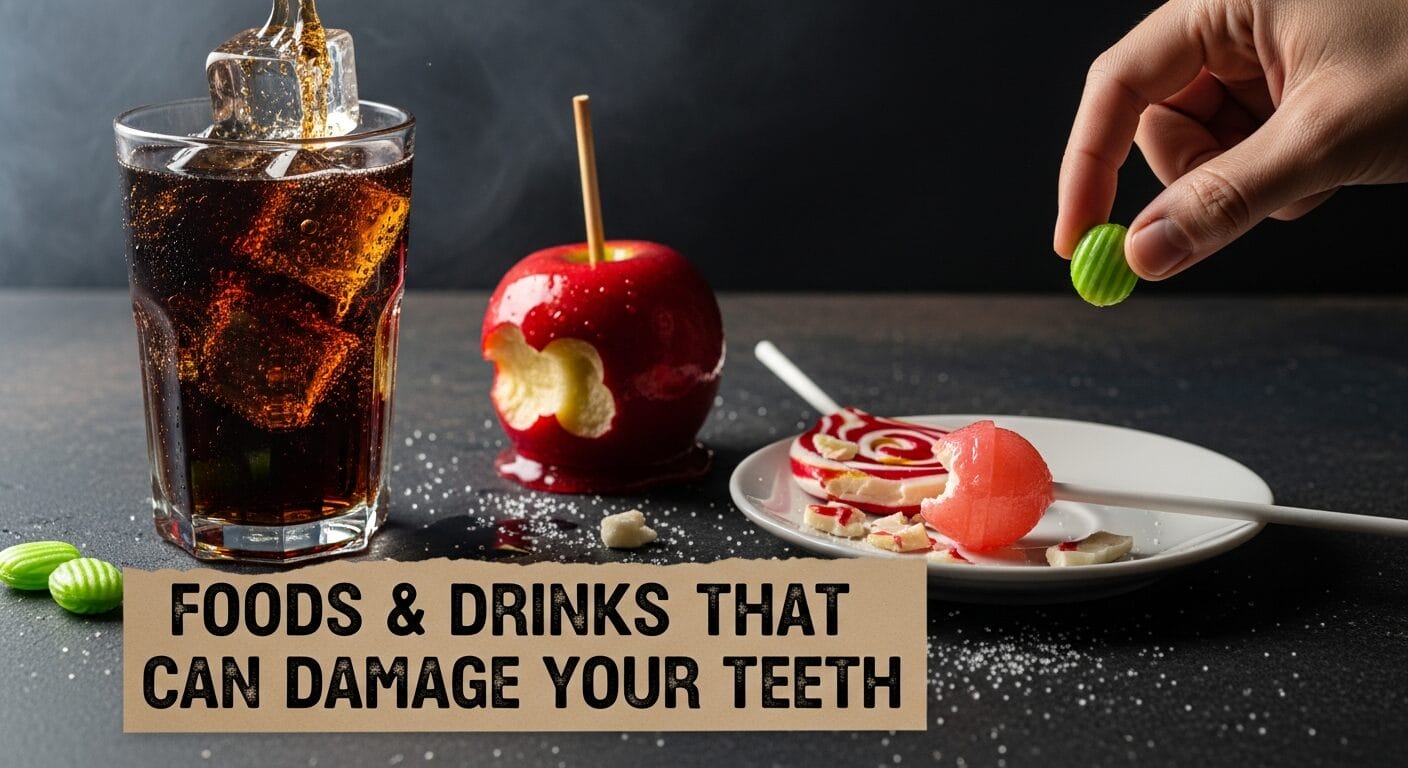
Two Kinds of Damage
How Foods and Drinks Actually Hurt Your Teeth
Patients tend to lump everything into "sugar is bad." That's half the story. Food damages teeth in two different ways, and the worst offenders on this list usually do both.
The first is decay. Bacteria in plaque feed on sugars and starches and give off acid as a by-product. According to the National Institute of Dental and Craniofacial Research, that acid pulls minerals out of enamel, first as a chalky white spot and eventually as a cavity if the mineral loss outpaces repair. The white-spot stage can still be reversed with fluoride and saliva. The hole can't.
The second is erosion. Here no bacteria are needed. The acid is already in the food or drink, and it softens the enamel surface directly. Enamel starts to dissolve once the mouth drops below roughly pH 5.5, and many sodas sit near pH 2.5. Erosion is the reason diet soda isn't a free pass.
The damage adds up quietly. Early erosion rarely hurts, so most people first notice it as sensitivity to cold, edges that look see-through, or a filling that seems to stand taller than the tooth around it. If you want the other side of this, the habits and treatments that keep enamel strong, I cover that on my page about how to strengthen tooth enamel. This page is about the foods themselves.
The List
The 10 Worst Foods and Drinks for Your Teeth
This order reflects what I see most often in Murrieta patients, not a lab ranking. A food lower on the list can still be the main problem for you if you have it every day.
1. Soda and other carbonated soft drinks
Regular soda hits teeth both ways at once: the sugar feeds decay and the acid erodes enamel. Diet soda drops the sugar but keeps most of the acid. The American Dental Association calls soft drinks the major erosion culprit and points out that carbonation alone raises a drink's acidity, sugar-free or not.
A meta-analysis in PLoS One pooling nine studies found soft drinks carried about 2.4 times the odds of dental erosion. In my chair, the soda pattern is decay along the gumline and between the teeth, plus cupped-out spots on the tips of the back teeth.
2. Candy, especially sour and sticky kinds
Chocolate that melts and clears quickly is one of the milder sweets. The ones I worry about are the candies that stay in the mouth: caramels, taffy, gummies, hard candy you suck on for ten minutes, and sour candy. The ADA notes that some sour candies come close to the acidity of battery acid. Sour gummies are the worst of both, sticky and acidic at the same time.
3. Citrus fruit, juice, and lemon water
Oranges and grapefruit are good food. The problem is how people use them. A glass of orange juice sipped over an hour, or lemon water carried around all morning because it's "healthy," keeps the mouth acidic for the whole time. Patients who suck on lemon wedges show a very specific pattern: smooth, thinned enamel on the outside surfaces of the front teeth.
Eat citrus with a meal, drink juice rather than nursing it, and if you like lemon water, have it in one sitting and follow it with plain water.

4. Coffee, especially sweetened and sipped
Black coffee is mildly acidic and stains, but on its own it isn't a major decay risk. What turns coffee into a problem is sugar, flavored syrup, or sweet creamer, spread across a 20-ounce cup that lasts until lunch. That's a small sugar dose every few minutes for hours, which is exactly what decay bacteria need.
Coffee stain on the enamel surface usually comes off at a cleaning. For heavy stain I use air polishing during the cleaning visit, which removes it without scraping.

5. Wine
We're a short drive from Temecula wine country, so I see plenty of wine teeth. White wine tends to be more acidic and softens enamel. Red wine is the bigger stainer. A tasting day is the hardest version: small sips of acidic wine over several hours with not much food. Eat something with it, drink water between pours, and don't brush for an hour afterward.
6. Sports and energy drinks
Summer in Southwest Riverside County means kids at soccer and adults on the trail drinking sports drinks by the bottle. These are sugar plus citric acid, sipped slowly, often in a dry mouth after exercise. Energy drinks are usually worse. For most kids and most workouts, water does the job. Save sports drinks for long, hot, heavy-sweat sessions.
7. Dried fruit
Raisins, dried mango, and fruit leather look like health food and act like candy on your teeth. Drying concentrates the sugar, and the texture packs it into the grooves of your molars. The ADA points out that because dried fruit clings to teeth, the acid from decay bacteria keeps working long after you stop chewing. Fresh fruit is a far better choice.
8. White bread, crackers, and chips
Starch breaks down into sugar starting in your mouth. Soft white bread turns into a paste that fills the grooves of the back teeth, and chips and crackers do the same. When I see decay deep in the chewing surfaces of an adult who swears they don't eat sweets, crackers at the desk are often the answer.
9. Vinegar, pickles, and apple cider vinegar shots
Vinegar is straight acid. Pickles and vinegar dressings with a meal aren't a big deal. The daily apple cider vinegar shot is. If you take it for health reasons, dilute it well, drink it quickly, rinse with water after, and wait an hour before brushing.
10. Ice
Ice has no sugar and no acid. It's on the list because chewing it cracks teeth. Enamel handles steady pressure well, but a hard, cold, brittle cube hit repeatedly is how I end up with cracked molars and chipped fillings. If you crave ice, let it melt or switch to crushed. If a tooth has already chipped, my page on a chipped front tooth walks through the repair options.
What Matters Most
How Often You Eat Matters More Than What You Eat
If you take one thing from this page, make it this. A can of soda finished in ten minutes with lunch does far less damage than the same can sipped over two hours. Every sip restarts the acid clock. Saliva needs time between exposures to neutralize acid and put minerals back into enamel, and constant sipping or snacking never gives it that time.
The ADA's diet guidance makes the same point: foods eaten as part of a meal cause less harm than a string of snacks, because a meal brings more saliva with it.
Have it with a meal
Sweets and acidic drinks do the least damage when they come with food.
Finish it, don't nurse it
One short exposure beats a long, slow one every time.
Rinse with water after
A mouthful of water, milk, or a bite of cheese helps neutralize the acid.
Wait an hour to brush
Brushing right after acid scrubs softened enamel away. Give saliva an hour.
A straw helps a little with soda and iced drinks because it moves the liquid past the front teeth. It doesn't help much if you hold the drink in your mouth or swish it.
Better Choices
What I Suggest Instead
I don't ask patients to give up coffee or never eat candy again. Nobody follows that advice. These swaps are the ones people actually keep.
| Instead of | Try | Why it helps |
|---|---|---|
| Soda sipped all afternoon | One can with lunch, then water | One short acid exposure instead of dozens |
| Sweetened coffee to go | Less syrup, and finish it before work starts | Cuts hours of steady sugar exposure |
| Sour gummies or fruit snacks | Plain chocolate after a meal | Melts and clears the teeth faster |
| Sports drink at every workout | Water, with electrolytes only for long, hot sessions | No sugar or citric acid |
| Crackers or chips as a snack | Cheese, nuts, or raw vegetables | Little fermentable starch; cheese helps neutralize acid |
| Lemon water all morning | Lemon water in one sitting, then plain water | Shortens the acid window |
Sugar-free gum after a meal or a sweet drink also helps. Chewing gets saliva flowing, and saliva is your best built-in defense. The ADA recommends gum that carries its Seal of Acceptance.
Warning Signs
When Your Diet Is Already Showing on Your Teeth
These are the signs I look for, and the ones worth booking an exam for rather than waiting until your next cleaning:
Sensitivity has other causes too, including gum recession and grinding. My page on why teeth get sensitive sorts through them. If what you have is a real ache rather than a quick zing, my guide to why your teeth hurt explains what each kind of pain means. If there's already a cavity, I'll show it to you on the X-ray and give you a written quote for a tooth-colored filling before anything is done.
Who Wrote This
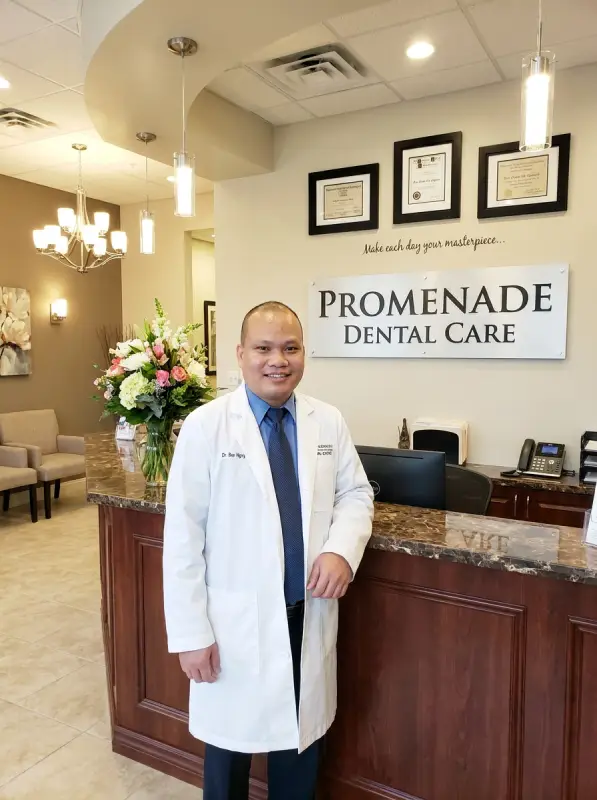
Dr. Bao Nguyen, DDS
I earned my dental degree at the UCLA School of Dentistry and spent ten years as a U.S. Navy dentist, including an Advanced Education in General Dentistry residency at Naval Hospital Camp Pendleton. Military life taught me how much schedule and diet drive decay. Long shifts fueled by energy drinks and vending-machine snacks show up on the X-ray, and changing the habit usually does more than any filling.
I've practiced on Date Street in Murrieta since 2010 and see families from Temecula, Menifee, Wildomar, and Lake Elsinore. New patients start with a $20 exam and digital X-rays. We accept PPO plans, are in-network with Delta Dental PPO, Cigna, MetLife, Guardian, Aetna, and United Concordia, and offer CareCredit financing. You get a written quote before any treatment.
From Our Patients
What Murrieta Patients Say
Had a cavity done in less than 15 minutes... amazing! Very polite staff, clean office. Would recommend.
— Brenda Sanders · Google review
Dr Nguyen took me in immediately. Took X-rays and replaced filling. No wait at all.
— Renee Solorzano · Google review
Very professional and did not try to talk me into extra cost procedures I don't need like my previous dentist always tried to do with me.
— Gaspar Ronda · Google review
Related Pages
More on Protecting Your Teeth
Teeth Cleaning
What a $95 ultrasonic cleaning takes off, including the surface stain coffee, tea, and wine leave behind.
How to Strengthen Tooth Enamel
Fluoride, brushing timing, reflux, grinding, and the foods that help rather than hurt.
Why Are My Teeth Sensitive?
The nine common causes of a cold or sweet zing, and how each one is treated.
Tooth-Colored Fillings
What happens when a spot has already turned into a cavity, and what it costs.
Dental Sealants for Kids
Closing off the molar grooves where most children's cavities start.
$20 Exam and Digital X-Rays
The visit where I check for erosion, early decay, and cracks.
Questions Patients Ask
Foods, Drinks, and Your Teeth: Frequently Asked Questions
Is diet soda safe for teeth since it has no sugar?
Not really. Diet soda removes the sugar that feeds decay, but it keeps most of the acid, and carbonation itself makes a drink more acidic. That acid softens enamel directly. Diet soda is less harmful than regular soda for cavities, but it still causes erosion, especially when it is sipped over a long time.
Is sparkling water bad for your teeth?
Plain, unflavored sparkling water is only mildly acidic and is a far better choice than soda. Citrus-flavored sparkling waters are more acidic. If you drink a lot of it, Dr. Nguyen suggests plain versions, drinking them with meals, and still making regular water your main drink.
Does drinking through a straw protect your teeth?
A little. A straw moves soda, iced coffee, or juice past the front teeth, so they get less contact with sugar and acid. It does not help if you hold the drink in your mouth or swish it, and it does nothing for how long you spend sipping, which matters more.
Does drinking lemon water every morning damage teeth?
It can, if you sip it slowly for an hour or more every day. Lemon is strongly acidic. Drink it in one sitting, follow it with plain water, and wait about an hour before brushing so you are not scrubbing softened enamel.
Are gummy vitamins bad for your teeth?
They can be. Gummy vitamins are sticky and usually contain sugar, so they cling to the grooves of the back teeth like candy. Take them with a meal and brush afterward, or ask your doctor whether a tablet or chewable form without sugar would work.
Does apple cider vinegar damage teeth?
Yes. Vinegar is acid, and a daily apple cider vinegar shot erodes enamel over time. If you take it, dilute it well, drink it quickly, rinse with water afterward, and wait an hour before brushing.
Is it better to eat sweets with a meal or on their own?
With a meal. A meal produces more saliva, which helps neutralize acid and clear sugar from the teeth. The same dessert spread out as small snacks through the afternoon causes far more acid attacks.
Does chewing sugar-free gum after eating help?
Yes. Chewing sugar-free gum after a meal or a sweet drink gets saliva flowing, and saliva neutralizes acid and helps put minerals back into enamel. The American Dental Association recommends gum that carries its Seal of Acceptance.
Is chewing ice really bad for your teeth?
Yes. Ice has no sugar or acid, but chewing hard, cold cubes can crack enamel, chip fillings, and cause cracked molars. Let ice melt, switch to softer crushed ice, and if you notice a new sharp edge or pain when biting, have it checked.
Find Out What Your Diet Is Doing to Your Teeth
A $20 exam with digital X-rays shows early erosion, white spots, and cavities while they are still small, with a written quote before anything is done.
(951) 412-0127 Contact Us Online