
Implant-Supported Dentures in Murrieta, CA
Implant-Supported Dentures and All-on-4 in Murrieta
A denture that stays put, and a straight answer about which kind you actually need.
Most people who ask me about implants under a denture are really asking one thing: how do I stop this lower denture from moving? There are two very different answers. One is a snap-on denture that clips onto implants. The other is a fixed arch that never comes out. I'm Dr. Bao Nguyen, and I'll show you both against your own scan, tell you which parts I do and which part goes to a periodontist, and put the whole cost in writing before you commit to anything.
Start With the Problem
Why a Lower Denture Won't Stay Down, and What Implants Change
The complaint I hear most at the chair isn't about the upper denture. It's the bottom one. An upper has your whole palate to seal against. A lower sits on a narrow horseshoe of gum with your tongue and cheek muscles pushing on it every time you talk or swallow. Add a few years of bone shrinkage and you get the lower that floats, traps seeds underneath, and needs a bead of adhesive just to get through lunch.
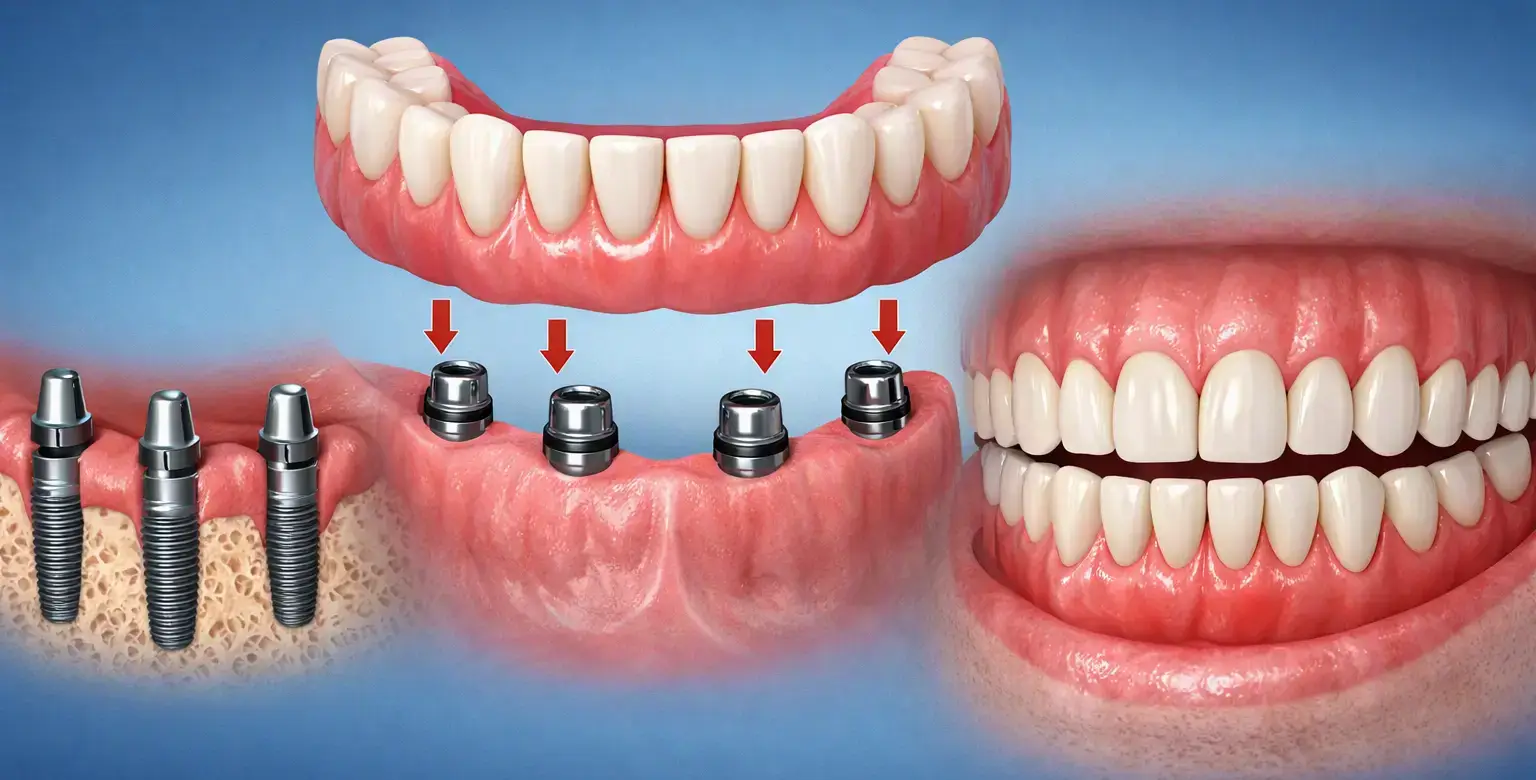
Adhesive can't fix that. What fixes it is giving the denture something solid to hold onto, and that's what dental implants are: titanium posts set in the jawbone that the denture either clips onto or screws onto. The Cleveland Clinic's guide to implant-supported dentures describes both the removable and the fixed versions. Which one makes sense for you comes down to your bone, your budget, your hands, and how you feel about taking your teeth out at night.
Implants also slow down the thing that eventually loosens every conventional denture. Bone that isn't doing any work resorbs. Bone around an implant gets loaded every time you chew, so the ridge holds its shape better where the implants are.
If you're still deciding between a regular denture and implants at all, start with my custom dentures page, which lays out full, partial, and snap-on sets side by side. This page picks up at the next question. Once implants are on the table: which kind, how many, who places them, and what it really costs.
- Options covered
- Snap-on (implant-retained) overdentures and fixed full-arch bridges, including All-on-4 and All-on-X
- Who places the implants
- Two-implant lower snap-ons are placed in my office. Fixed full-arch implant surgery is done by a periodontist I refer to, while I plan the case and build the teeth.
- First visit
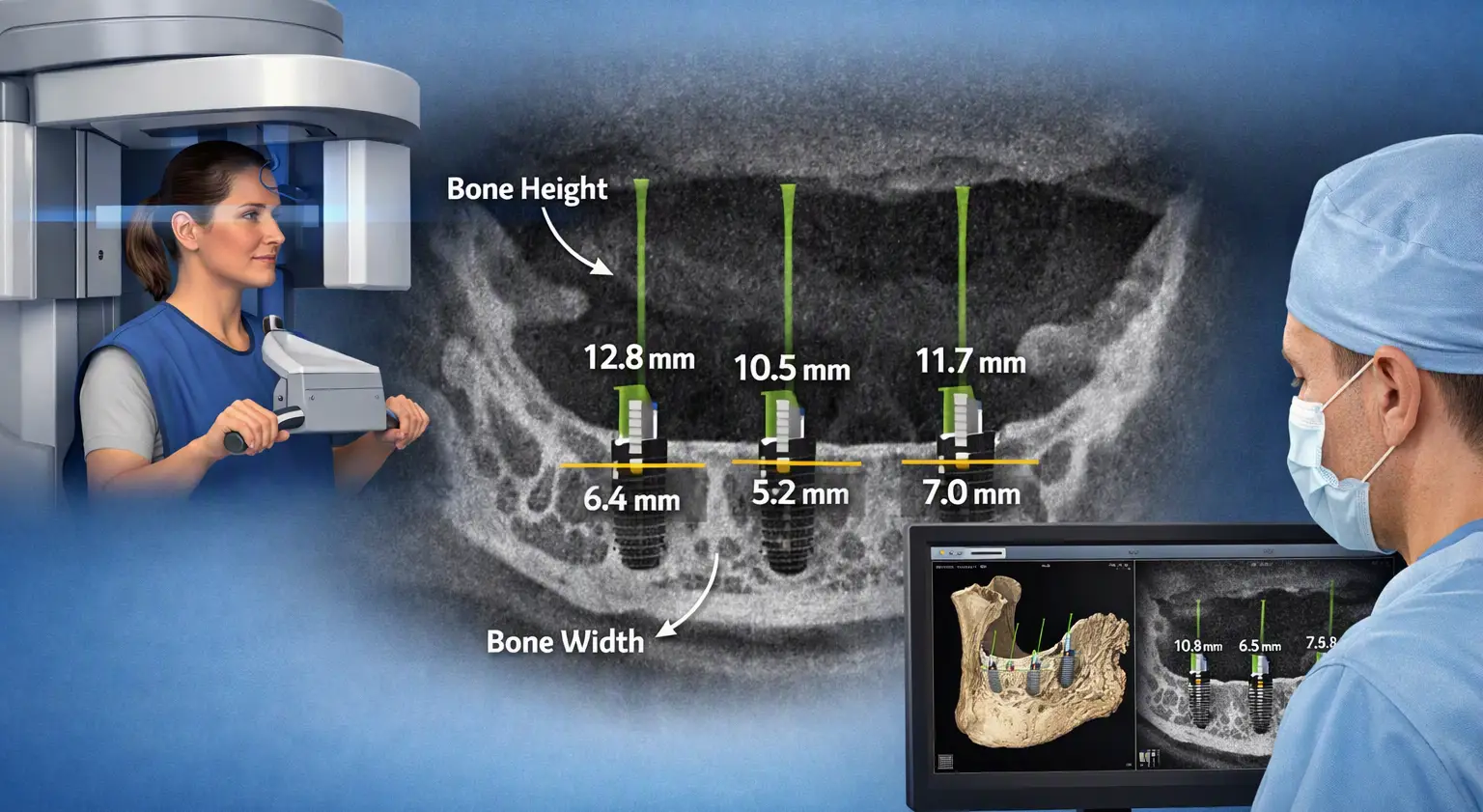
- $20 exam with digital X-rays; a cone-beam CT scan when implants are being planned
- Typical timeline
- Snap-on: about 3–6 months from implant placement to the final attachments. Fixed: a temporary arch is often placed the day of surgery, with the final arch 4–6 months later.
- Office
- 26957 Date St, Suite B4, Murrieta, CA 92563 (Aldi plaza at Winchester Rd & Murrieta Hot Springs)
- Payment
- All PPO dental plans accepted; CareCredit for qualified patients; a written quote before anything starts
Two Different Things
Snap-On Overdenture or Fixed Full Arch: They Aren't the Same Product
People use "implant dentures," "permanent dentures," and "All-on-4" as if they mean the same thing. They don't, and the difference affects everything from how big the surgery is to how you clean your teeth at night.
The snap-on (implant-retained) overdenture
This is still a denture, acrylic base and all. Underneath it are small attachments that click onto matching caps on the implants. On a lower jaw that usually means two implants toward the front. The denture stops sliding, you stop buying adhesive, and it still comes out so you can clean it and give your gums a rest.
It's also the option with the strongest research behind it for a lower jaw with no teeth. In 2002 a panel of prosthodontists and researchers meeting at McGill University concluded that a two-implant overdenture should be the first-choice treatment for a toothless lower jaw, ahead of a conventional denture (review in the Journal of Medicine and Life). A follow-up statement from the British Society for the Study of Prosthetic Dentistry, known as the York Consensus, reached the same conclusion in 2009.

The fixed full arch (All-on-4 and All-on-X)
A fixed arch is a one-piece bridge of teeth screwed onto four or more implants. It doesn't come out at home; only a dentist can take it off. All-on-4 is the name of a technique that uses four implants per arch, with the back two tilted to reach better bone and stay clear of the sinus in the upper jaw or the nerve in the lower. All-on-X is the catch-all people use when the count is five, six, or more. A fixed arch chews closer to natural teeth than anything removable, and there's no plate over the roof of your mouth. The trade-offs are a bigger surgery, a bigger fee, and cleaning under a bridge you can't lift out.
| Factor | Snap-on overdenture | Fixed full arch (All-on-4 / All-on-X) |
|---|---|---|
| How it stays in | Clips onto 2 implants on a lower, usually 4 on an upper | Screwed to 4–6 implants |
| Comes out at home | Yes, at night and for cleaning | No. The dentist removes it when needed. |
| Who places the implants | Two-implant lower: me, here on Date Street | A periodontist; I plan the case and build the teeth |
| Surgery | Minor. Two implants under local anesthetic. | Larger. Often extractions plus 4–6 implants, usually with sedation. |
| Daily cleaning | Take it out, brush the denture and the implant caps | Water flosser and small brushes under the bridge |
| Routine upkeep | Attachment inserts swapped as they wear; relines as the gum changes | Professional cleanings; the arch comes off now and then for a deeper check |
| Relative cost | Middle. One office, one fee. | Highest, billed by two offices |
| Usually the right fit for | A loose lower denture, a tighter budget, anyone who wants to be able to take it out | People who want teeth that never come out and have the bone for it (or can be grafted) |
If your main problem is a loose lower denture, a two-implant snap-on solves most of it for a fraction of a fixed-arch fee. I say that to a lot of people who came in expecting to be sold All-on-4, and most of them are relieved to hear it.
A Straight Answer
Which Parts I Do, and the Part a Periodontist Does
I'd rather tell you this now than have you find out halfway through: I don't place full-arch implants. When a plan calls for All-on-4 or All-on-X, the surgery goes to a periodontist, a dental specialist trained in gum surgery and in placing implants. The ADA's patient site describes what periodontists are trained to do, and the American Academy of Periodontology has more on the specialty. I place single implants and two-implant lower snap-ons here on Date Street.
Why refer at all? Full-arch surgery is its own skill set. It can mean removing the remaining teeth, reshaping the bone, setting four to six implants at precise angles, and fitting a temporary arch the same day. A periodontist who does that every week will do it better than a general dentist who does it a few times a year. I'd rather hand off the part where a specialist is better and keep the parts where I'm the right person.
What I handle
- The $20 exam, digital X-rays, and cone-beam scan review
- Deciding where your teeth need to sit for your face, lips, and bite, before anyone picks implant positions
- Two-implant lower snap-on placement, and converting or making the denture
- Designing and delivering the final fixed arch after the periodontist's surgery
- Bite adjustments, attachment changes, and long-term checkups
What the periodontist handles
- Extractions and bone shaping on full-arch cases
- Placing the four to six implants behind a fixed arch
- Grafting at the time of surgery when the bone calls for it
- Surgical follow-up while the implants heal
Upper snap-ons fall in between. An upper usually needs four implants because upper bone is softer and the denture is larger. Whether I place those or the periodontist does depends on where your bone is, and I'll tell you which at the planning visit, not after you've signed anything.
Either way, I'm the person you call, and your imaging goes with you so you're not paying for the same scan twice. I plan where the teeth go before anyone decides where the implants go. An implant in the wrong spot can't be moved later. A tooth setup can.
Candidacy
Who's a Good Candidate, Who Should Wait, and When I'd Skip Implants
Most people who've lost all the teeth on an arch, or are about to, can have some version of an implant denture. What decides it is bone and health, not age. The Cleveland Clinic makes the same point: you need enough jawbone to hold the implants, and bone grafting can often add what's missing.
Good signs
Reasons to wait
Active gum disease on teeth that are staying comes first; a full mouth deep cleaning settles it before any implant goes in. Poorly controlled diabetes slows healing and raises infection risk, so we work on that with your physician. Some bone medications, especially the IV kind used for cancer or severe osteoporosis, change the surgical risk enough that I talk to your doctor before planning anything. And in the upper back jaw, where the sinus often drops down after teeth are lost, a sinus lift may be needed first.
When a regular denture is the better call
If your upper denture already fits well, leave it alone. Plenty of my patients only need implants on the bottom. If the bone is very thin and you don't want grafting, or the budget isn't there right now, a well-made conventional denture is still the right answer, and it keeps the door open to adding implants later. If arthritis or a tremor would make cleaning under a fixed bridge a daily struggle, a snap-on you can take out and scrub at the sink is often easier to live with.
Visit by Visit
How Long It Takes From First Exam to Final Teeth
Here's how a two-implant lower snap-on usually runs in my office. A fixed arch follows a different schedule, covered below the steps.
1Exam and scan
A $20 exam with digital X-rays, then a cone-beam scan if implants look likely. You leave with a written plan and fee.
2Tooth setup first
I check whether your current denture has the right tooth position and bite to convert. If it doesn't, we set up new teeth and try them in before the implants are placed.
3Implant placement
Two implants under local anesthetic, placed through a printed guide planned from your scan, the same way I place every computer-guided implant. I relieve your denture over the sites and reline it with a soft material so you can keep wearing it.
4Healing
About three to four months while the bone fuses to the implants. Softer foods at first, then close to normal.
5Attachments go in
Caps go on the implants and the matching inserts are set into the denture. From that visit on, it snaps in.
6Checkups
A yearly check of the implants, the gum, and the fit, plus insert changes whenever the snap starts to feel weak.
A fixed arch runs differently. Extractions, implant placement, and a temporary fixed arch often happen on the same surgical day at the periodontist's office, so you don't leave without teeth. You eat soft food for the first couple of months while the implants integrate. The final arch, which I design and have made, goes in about four to six months later. If grafting or a sinus lift has to come first, add another three to four months to either path.
Money, Plainly
What Implant-Supported Dentures Cost, and Why a Full Arch Has Two Bills
I won't put a single number on this page for an implant denture, because the number depends on how many implants you need, whether teeth come out first, whether you need grafting, and which kind of prosthesis you choose. An ad that quotes "All-on-4 from" some figure is quoting the simplest possible case. What I will do is put every piece in writing before anything starts.
Exam with digital X-rays
$20
Includes a written plan and fee
Bone graft, socket preservation
$500
Per site, membrane included, only if needed
Snap-on overdenture
Written quote
Implants, attachments, and denture from one office
Fixed full arch
Two quotes, one plan
Periodontist's surgery fee plus my fee for the teeth
Snap-on: one office, one fee covering the implants, the caps and inserts, and either a new denture or the conversion of the one you already have. Fixed arch: the periodontist bills for the surgery and implants, and I bill for planning and the final arch. We go over both numbers together before surgery is scheduled, so a second bill never shows up as a surprise.
Insurance and financing. Most PPO plans treat the denture itself as major restorative work and cover a share of it after the deductible. Implant coverage varies a lot from plan to plan, and an implant case can use up an annual maximum quickly, so we sometimes split treatment across two plan years. We verify benefits for my part of the work; on a fixed arch, the periodontist's office verifies theirs. CareCredit, with up to six months at zero interest, is available for qualified patients. If you're paying cash, you get written cash pricing.
Read the fine print on full-arch ads. A low advertised price often leaves out the extractions, the grafting, the temporary arch, or the material of the final arch. Ask for a written list of what's included and what isn't before you compare offices.
Keeping It Working
Daily Care and the Upkeep Nobody Mentions at the Consultation
Snap-on overdenture
Take it out every night. Brush the denture and the attachment inserts with a soft denture brush and a non-abrasive cleanser, then brush the caps on the implants and your gums with a soft toothbrush. The nylon inserts wear a little every time you snap the denture in and out, so eventually it feels easier to pull out. That's your cue to have them changed. It's a short visit, and the snap comes right back.
Fixed full arch
Clean under the bridge every day. A water flosser along the gum line does most of the work, and small interdental brushes or threaded floss clean where each implant meets the arch. Brush the teeth twice a day like natural teeth. If you grind at night, a custom night guard protects the arch from chipping.
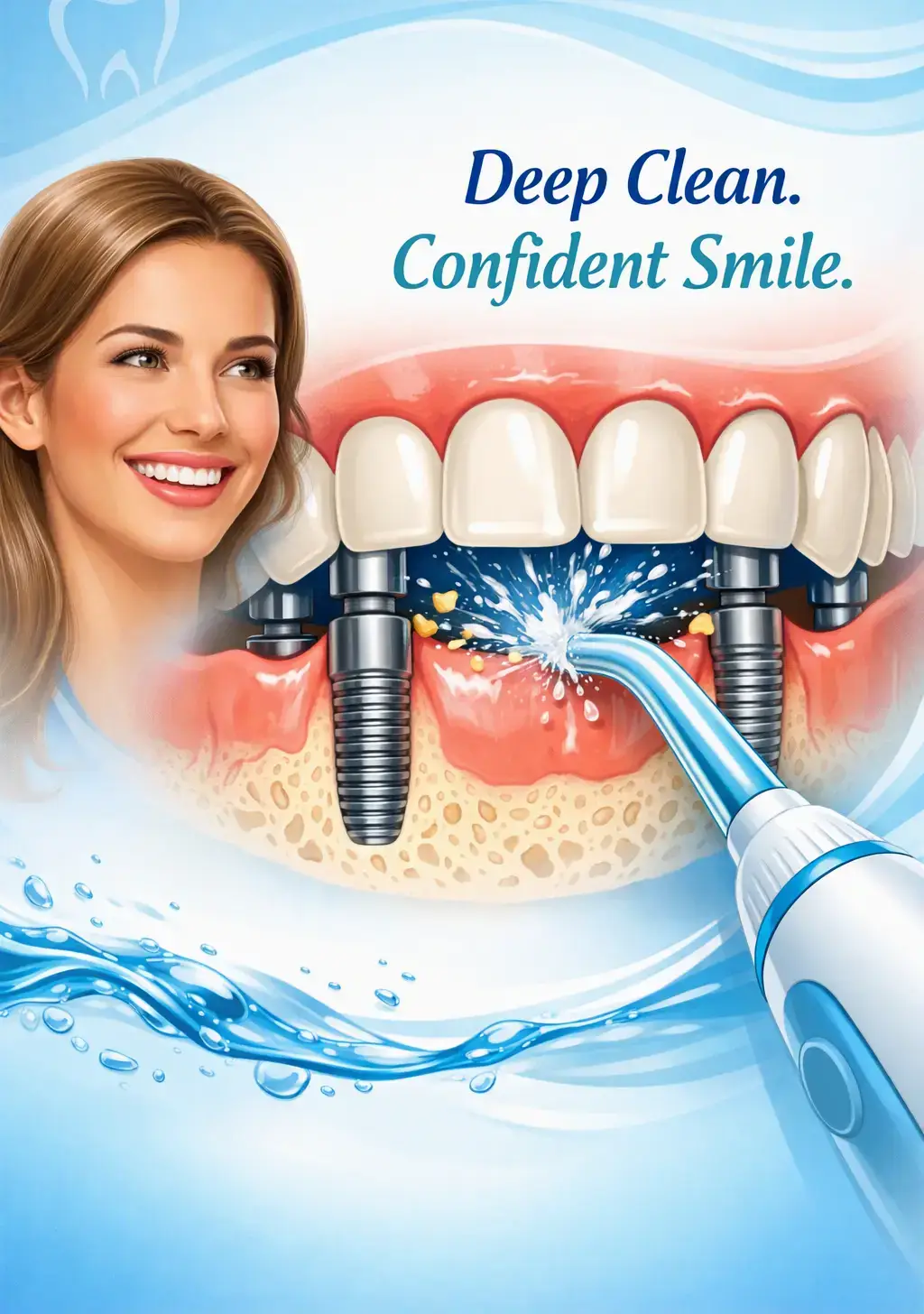
Implants don't get cavities, but the gum and bone around them can get infected, the same way gum disease works around natural teeth. In 2025 the American Academy of Periodontology and the Academy of Osseointegration published a joint consensus on preventing and managing peri-implant disease, and the practical message for patients is simple: clean daily and keep your maintenance visits. Call if you notice bleeding around an implant, a bad taste that won't rinse away, or a snap that suddenly feels loose.
Meet Your Murrieta Dentist
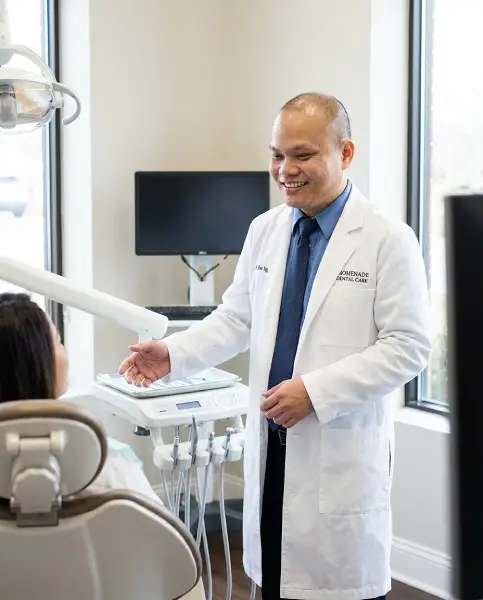
About Dr. Bao Nguyen, DDS
I trained at UCLA School of Dentistry and then served ten years in the U.S. Navy Dental Corps, including an Advanced Education in General Dentistry residency at Naval Hospital Camp Pendleton and deployments to Kuwait and Iraq. I've practiced in Murrieta since 2010, in the same Date Street office.
The Navy taught me to plan backward from the result. On a denture case that means deciding where the teeth belong for your face and your bite first, then working out where the support has to go. It's also why I'm comfortable saying what I don't do. I place single implants and two-implant snap-ons, I build the prosthetics, and I refer fixed full-arch implant surgery to a periodontist. I'd rather tell you that on the first visit than sell you something I shouldn't be the one doing.
If fear of the chair is what's kept you in a loose denture this long, tell us when you call. Sedation and a slower pace are available, and nobody here works on commission.
Related Care on Date Street
Where Implant Dentures Connect to the Rest of Your Plan
Custom Dentures
Full, partial, immediate, and snap-on dentures, with how a custom set is measured and fitted.
Dental Implants
Single implants and implant bridges when you're replacing a few teeth rather than a whole arch.
Bone Grafting
Socket preservation at extraction and ridge rebuilding when there isn't enough bone for implants.
Sinus Lift
Adds bone height in the upper back jaw so implants have something to anchor into.
Tooth Extraction
Removing failing teeth before a denture, with aftercare that protects the ridge.
Computer-Guided Implants
How I plan implant positions from a 3D scan and place them through a printed guide, starting from where the teeth need to sit.
From Our Google Reviews
What Patients Say About Straight Answers and Fair Prices
“The office treats you with respect and dignity. The dentist / Owner is informative and concerned with the patient and their needs. He tells the truth. No sells pitch just the right procedure advised with the patient as his prime concern. A rarity today, honesty and concern. Highly recommend.”
Larry H. — New patient, with spouse
“Dr. Nguyen does a great job. He is always on time and very honest. Never has you do unnecessary treatments just to make extra money. I love that he is a solo practitioner and runs his own shop. All my family comes to see him.”
Tom Haynes · Google Review
“Found Dr Bao years ago when I needed emergency care on a weekend. Started going to him while I still lived in the area. Moved a few years ago, but recently felt like I was being scammed by my new dentist (new insurance), drove over an hour to get a second opinion from Dr Bao. He is as straight forward, efficient, and affordable as ever. Work was still needed but not nearly to the extent and cost as was being told to me by the other dentist.”
P Hooper — Crown & restorative patient
“I am completely terrified of the dentist. I neglected getting anything done for years because of bad experiences and anxiety. The price was pretty much half of what comparable dentists wanted and they were really really nice to me. I can honestly say I have way less fear now.”
Jay D · Google Review
“Finding an excellent dentist is difficult! Dr. Bao offers the most affordable dental care in Murrieta. He is friendly and professional. I don’t have insurance and the pricing was explained up front — no surprises and no pressure to do more than I needed.”
David C. · Cash-pay patient, no insurance
Questions I Get About Implant Dentures
Implant-Supported Denture FAQs
Does Dr. Nguyen do All-on-4 implant surgery himself?
No. I refer the surgery for All-on-4 and other fixed full-arch cases to a periodontist, a specialist in gum surgery and implant placement. I do the exam, review the scan, and plan the tooth positions before surgery, and I design and deliver the final arch afterward. Two-implant lower snap-on dentures are different: I place those implants here in the Date Street office. Either way, you get one written plan with every fee on it before anything is scheduled.
How many implants does a snap-on denture need?
A lower snap-on usually needs two implants, placed toward the front of the jaw where the bone tends to hold up best. That's the setup the McGill consensus panel recommended as the first choice for a lower jaw with no teeth. An upper snap-on usually needs four, because upper bone is softer and the denture is larger. More implants add support, but past a certain point you're paying close to fixed-arch money for teeth you still take out at night.
Can my current denture be turned into a snap-on denture?
Sometimes. If your denture fits well, the teeth aren't worn flat, and the bite is right, I can place the implants and then set the attachments into the denture you already own, which saves the cost of a new set. If it's loose because the ridge has shrunk, or it's cracked or badly worn, converting it just locks a bad denture onto good implants, and I'll recommend a new one. You'll know which at the exam.
Can I wear my denture while the implants heal?
Usually, yes. After the implants go in, I hollow out the denture over them and line it with a soft material so it doesn't press on the healing sites. Most people are back in their denture the same day or within a day or two, eating softer food for the first few weeks. With a fixed full arch, the periodontist typically places a temporary fixed arch on the day of surgery instead.
What's the difference between All-on-4, All-on-6, and All-on-X?
All-on-4 is a specific technique that uses four implants per arch, with the back two angled to reach better bone. All-on-6 uses six. All-on-X is a catch-all for any fixed arch on four or more implants. The right count comes from your bone and your bite, not from the name on the ad. Six implants aren't automatically better than four; it depends on where the bone is and how the chewing load spreads across the arch.
How often do the snap-on attachments need to be replaced?
The small nylon inserts inside the denture wear a little every time you snap it in and out. Most people notice the denture getting easier to pull out somewhere between six months and a couple of years, depending on how often they remove it and how hard they chew. Changing the inserts is a short, inexpensive visit and brings the snap right back. The implants themselves aren't the part that wears out.
What happens if one of the implants under my denture fails?
It's uncommon, but it happens, most often early while the bone is still fusing or years later from infection around the implant. On a snap-on, the implant comes out, the site heals, and a new one can usually be placed while you keep wearing the denture with that attachment relieved. On a fixed arch, the periodontist and I check whether the arch can keep working on the remaining implants or needs a replacement implant first. Catching the early signs, like bleeding around an implant or a bad taste, makes most of these easier to fix.
Do I need a bone graft before getting implant-supported dentures?
Not always. Two lower implants often go in without grafting, because the front of the lower jaw usually keeps enough bone. Grafting comes up when teeth are being removed and the sockets need preserving, when the ridge has thinned after years without teeth, or in the upper back jaw where the sinus has dropped. At Promenade a socket-preservation bone graft is a flat $500 per site, membrane included, and the cone-beam scan shows whether you need one before you commit.
Am I too old for implant-supported dentures?
There's no age cutoff. Some of my patients in their eighties have healthier bone than people decades younger. What matters is your general health, how much bone you have, whether you can keep the implants clean, and whether surgery is safe with the medications you take. If your physician needs to weigh in first, we coordinate that before anything is scheduled.
Can I get implant dentures if I smoke or have diabetes?
Often, yes, with a caveat for each. Smoking cuts blood flow to healing bone and raises the chance an implant doesn't fuse, so I ask people to stop for the weeks around surgery at the very least. Well-controlled diabetes isn't a barrier. Poorly controlled diabetes slows healing and raises infection risk, so we'd work with your physician to get your numbers steady first. Neither one is an automatic no.
Does dental insurance pay for implant-supported dentures?
Partly, depending on your plan. Most PPO plans cover the denture itself as major restorative work. Implant coverage varies widely, and one implant case can use up an annual maximum fast, so we sometimes split treatment across two plan years. We verify your benefits for my part of the work before treatment starts. On a fixed arch, the periodontist's office verifies benefits for the surgery separately.
Should I sleep with my snap-on denture in?
No, take it out at night. With a snap-on, your gums still carry part of the chewing load, and they need a few hours without pressure. Nights out also give you time to clean the denture and the implant caps properly. A fixed arch is different: it stays in, because it isn't designed to come out at home.
How do I clean under a fixed All-on-4 arch?
Every day, with tools that reach underneath it. A water flosser aimed along the gum line under the bridge does most of the work, and small interdental brushes or threaded floss clean around each implant where the arch meets the gum. Brush the teeth twice a day like natural teeth. Expect professional cleanings more often than you had with your own teeth, and call right away about bleeding, swelling, or a bad taste around an implant.
Find Out Which Implant Denture Fits Your Mouth
A $20 exam with digital X-rays tells you whether a snap-on, a fixed arch, or a well-made conventional denture makes the most sense for you. It's in writing, and nobody will ask you to decide on the spot.
(951) 412-0127 Request an Appointment26957 Date St, Suite B4, Murrieta, CA 92563