
Guided Implant Surgery in Murrieta, CA
Computer-Guided Dental Implants in Murrieta
Your implant is placed on the computer first, then placed in your mouth exactly the way it was planned.
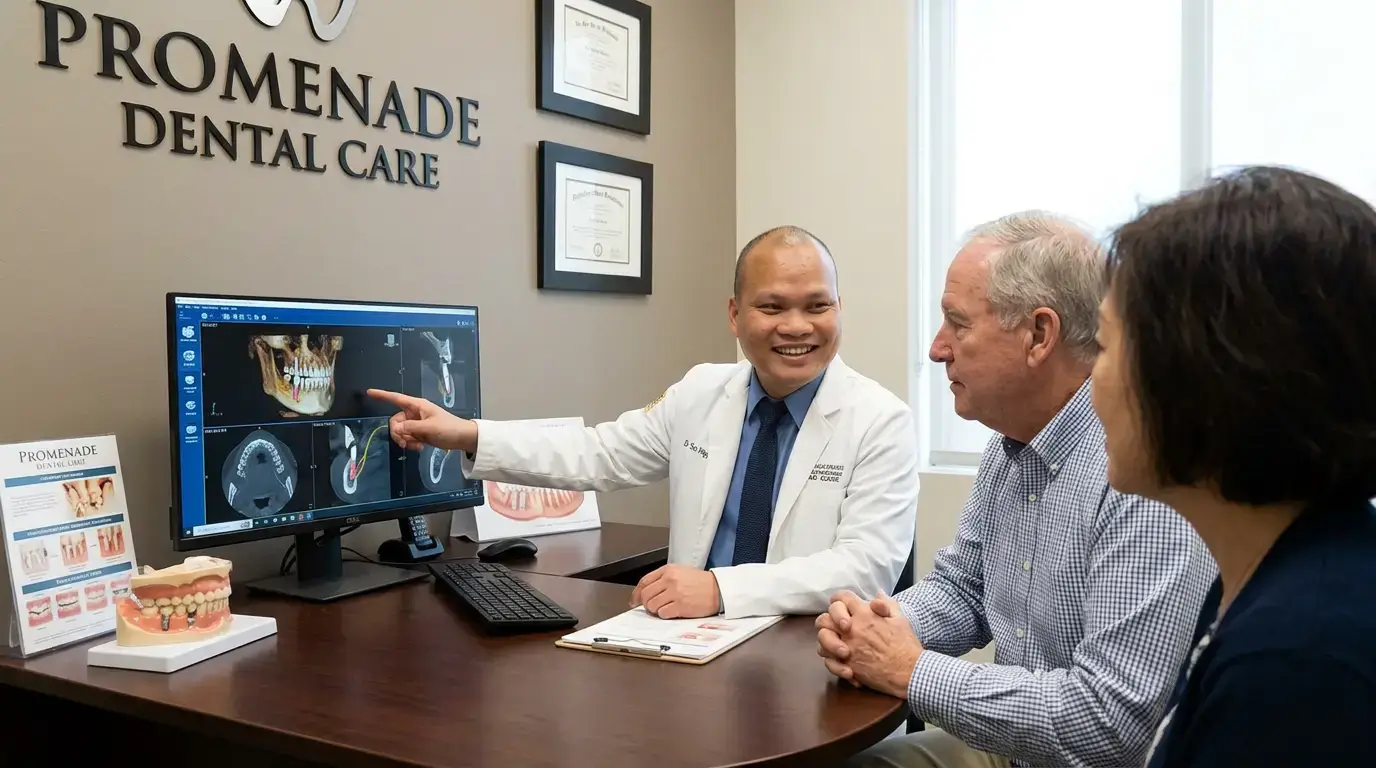
Most people who ask me about guided implants have one worry: what if the dentist hits something he shouldn't? That's a fair question. A regular X-ray is flat, and your jaw isn't. I plan every implant I place from a 3D cone-beam scan, then put it in through a printed guide that holds the drill on the path I chose. You get to see that plan before anyone picks up an instrument.
The Problem With Flat Pictures
Why a Regular X-Ray Isn't Enough to Place an Implant
A standard dental X-ray is a shadow. It tells me how tall the bone is, more or less. It doesn't tell me how wide it is, which way it leans, or whether the ridge under your missing tooth has thinned into a knife edge since the tooth came out. Those are exactly the things that decide where an implant can safely go.
In the lower jaw there's a nerve running through the bone that gives feeling to your lip and chin. In the upper back jaw, the floor of the sinus often sits just a few millimeters above where the implant wants to be. On a flat film, both can look farther away than they really are. That gap between what the film shows and what's actually there is where freehand implant problems come from.
A cone-beam CT scan closes that gap. It gives me your jaw in three dimensions, slice by slice, so I can measure the bone in every direction and see the nerve canal and sinus floor for what they are. Computer-guided implant surgery is simply the next step: once I know where the implant should go, a surgical guide makes sure that's where it ends up.
If you're still deciding whether an implant is the right fix at all, start with my dental implants in Murrieta overview. It covers who qualifies, the three ways implants replace teeth, and what drives the cost. This page is about one part of that: how I get the implant where it belongs.
The short version: the hard decisions about your implant get made at my desk, with the full 3D picture and plenty of time, not in the middle of surgery with a flat X-ray clipped to the light.
Step by Step
How a Guided Implant Actually Happens
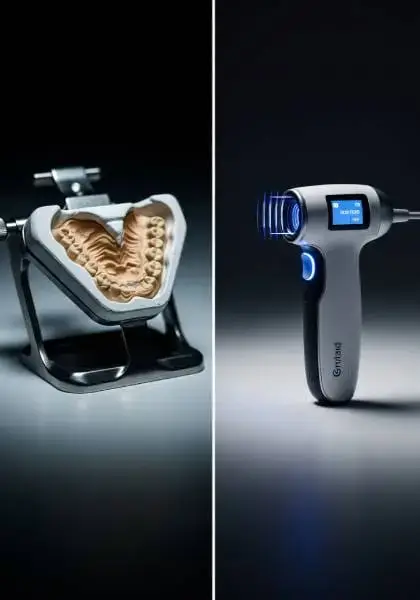
People expect "computer-guided" to mean a robot. It doesn't. I'm the one holding the drill. The computer is where the planning happens, and the guide is a precise piece of plastic that keeps my hands honest to that plan.
I plan from the tooth backward
The old way was to find the best bone and put the implant there, then figure out the crown later. That's how you end up with a crown that's angled strangely or a screw hole coming out the front of a tooth. I start with where your new tooth needs to sit to bite correctly and look natural, then find the implant position underneath it that the bone will support.
1Exam and scan
A $20 exam with digital X-rays tells us whether an implant is even the right idea. If it is, the cone-beam scan takes well under a minute in the chair.
2Digital plan
I load the scan into implant planning software and set the implant's position, angle, and depth, with clear distance from the nerve, the sinus, and the roots next door.
3You see the plan
Before we book surgery, I show you the plan on screen. You'll see your bone, the nerve, and the implant sitting where it's going to go. Ask anything.
4The guide is made
A surgical guide is printed from that plan. It fits over your teeth like a snug tray and has a sleeve that lines the drill up with the planned path.
5Placement
You're fully numb. The guide seats, and the post goes in through a small opening in the gum. Sedation is available if you want it.
6Healing and crown
The bone bonds to the implant over several months. Then I make the crown that goes on top, so the same dentist who planned it finishes it.
What the Research Says
How Accurate Is Computer-Guided Implant Surgery?
This is the part I want patients to understand clearly, because some offices oversell it. A guide doesn't make placement perfect. It makes it predictable. Researchers measure accuracy by comparing where the implant was planned with where it actually landed on a follow-up scan.
A large systematic review and meta-analysis of 67 clinical studies on computer-guided placement found these average differences between plan and result:
Those numbers are why I still plan a safety margin around every nerve and sinus. The tip of the implant is where the deviation is largest, so I never plan an implant to finish right up against something I need to protect. The margin is built into the plan, and the guide keeps the result inside it.
Compared with freehand placement, guided techniques come out ahead. A 2025 meta-analysis of implants placed at the time of extraction found computer-aided placement landed roughly 0.7 mm closer to the plan than freehand placement at both the top and the tip of the implant. Seven-tenths of a millimeter sounds small until you remember how close the nerve can be.
Side by Side
Guided vs. Freehand Implant Placement
Plenty of good implants have been placed freehand, and an experienced surgeon can do fine work that way. I placed implants before guides were common. I switched because the guided approach removes guesswork I don't need, and I'd rather find a problem on a screen than in a surgery.
| Question | Guided placement | Freehand placement |
|---|---|---|
| What the plan is built on | 3D cone-beam scan plus planning software | 2D X-rays and what the surgeon sees once the gum is open |
| When problems show up | On the screen, weeks before surgery | Often during the surgery itself |
| Size of the opening | Usually small, sometimes no flap at all | Gum is often lifted to see the bone |
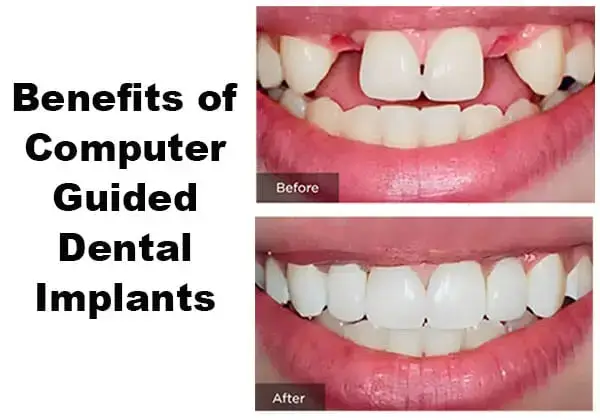
| Crown position | Planned first; implant placed to support it | Crown adapted to wherever the implant ended up |
| Can you see it ahead of time? | Yes, I show you the plan | No |
The smaller opening is what most patients notice. When I don't have to peel the gum back to see the bone, there's less swelling and the first few days are easier. That isn't possible in every case. If the ridge is thin or you don't have enough firm gum tissue around the site, I'll open it up so I can graft or shape the tissue properly, and I'll tell you that in advance.
Straight Talk
What a Surgical Guide Can't Do for You
I'd rather you hear this from me than find out later. A guide controls where the implant goes. It doesn't control whether the implant lasts. The Cleveland Clinic's overview of dental implants lists smoking, untreated gum disease, and significant bone loss among the things that affect whether someone is a good candidate, and none of those change because the surgery is guided.
When I'll talk you out of an implant: if a tooth can be saved with a root canal and a crown, that's usually the better deal. If the teeth on both sides of the gap already need crowns, a bridge may make more sense. And if you're missing a whole arch of teeth, I don't place full-arch implants myself. I refer that surgery to a periodontist I trust and handle the planning and the teeth that go on top. My implant-supported dentures and All-on-4 page explains how that split works.
The 3D Scan
What to Expect From the Cone-Beam CT Scan
You stand or sit still while the machine turns once around your head. It's quick, it doesn't touch you, and there's nothing to swallow or hold in your mouth for long. Nothing about it is uncomfortable.
Radiation is a reasonable thing to ask about. According to the FDA's guidance on dental cone-beam CT, a dental CBCT generally delivers less radiation than other CT exams but more than regular dental X-rays. That's why I only take one when an implant, or another surgery near a nerve or sinus, is actually on the table. I don't scan people as a routine or to pad a bill.
The same scan does more than plan the implant. It also shows me whether an old infection is hiding at the tip of a neighboring root, how thick the bone is on the cheek side, and whether a tooth that needs to come out first should be removed gently to protect the socket. If you need a tooth extraction before the implant, we plan both together.
What It Costs
Is Guided Surgery Extra?
No. Guided planning is how I place every implant, so it isn't an upgrade I quote on top. Some offices price the guide as an add-on and advertise a low number for the implant alone. I'd rather give you one written quote that covers the whole thing, with the cone-beam scan and any grafting listed as their own lines so nothing shows up later.
$20
Exam with digital X-rays
Tells us whether an implant is the right answer
Included
Guided planning and surgical guide
Part of every implant I place, never an add-on
Written
Itemized quote
Scan, implant, abutment, crown, and any grafting, before you commit
Promenade Dental Care accepts all PPO plans and is in-network with Delta Dental PPO, Cigna, MetLife, Guardian, Aetna, and United Concordia. Many plans cover part of the crown even when they exclude the implant itself, and we'll check that for you. CareCredit financing is available. Patients come to our Date Street office from Murrieta, Temecula, Menifee, Wildomar, and across Southwest Riverside County. For the full picture on implant options, timelines, and pricing, see the Murrieta dental implants page.
Who Plans Your Implant
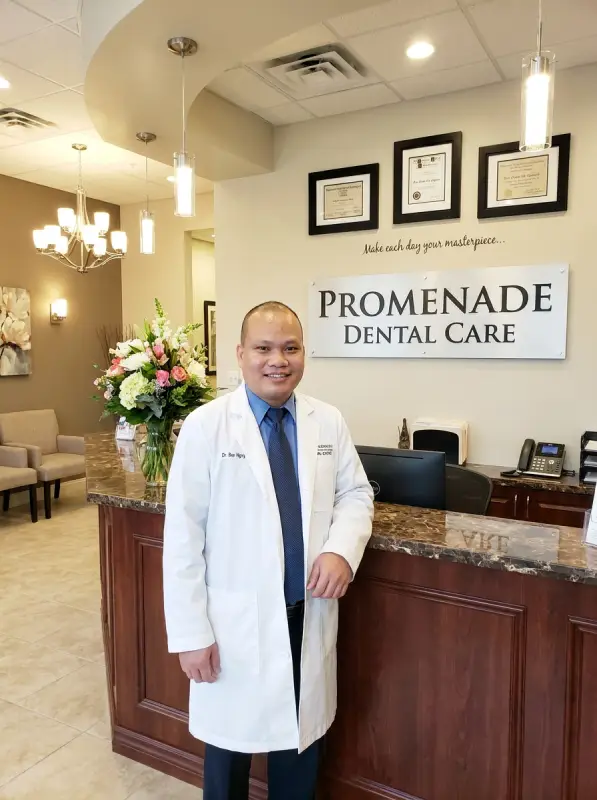
Dr. Bao Nguyen, DDS
I graduated from the UCLA School of Dentistry and served ten years as a dentist in the U.S. Navy, including an Advanced Education in General Dentistry residency at Naval Hospital Camp Pendleton and deployments to Kuwait and Iraq. In a military clinic you don't get to refer every hard case out. You learn to read the anatomy carefully and respect it.
That habit is why I plan implants the way I do. When I sit down with a cone-beam scan, I'm looking for the reason not to place an implant just as hard as I'm looking for the spot to place it. I've been doing that on Date Street in Murrieta since 2010, and I still do the scan, the plan, the surgery, and the crown myself.
My office speaks English, Spanish, and Vietnamese. If nerves are what's kept you from dealing with a missing tooth, ask about sedation dentistry when you call.
From Our Google Reviews
What Patients Say About Honest Treatment Plans
“$20 for a second opinion. The other dentist said I needed implants and new bridges for thousands of dollars. I wanted a second opinion and found this great guy. He saved me so much money! Very nice dentist.”
Brenda C. · Google Review
“I saw doctor Bao Nguyen at Promenade Dental Care on three occasions. In these visits, Dr Nguyen took time to carefully examine my dental concerns and explained very clearly to me what my conditions are, and what treatment options available. He advised me against immediate treatments for conditions that can be improved or maintained with good oral hygiene. He was very gentle with treatments, especially with the local anaesthetic injections. Greatly appreciate his professional care.”
C. Nguyen · Google Review
“Found Dr Bao years ago when I needed emergency care on a weekend. Started going to him while I still lived in the area. Moved a few years ago, but recently felt like I was being scammed by my new dentist (new insurance), drove over an hour to get a second opinion from Dr Bao. He is as straight forward, efficient, and affordable as ever. Work was still needed but not nearly to the extent and cost as was being told to me by the other dentist.”
P Hooper · Google Review
“Dr. Nguyen does a great job. He is always on time and very honest. Never has you do unnecessary treatments just to make extra money. I love that he is a solo practitioner and runs his own shop — he knows you personally as a patient. Best dentist I’ve ever had.”
Tom Haynes · Google Review
“Since starting with Promenade Dental Care I have had cleanings, fillings, teeth replaced, root canal and crown replacement yesterday. I have never gone to a more gentle caring dentist. Love my dentist!”
Lucille L. · Google Review
Questions Patients Ask
Computer-Guided Implant FAQs
Is computer-guided implant surgery the same as robotic implant surgery?
No. With computer-guided surgery, the computer is used for planning, and a printed surgical guide holds the drill on the planned path while I do the surgery by hand. Robotic systems are a different technology where a robotic arm assists with the drilling. I use printed guides.
Do I pay extra for the surgical guide?
No. I plan and place every implant with a guide, so it's part of the implant, not an add-on. The cone-beam scan and any grafting are listed as their own lines on the written quote you get before you agree to anything.
How much radiation is a dental cone-beam CT scan?
A dental cone-beam scan generally uses less radiation than a medical CT scan but more than regular dental X-rays, according to the FDA. That's why I only take one when an implant or another surgery near a nerve or sinus is actually being planned.
Will I get to see my implant plan before surgery?
Yes. Before we schedule surgery I show you the plan on screen, including your bone, the nerve or sinus nearby, and where the implant will sit. If you have questions or want to think it over, that's the time to do it.
What if the scan shows I don't have enough bone?
Then we know before surgery instead of during it. Depending on where the shortage is, I'll recommend a bone graft, or a sinus lift in the upper back jaw, and place the implant once that area has healed. Sometimes a shorter or narrower implant planned carefully avoids the graft altogether.
Can a guided implant go in the same day my tooth is pulled?
Sometimes. If the tooth comes out cleanly, there's no active infection, and there's enough bone beyond the socket to hold the implant firmly, I can place it at the same visit. The scan tells me ahead of time whether that's realistic, so you'll know before extraction day.
Can I be sedated for guided implant surgery?
Yes. The site is always fully numb with local anesthetic, and sedation is available if you're anxious about the procedure. Tell us when you book so we can go over the options and what you'll need to do to prepare.
Does a surgical guide guarantee my implant won't fail?
No. A guide controls where the implant goes, not how your body heals around it. Smoking, uncontrolled diabetes, gum disease, and skipped cleanings all affect whether an implant lasts, and good placement doesn't cancel those out.
Can guided surgery replace a whole arch of teeth?
Guided surgery is used for full-arch cases, but I don't place full-arch implants myself. I place single implants and two-implant lower snap-on dentures. For a fixed full arch, I refer the implant surgery to a periodontist I trust, and I handle the planning and the teeth that go on top. The implant-supported dentures page lays out both options.
How long is it between the scan and the surgery?
The guide has to be made from your plan, so the scan and the surgery are separate visits. When no grafting is needed, the wait is usually a couple of weeks. If you need a graft first, the implant waits until that area has healed.
Can you use a CBCT scan I had at another office?
Often, yes, if it's recent, covers the area we need, and the image quality is good enough to plan from. Have the other office send the scan file, and I'll tell you whether it's usable before taking a new one.
Does guided placement matter more for a front tooth?
It helps a lot there. On a front tooth, a small difference in angle or depth can show up as a crown that looks too long, a gray line at the gum, or a screw hole in the wrong place. Planning the crown first and placing the implant to fit it is how I avoid those problems.
Is the recovery different from a regular implant?
The healing inside the bone takes the same several months either way. What's often different is the first few days. Because the guide lets me work through a smaller opening in many cases, patients usually have less swelling and soreness than when the gum has to be lifted back.
See Your Implant Plan Before You Decide
Start with a $20 exam and digital X-rays. If an implant makes sense, you'll see the 3D plan and get a written quote. If it doesn't, I'll tell you what will work better.
(951) 412-0127Promenade Dental Care · Dr. Bao Nguyen, DDS
26957 Date St, Suite B4, Murrieta, CA 92563
Mon, Tue, Thu 9:00 AM – 5:00 PM · Wed, Fri 9:00 AM – 3:00 PM
Saturday by appointment & emergencies · Sunday closed