A Calmer Kind of Dentistry · Murrieta, CA
The Murrieta Dentist for People Who Dread the Dentist
No lectures, no surprise bills, no rushing you through it.
If your last appointment was years ago and the thought of the next one ties your stomach in knots, you are the patient I built this practice around. I am Dr. Bao Nguyen, and I treat nervous patients on Date Street every week of the year. Start with a $20 exam and a conversation. Nothing else is required of you.
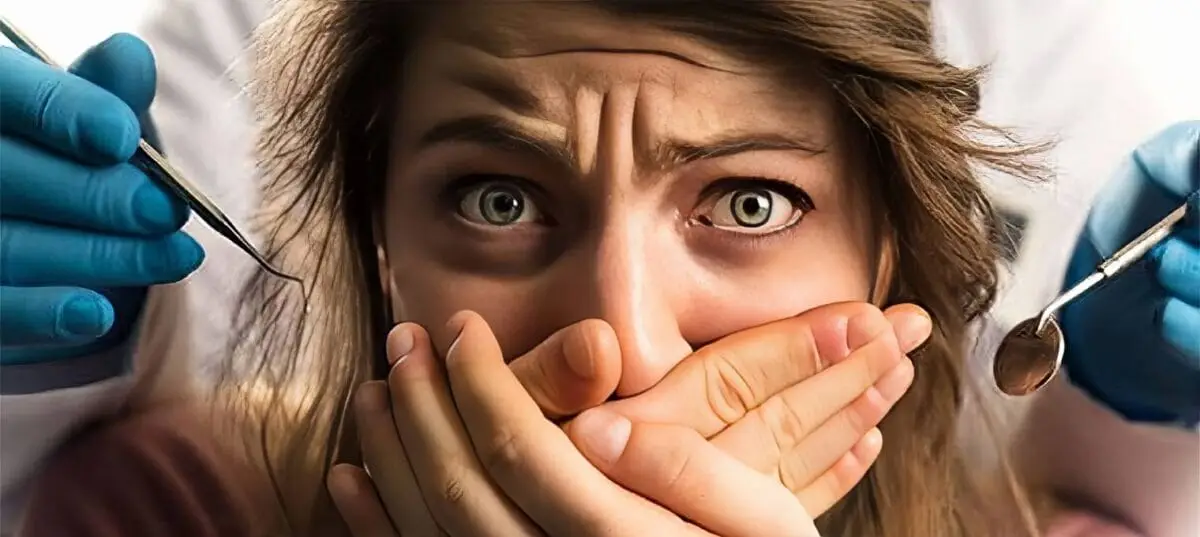
Fear of the dentist is almost never irrational. It gets taught to people, usually early, and usually by someone in a white coat who was in a hurry.
Dental Anxiety Is Common, and It Responds to Treatment
Somewhere between a quarter and a third of adults feel real fear about dental visits, and researchers who study the condition put severe dental phobia at around one in ten. The prevalence research published through the National Library of Medicine has held steady on those numbers for two decades, and the American Dental Association treats dental fear as a routine clinical matter rather than a character flaw. If you have been white-knuckling cleanings since childhood or skipping them altogether, you have a great deal of company here in Murrieta.
Ask anyone in that group how it started and you will hear a version of the same story. Someone drilled before the numbing had taken hold. A hygienist scolded them about flossing. A bill came back at three times the estimate. Those are all learning experiences, and the nervous system learns them well. The useful part of that is what it implies. Anything learned this way can be unlearned, and the way it gets unlearned is a run of calm, honest, predictable appointments where nothing bad happens.
That is the whole model at Promenade Dental Care. It is a small office on Date Street, one dentist and one team, the same faces every time you come in. I spent ten years as a U.S. Navy dentist before opening here in 2010, including an Advanced Education in General Dentistry residency at Camp Pendleton, and the habit I brought home with me was slowing down when a patient is frightened rather than speeding up to get it over with.
Promenade Dental Care is fantastic! The staff is warm, professional, and genuinely cares about your comfort. The office is spotless and modern, and appointments always run on time. Dr. Nguyen explains everything clearly and makes sure you feel at ease. You leave with a bright smile and real confidence in your care.
— Sabrina C., Google Review
1 in 10
adults live with severe dental fear
$20
exam and digital X-rays, insured or not
Since 2010
treating anxious patients in Murrieta
How Dental Anxiety Actually Gets Unlearned
Psychologists call the method graded exposure, and there is nothing clever about it. It is a run of short, calm, successful appointments taken in a deliberate order. An exam first, because nothing is done to you. A cleaning next. A small filling after that, if one is needed. Each appointment that ends without pain is evidence your nervous system can actually use, and after two or three of them most of my patients stop rehearsing the visit for days beforehand. That is also why I would rather stop a first visit early than push it one step too far. A visit that ends well is worth more than a visit that gets more done.
What a Small Office Changes
Anxiety feeds on not knowing what comes next, and a rotating cast of dentists guarantees you never stop guessing. Corporate chains move associates between offices, run production schedules, and hand your chart to whoever is free that morning, so every visit restarts the clock on trust. Here the dentist who examines you is the one who treats you, answers the phone when you call back with a question, and remembers that you want a minute before the chair reclines. The Cleveland Clinic overview of dentophobia names feeling out of control as a primary trigger, which is why control is the thing I hand back first. You raise a hand and we stop. Every time, with no exceptions and no discussion.
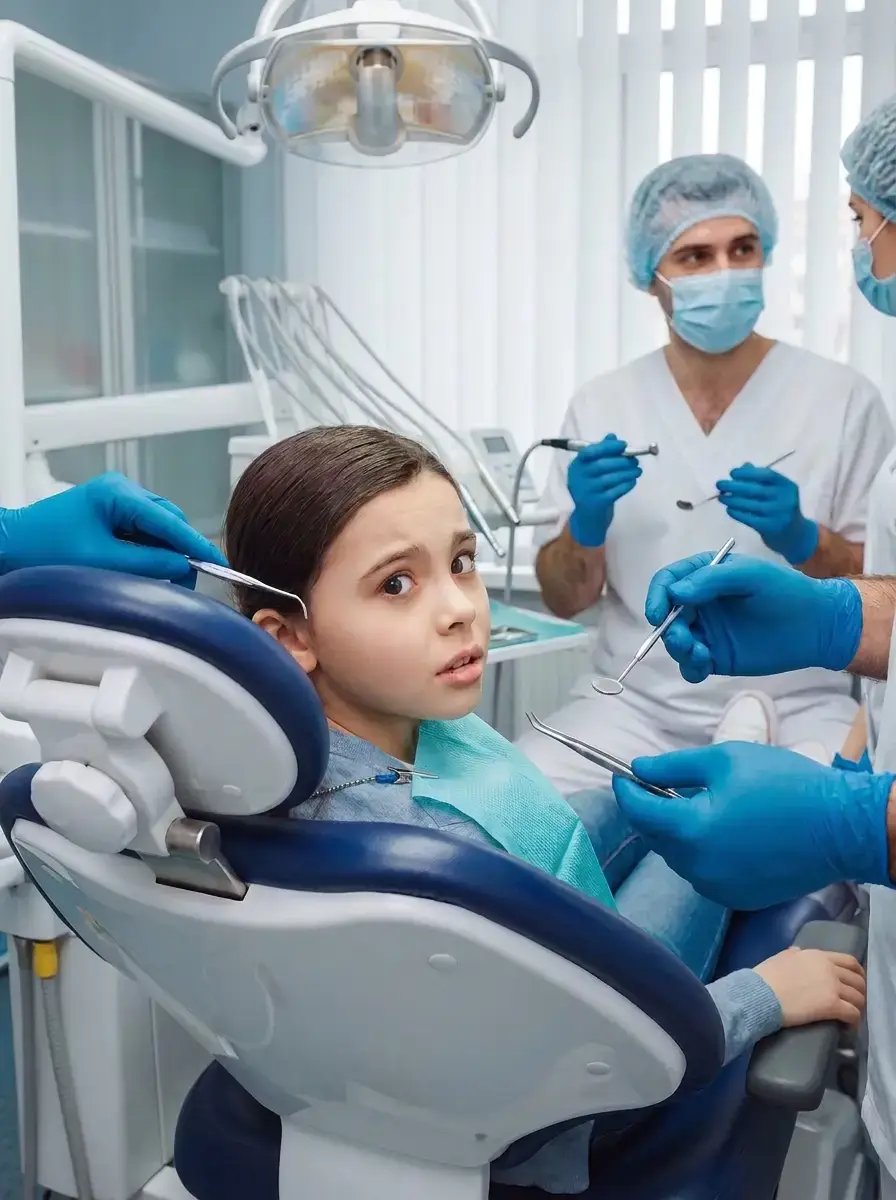
Dental Anxiety and Dental Phobia Are Not the Same Thing
People use the two words interchangeably, and the distinction actually matters when you are deciding how much help to ask for.
| Dental anxiety | Dental phobia | |
|---|---|---|
| How it feels | Dread building for days beforehand | Panic, nausea, or tears at the thought of booking |
| Effect on care | You reschedule once or twice, then go | You stop booking entirely, sometimes for years |
| How common | Roughly one adult in three | Roughly one adult in ten |
| What helps | A slower visit and an honest price | Gradual visits, a stop signal, sometimes sedation |
Both respond to the same approach. The phobic end of the range simply needs more patience and a longer runway, and there is no version of this where I tell you that you should have come in sooner.
The Part Nobody Enjoys
What Avoiding the Dentist Actually Costs
Nobody stays away because they are lazy. They stay away because the fear is immediate and the consequences are abstract, right up until the Friday night when they stop being abstract. The CDC oral health data draws a straight line from delayed care to tooth loss, and I see the local version of that line most months, usually in a patient from Murrieta or French Valley who held out until a toothache made the decision for them.
A Filling Turns Into a Root Canal
A cavity caught at a $20 exam is a single-visit filling. Left alone for eighteen months, that same tooth often needs a root canal and a crown, which runs four to six times the cost and is exactly the appointment an anxious patient dreads most.
Infection Does Not Negotiate
An abscessed tooth can push infection into the jaw and the bloodstream, at which point it stops being a dental problem and becomes a medical one. Facial swelling or a fever alongside tooth pain means you call us now or go to urgent care tonight.
Teeth That Could Have Been Saved
The saddest chart I open is a tooth I could have kept six months earlier. Extraction plus a replacement always costs more than the treatment that was skipped, in money and in what you can comfortably chew.
The Fear Keeps Growing
Every year away makes the imagined first visit worse and the likely treatment bigger, which is a loop that only breaks one way. It breaks on a first appointment where nothing bad happens, and that is the appointment this office is built to deliver.
In real pain right now? Stop reading and call. Our Murrieta emergency dentist line is (951) 412-0127 and we hold same-day slots for patients in pain, including patients we have never met and patients with no insurance. Being nervous does not disqualify you from urgent care.
The Whole Script, In Advance
Your First Visit, Step by Step
Not knowing what comes next is the enemy, so here is the entire appointment in order. Nothing on this list happens out of sequence and nothing happens without your say-so.
1Say you are nervous when you book
Mention it on the phone or in the booking note. It buys you a longer slot, a quieter hour, and a heads-up to the whole team before you arrive. Nobody raises it in the lobby unless you do.
2We talk before you recline
The visit opens with a conversation, sitting upright, with no instruments in sight. Tell me what happened last time. I have heard every version of it, and the details change how I work.
3A gentle $20 exam and X-rays
The exam with digital X-rays is $20 with no asterisk attached. It is a look, not a procedure. Most first visits involve no drilling, no scraping, and no pain at all.
4An honest plan with prices attached
You see your own X-rays and hear what is urgent, what can wait, and what needs nothing. I regularly tell patients to leave something alone for now. Every option comes with its cash price before you decide.
5You set the pace
Treatment happens on your timeline, in one visit or in several short ones. A raised hand means we stop. If all you manage on visit one is sitting in the chair and leaving calm, we have something to build on.
The one promise underneath all of it: you will always know what is happening, why it is happening, and what it costs before it happens.
In the Chair
How We Keep Anxious Patients Comfortable
Comfort comes out of a stack of small decisions made in your favor, starting with the schedule and ending with the syringe. These are the ones patients mention on the way out.
Numbing Done Slowly
Topical gel first, then anesthetic delivered slowly and warmed, then a real wait before anything starts. Our whole pain-free approach exists because the injection is the moment most people fear, so it is the moment I am most careful with.
Sedation If You Want It
Nitrous oxide and oral conscious sedation are both available when patience alone is not enough, and neither one is ever a condition of being treated here. The two options are laid out below.
Same-Day Crowns
Fewer visits means fewer weeks for dread to build. Our same-day CEREC crowns turn what used to be two appointments and a temporary into one sitting.
Quieter Cleanings
Ultrasonic cleaning replaces most of the scraping that anxious patients associate with old-fashioned hygiene visits. Less pressure and less time in the chair for the same result.
A Stop Signal That Works
We agree on a hand signal before anything begins, and it is honored instantly, including mid-procedure. Control is the antidote to panic, so you keep hold of it for the entire visit.
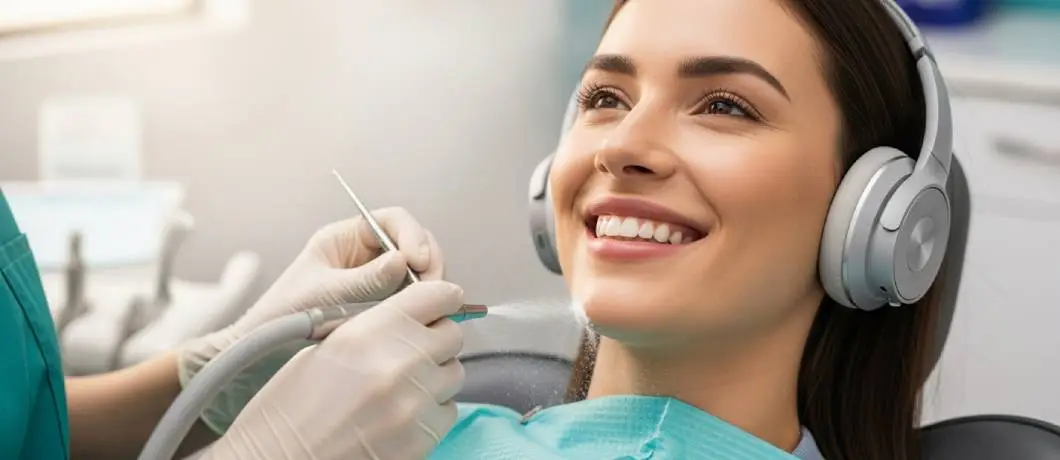
Headphones, Breaks, No Rush
Bring earbuds and your own playlist. Ask for breaks. Book short visits. Anxious patients get the appointment length they need rather than the length a production target allows.
When Patience Is Not Enough
Sedation Options for Anxious Patients in Murrieta
Most nervous patients get through treatment on a slow injection, a stop signal, and an unhurried hour. For severe anxiety, for a long appointment, or for a phobia that has kept someone out of a dental office for a decade, sedation is the bridge back into regular care. I offer two forms here and I start with the lightest one that will do the job.
Nitrous Oxide
Laughing gas, delivered through a small mask over your nose. It takes effect in three to five minutes and clears within minutes of the mask coming off. You stay awake and answer questions the whole time, and most patients drive themselves home afterward. It is the option I reach for first because it is the easiest one to stop.
Oral Conscious Sedation
A prescription tablet taken about an hour before your visit. It goes deeper than nitrous, so the appointment often ends up hazy or not remembered at all, and it stays in your system for several hours. You will need someone to drive you both ways. This is the one that gets long-avoidant patients through a first real treatment visit.
Deeper Sedation Is Referred Out
IV sedation and general anesthesia belong in a surgical setting with an anesthesia team, so we do not perform them at Promenade Dental Care. When a case genuinely calls for that level, usually complex oral surgery, I coordinate the referral rather than stretch past what a general practice should be doing.
How it is handled: sedation here follows the American Dental Association guidelines for sedation and general anesthesia and Dental Board of California permit rules, with monitoring throughout. Nothing is given without reviewing your medical history and current medications first, and nobody is talked into sedation who does not want it. Full detail is on the sedation dentistry page. A good number of patients who arrive certain they need it never end up using it, and knowing it was on the table is what let them sit down.
The Day Before
Before Your Appointment: A Short Checklist
None of this is required and all of it helps. The Anxiety and Depression Association of America recommends the same principles for any feared situation, which are to cut down the unknowns, schedule on your own terms, and bring your coping tools with you.
Tell us you are anxious when you book so we can schedule extra time at a quiet hour.
Book a morning slot if you can. Less time to dread it, and 9:00 AM is the calmest hour here.
Skip the extra coffee. Caffeine and adrenaline are a bad combination before a dental visit.
Bring earbuds and a playlist or podcast you already like.
Write your questions down. Anxiety erases them the second you sit in the chair.
Bring a list of medications, anxiety medication included. It matters clinically and nobody judges it.
Bring someone with you if it helps. A friend or family member is welcome in the room, not just in the lobby.
Eat something light beforehand unless we have told you otherwise.
Plan something small for afterward. Finish the visit, claim the reward.
Three Things Patients Tell Me Made the Difference
- Run the 4-7-8 breath in the parking lot before you come in. Inhale for four, hold for seven, exhale for eight, three rounds. It brings a racing heart rate down before you reach the front door. If holding the breath makes it worse, drop the hold and simply make the exhale longer than the inhale, four counts in and six counts out. The longer exhale is the part that does the work, and the trials of breathing and relaxation techniques for dental anxiety collected by the National Library of Medicine bear that out.
- Ask for the tell-show-do walkthrough. I will name each instrument and let you see it before it is used. It sounds like a small thing and it is not.
- If it has been five years or more, book the $20 exam with no commitment to treatment at all. Knowing where you stand is calmer than wondering, even when the news is not perfect.
The Other Fear
No Dental Insurance? You Are Still Welcome Here.
For a lot of my patients the fear was never really the drill. It was the bill. Corporate offices are built around insurance billing and financed treatment plans, and patients paying cash often get quoted the same inflated rate that an insurer would negotiate down to a fraction. Anyone who has walked out of a chain office holding a four-figure treatment plan they did not understand knows the feeling exactly.
This practice runs the other way. Exams are $20 and that price is posted publicly. Cash prices get quoted before treatment rather than after. Fillings are priced to be paid for rather than financed. Because I own the practice there is no regional manager setting production quotas behind the scenes, and no one here earns anything by talking you into a crown. The California Dental Association publishes guidance on patient billing rights that is worth reading wherever you go. My aim is to make it unnecessary here.
The Two Prices That Matter on a First Visit
- $20 for a complete exam with digital X-rays, insured or not. No drilling, no cleaning, no obligation to book anything afterward.
- $95 for a gentle ultrasonic cleaning, which is quieter and far less scrapey than traditional hand scaling.
Anything beyond those two is quoted in writing at its cash price before it happens. If you would rather ask about a price before you book, send us the question or call and ask. Nobody here is scored on how much you agree to.
Why the prices stay low on purpose: I would rather treat a cavity this month at a price you can pay than watch the same tooth turn into a root canal and a crown in two years. Honest pricing is part of the anxiety treatment, because a patient who is not braced for a surprise bill can finally relax in the chair.
Getting Here
Serving Murrieta, French Valley, and Winchester 92596
The office sits at 26957 Date St, Suite B4, on the east side of Murrieta where the 215 corridor meets the Temecula line. That puts us minutes from the fastest-growing neighborhoods in southwest Riverside County: straight up Winchester Road for French Valley, an easy run from Winchester 92596, and a short hop off Clinton Keith for anyone east of the freeway. Patients tell me the drive matters more than they expected it to, because a nervous patient who has just fought forty minutes of traffic walks in more wound up than they left home.
French Valley in particular has thousands of new households and not many dentists willing to take extra time with a frightened patient. If you have moved into one of the new builds off Winchester and you have been putting off finding a dentist, the $20 exam is a low-stakes way to start.
Office Hours
| Monday | 9:00 AM – 5:00 PM |
| Tuesday | 9:00 AM – 5:00 PM |
| Wednesday | 9:00 AM – 3:00 PM |
| Thursday | 9:00 AM – 5:00 PM |
| Friday | 9:00 AM – 3:00 PM |
| Saturday | By appointment & emergencies |
| Sunday | Closed |
Same-day emergency slots are held daily. Call (951) 412-0127 and ask for the earliest quiet hour if mornings are easier on you.
One Calm Visit Changes Everything After It
Nervous patients turn into regulars here on Date Street, minutes from French Valley and Winchester. Start with a conversation and a $20 exam. The rest moves at your speed.
(951) 412-0127 Book a $20 ExamReal Patients
What Nervous Patients Say Afterward
It is safe to say that Dr. Nguyen is the best dentist I have ever visited in my life. He is compassionate, patient, and works like an artist. I will highly recommend. Great dentist!
— Marguerite B., Google Review
They are very professional and very honest; they don't scam you like other places. The office is very clean, with a very comfortable waiting area. The receptionist is very polite and always has a nice smile while helping all the patients. Doctor Nguyen is very efficient and does an excellent job; he is a multitasking person. I definitely recommend this office, because after going to several dentists in this area, I finally found a professional dentist like my Bay Area dentist with whom I had been with for over 16 years. Absolutely Dr. Nguyen is THE BEST DENTIST in this area!!!!
— Fangiegto, Google Review
I had a dental emergency and the dentist called me immediately and was able to get me in within an hour of speaking to him. The front desk was extremely welcoming and kind. They went over options with me and without having dental insurance they were very affordable. Would recommend to everyone!
— Brittani M., Google Review
I had an amazing experience with Dr. Bao. It's so hard finding a good dentist nowadays, and Dr. Bao will definitely be my go-to dentist from here on out. Very patient, reliable, and fast. He had me in and out in under 3 hours for a porcelain crown and deep cleaning. Never any uncomfortable pain, and he didn't let me leave until everything felt and looked perfect. Highly recommend for all my French Valley neighbors.
— Diana D., Google Review
Common Questions
Dental Anxiety Questions, Answered Straight
What is dental anxiety?
Dental anxiety is fear or dread connected to dental treatment, ranging from mild nerves before a cleaning to a severe phobia that stops a person from booking at all. It is usually learned rather than irrational. A painful appointment, a dentist who started before the numbing had taken hold, or a bill that arrived larger than the estimate will all teach the nervous system that the dental chair is a place where bad things happen. Because it is learned, it can be unlearned. A run of calm, predictable visits is what does it.
What is the difference between dental anxiety and dental phobia?
Dental anxiety is uneasiness that you push through, while dental phobia is fear strong enough that you avoid care entirely, sometimes for years. Roughly one adult in ten meets the description of severe dental fear, and dentophobia is recognized in the clinical literature as a specific phobia. The practical difference is behavior. An anxious patient reschedules twice and then shows up. A phobic patient stops booking at all and only appears when pain forces the issue. Both respond to the same treatment, which is gradual, controlled exposure in an office that does not rush.
How do I overcome dental anxiety before an appointment?
Book the smallest possible visit, say out loud that you are anxious when you book it, and slow your breathing down before you walk in. Those three moves do most of the work. A $20 exam with digital X-rays is a look and nothing more, so there is no procedure waiting at the end of the dread. Telling the front desk you are nervous buys you a longer slot at a quieter hour before you ever arrive. And a longer exhale than inhale, four counts in and six counts out, brings a racing heart rate down in the parking lot. Morning appointments help too, because you spend fewer waking hours rehearsing it.
Can dental anxiety be cured, or does it only get managed?
For most people it genuinely fades rather than being managed forever, and it fades through repetition. The method has a name, graded exposure, and it is unglamorous: a run of short, calm, predictable appointments in a deliberate order. An exam first. A cleaning next. A small filling after that, if one is needed. Each visit that ends without pain is evidence your nervous system can actually use, and after two or three of them most of my patients stop rehearsing the appointment for days beforehand. Severe phobia takes a longer runway and sometimes sedation, but it moves in the same direction.
I have not seen a dentist in over ten years. Will I be judged?
No. About a third of the new patients who find this page open with some version of that same sentence, and it changes nothing about how I treat you. My interest is where your mouth is today and what we do next, not how long the gap was. I spent ten years as a U.S. Navy dentist, so I have seen what neglect, deployment, and bad luck do to teeth. The lecture you are bracing for does not happen at Promenade Dental Care.
What does the first appointment cost?
The first visit is $20 for a full exam with digital X-rays, and it is the same $20 whether you have insurance or not. That price is posted publicly and it does not commit you to any treatment. You leave with your X-rays explained, a written plan, and the cash price of anything I recommend. Call Promenade Dental Care at (951) 412-0127 in Murrieta to book it.
How do I tell my dentist that I am scared?
Say it plainly when you book, in one sentence: I am an anxious patient. That is genuinely all it takes. On our end it changes the schedule before you ever arrive, because you get a longer slot, a quieter hour, and a note that the whole team sees. You do not owe anyone the backstory. If you want to give it, I will listen, because knowing which part went wrong last time tells me which part to handle differently.
Can you see me the same day if I am in pain?
Usually yes. Promenade Dental Care holds same-day slots for emergencies, and an anxious patient in pain gets the same priority as anyone else. Call (951) 412-0127 first thing in the morning and describe what is happening. Being nervous does not put you at the back of the line, and neither does having no insurance. Our emergency dentist page covers what counts as urgent.
Do you offer sedation for anxious patients?
Yes. Sedation is available at Promenade Dental Care and the options are explained on our sedation dentistry page, with the right one depending on the procedure and your health history. I start with the lightest option that will keep you comfortable. A good number of patients who arrive certain they need sedation find that one calm visit was enough and they never use it. It stays on the table either way, and no one is talked into it.
What if I panic in the chair?
You raise your hand and everything stops immediately, including mid-procedure. We agree on that signal before anything starts and it is honored every time, without a discussion and without a sigh. Then we breathe, we talk, and we continue only when you say so. Some first visits end early, which is a perfectly good outcome. The visit where you stayed in control is the visit that makes the next one easier.
I have no dental insurance. What will treatment actually cost?
You will know the full cash price of every recommendation in writing before anything begins. We keep fees low enough that patients can pay for treatment directly rather than financing it, because I would rather fill a cavity this month than perform a root canal on the same tooth in two years. There is no financing pressure at Promenade Dental Care and no line items that appear after the fact.
Numbing has never worked well on me. What then?
Tell me before we start, because it changes the technique rather than ruling out treatment. Some people clear local anesthetic quickly and some have anatomy that hides the nerve. I use topical gel first, then deliver the anesthetic slowly and warmed rather than in one push, then wait long enough for it to take hold before touching anything. Most people who tell me numbing has failed them before were rushed, not resistant.
Do you treat anxious children and teenagers?
Yes, and carefully, because a child's first few visits set their relationship with dentistry for the next forty years. The rules are the same ones adults get: tell-show-do, no surprises, and a parent welcome at chairside. When a child is not ready, we stop and try again another day rather than holding them through it. Our pediatric dentist page has more on how those visits run.
What is the single best first step if I am scared but ready?
Book the $20 exam and say the words I am an anxious patient when you call (951) 412-0127. That one sentence sets up the entire visit correctly. Nothing else is asked of you on day one. You do not have to commit to treatment, you do not have to explain the gap, and you can leave having done nothing but sit in the chair and talk.
How far is the office from French Valley or Winchester?
Most French Valley patients reach us in about ten minutes down Winchester Road, and Winchester 92596 is usually fifteen minutes or less outside of rush hour. Promenade Dental Care is at 26957 Date St, Suite B4, Murrieta, CA 92563, just off the 215 on the east side of town, with parking directly at the door. A short drive matters more than people expect, because a nervous patient who has just fought forty minutes of traffic arrives more wound up than they left home.
What are your office hours?
Promenade Dental Care is open Monday, Tuesday and Thursday from 9:00 AM to 5:00 PM, Wednesday and Friday from 9:00 AM to 3:00 PM, Saturday by appointment and emergencies, and closed Sunday. Same-day emergency slots are held daily. If you are the kind of patient who does better first thing in the morning, ask for a 9:00 AM appointment when you call (951) 412-0127. Those are the quietest hours in the office.
Explore More
Related Care at Promenade Dental Care
$20 Exam & X-Rays
The low-stakes first visit, with a written plan and cash prices before you decide anything.
Sedation Dentistry
Options for patients who need more than patience, explained plainly and never pushed.
Ultrasonic Cleaning
Less scraping, less pressure, less time in the chair for the same result.
Kids Dentist
Gentle first visits that set a child up for the next forty years of dentistry.
Same-Day CEREC Crowns
One appointment instead of two, which is fewer weeks of dread on your calendar.