
Gum Health · Murrieta, CA
Gingivitis Treatment in Murrieta: Reversing Gum Disease at Its Earliest Stage
Bleeding, puffy gums are the one stage of gum disease that can be fully reversed. Here is how I diagnose and treat it at my Date Street office.
Gingivitis is inflammation of the gums caused by plaque left at the gumline. It is common, it is usually painless, and it is completely reversible because the bone under the gums is still intact. This page explains how to recognize it, what actually causes it, how I confirm it has not progressed to periodontitis, what treatment costs at Promenade Dental Care, and the handful of situations where bleeding gums mean something else entirely.
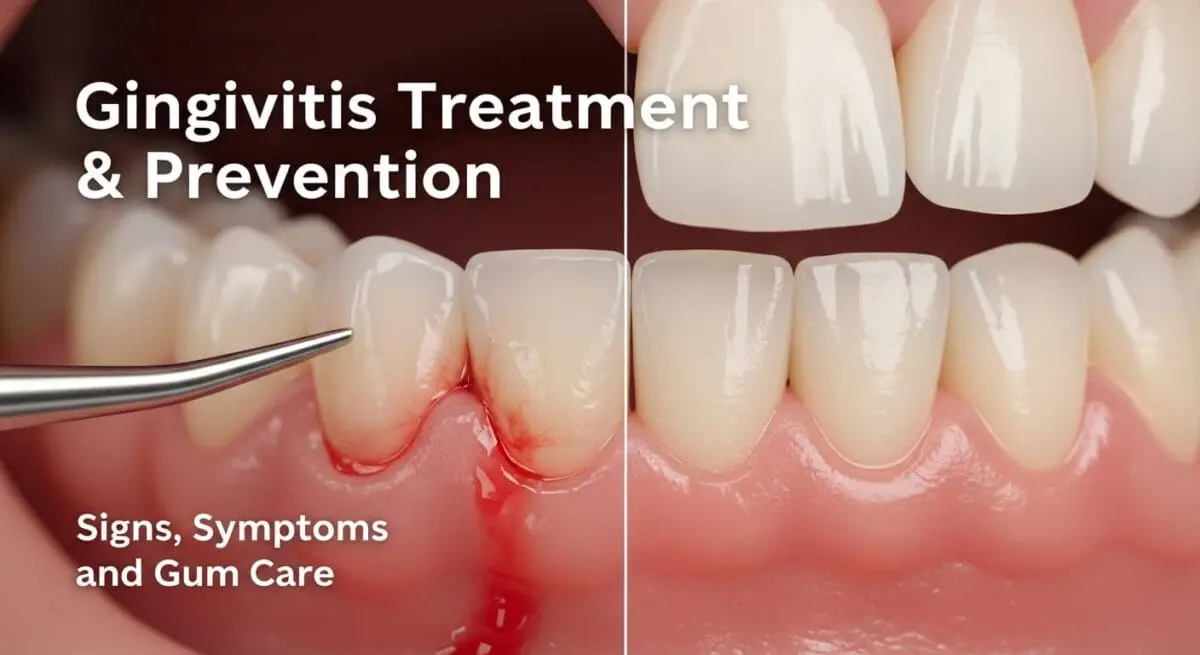
Understanding Gingivitis
What Gingivitis Is, and Why It Is the Stage Worth Catching
Gingivitis is the only stage of gum disease that heals completely. Everything after it can be managed, but not undone.
Gingivitis is inflammation of the gum tissue that sits around the necks of your teeth. It is the first stage of periodontal disease, and it is the only stage that can be reversed. The bone that anchors your teeth is still intact, nothing structural has been lost, and once the bacterial film along the gumline is cleared away and kept away, the tissue heals back to firm, pale pink, and quiet. That is not a marketing line; it is the reason dentists talk about gingivitis so differently from periodontitis.
I see it every week at my office on Date Street, usually in someone who came in for something else. A little pink in the sink after brushing, gums that look slightly puffy in a photo, breath that mouthwash keeps covering up. Most people assume these are normal, or that they are brushing too hard. They are neither. Bleeding is the gum tissue reacting to bacteria it cannot clear on its own, and it is the single most useful early warning in dentistry because it shows up while the fix is still cheap and simple.
This page is about gingivitis specifically: how to recognize it, what actually causes it, how I confirm it is gingivitis and not something further along, what treatment involves at Promenade Dental Care, and the situations where bleeding gums mean something else. If you already know you have deeper pockets, bone loss, or a diagnosis of periodontitis, the broader gum disease treatment page covers deep cleaning, periodontal therapy, and laser options.
- Condition
- Gingivitis: plaque-induced inflammation of the gums, the first stage of periodontal disease
- Reversible?
- Yes, fully. The bone and ligament are untouched at this stage.
- Usual treatment
- Ultrasonic cleaning plus a corrected home routine, with a re-check in 4 to 8 weeks
- First step
- $20 new-patient exam with digital X-rays, the images that rule bone loss in or out
- Office
- 26957 Date St, Suite B4, Murrieta, CA 92563 · (951) 412-0127
- Hours
- Mon, Tue, Thu 9:00 AM–5:00 PM · Wed, Fri 9:00 AM–3:00 PM · Sat: By appointment & emergencies · Sun: Closed
Recognizing It
Gingivitis Symptoms I Look for at Promenade Dental Care
Healthy gums are pale pink, firm, and shaped like small knife-edges between the teeth; they hug each tooth and they do not bleed when you clean them. Mayo Clinic's description is the same one I use chairside. Gingivitis changes each of those details, and the changes are easiest to see along the lower front teeth and behind the upper molars, where plaque collects fastest.
The signs below rarely all appear at once. Bleeding usually comes first, then color and contour changes, then the breath and taste problems that send people to the bad breath page before they think of their gums. Any one of them is enough reason to have it looked at.
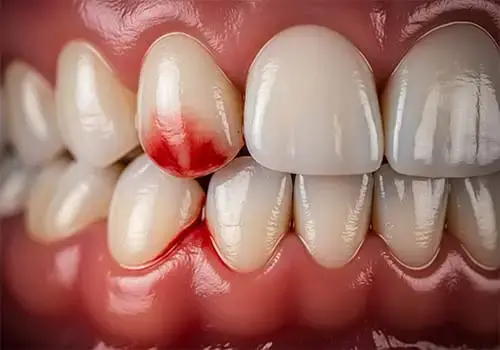
Gingivitis is usually painless, which is exactly why so many people have it without knowing. Pain, pus, a taste that will not go away, or a tooth that feels loose are not gingivitis symptoms; they point to something further along, and I cover those look-alikes below.
Why It Happens
What Causes Gingivitis Beyond a Missed Night of Flossing
The direct cause is dental plaque, the soft, sticky bacterial film that rebuilds on every tooth within hours of brushing. Left at the gumline for a couple of days, plaque begins to harden into tartar (calculus), and tartar is rough, porous, and impossible to remove with a toothbrush. The tissue next to it responds the way skin responds to a splinter: it reddens, swells, and bleeds easily. The classic 1965 study by Löe, Theilade, and Jensen showed this in the cleanest way possible. Healthy volunteers who stopped all oral hygiene developed gingivitis within ten to twenty-one days, and when they resumed brushing, the tissue returned to health within about a week.
Plaque control is the whole game, but several things make plaque harder to control or make the gums react to it more strongly. These are the factors I ask about at the first visit, because treating the gums without addressing them means the gingivitis comes back. The National Institute of Dental and Craniofacial Research lists smoking as the single most significant risk factor, and I would put dry mouth and uncontrolled diabetes right behind it.
The Exam
How Gingivitis Is Diagnosed at My Murrieta Office
The point of the exam is not to confirm that your gums bleed. You already know that. It is to answer one question: is this still gingivitis, or has it started to destroy bone? The answer decides whether you need a $95 cleaning or periodontal therapy, so I do not guess at it.
1Your history
Medications, tobacco, pregnancy, diabetes, recent changes in your routine, and how long the bleeding has been going on. Half of the diagnosis is in this conversation.
2Visual exam and photos
I look at color, contour, and swelling under magnification and take intraoral photos so you can see what I see, on the screen, before I say a word about treatment.
3Periodontal probing
A thin, blunt probe measures the gap between gum and tooth at six points on every tooth. Healthy readings are 1 to 3 millimeters. Bleeding when the probe touches the tissue is the textbook sign of active gingivitis.
4Digital X-rays
This is the step that separates gingivitis from periodontitis. Gingivitis shows no bone loss on the film; periodontitis does. The $20 new-patient exam includes these images.
If the probe readings are shallow, the X-rays show normal bone height, and the gums bleed on touch, the diagnosis is gingivitis and the treatment is straightforward. If there are deeper pockets or the bone has receded, the conversation changes to periodontal therapy, which I explain on the gum disease treatment page. Either way, you will know which one you are before you leave the chair, with a written price.
| What I check | Healthy | Gingivitis | Periodontitis |
|---|---|---|---|
| Color and shape | Pale pink, firm, knife-edged between teeth | Red or purplish, puffy, rounded | Often red and recessed; roots may show |
| Bleeding on probing | No | Yes | Yes, sometimes with pus |
| Probing depth | 1 to 3 mm | Usually 3 mm or less; swelling can read deeper | 4 mm and up, with attachment loss |
| Bone on X-ray | Normal height | Normal height | Bone loss visible |
| Reversible? | Nothing to reverse | Fully | No; can be halted and managed |
| Treatment | Routine cleaning every six months | Ultrasonic cleaning plus home routine; re-check in 4 to 8 weeks | Scaling and root planing; sometimes laser therapy or surgery |
What Happens Next
Gingivitis Treatment in Murrieta: What the Visit Actually Involves
Treatment for true gingivitis is not dramatic, and I am wary of any office that makes it sound dramatic. There is no surgery, there are no antibiotics, and there is no need for a "deep cleaning" if the X-rays show the bone is fine. The job is to remove every bit of plaque and tartar the gums are reacting to, then make sure it does not build back up before the tissue heals.
1Ultrasonic cleaning
A fine tip vibrating in a water spray breaks tartar off the tooth and flushes bacteria out from just under the gum margin. No scraping, and no anesthetic needed for most patients. The full description is on the ultrasonic teeth cleaning page.
2Polishing and problem spots
Stain and residual film come off, and I spend extra time on the areas that bled during probing, since those are where the tartar was doing the most damage.
3Your routine, rebuilt
I show you exactly where the plaque was hiding, using your own intraoral photos, and fix the two or three habits that let it stay there: brush angle, a floss technique that reaches under the margin, an interdental brush for the spaces floss skips.
4Fixing what feeds it
Smoothing a rough filling edge, adjusting a partial that traps food, a dry-mouth plan if a medication is drying you out. Sometimes that is a note to your physician about an alternative prescription.
5Re-check in 4 to 8 weeks
I probe the same spots again. Tissue that has stopped bleeding is healed tissue. If a few areas are still bleeding, we look at why before anything escalates.
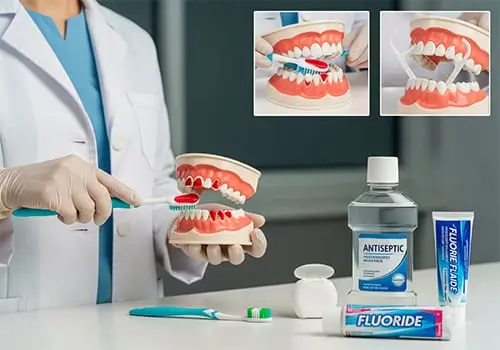
Healing is fast once the irritant is gone. Most patients notice the bleeding taper off inside the first week or two; puffiness takes a little longer. Gums that were swollen may look slightly lower once they tighten back up. That is the tissue returning to its normal contour, not recession, which is a separate problem covered on the gum recession page.
If sitting through a cleaning is the hard part, say so when you book. Nitrous oxide and oral sedation are available, and the dental anxiety page explains how we handle nervous patients without rushing them.
Pricing
What Gingivitis Treatment Costs in Murrieta
Both numbers are published, and they are the same whether or not you have insurance.
For most patients that is the entire cost of treating gingivitis: $115, plus a new toothbrush. We accept all PPO dental insurance plans and are in network with them; routine cleanings are typically covered as preventive care, and we verify your benefits before the visit rather than guessing. CareCredit is available for anyone who wants to spread larger treatment out over time.
If the exam finds periodontitis instead, the fees for scaling and root planing and laser therapy are laid out on the gum disease treatment page, and you get a written estimate before anything is scheduled. Patients drive in from Temecula, Menifee, French Valley, Winchester, and Wildomar for that reason as much as for the fees.
Look-Alikes
When Bleeding Gums Are Not Gingivitis
Most bleeding gums are gingivitis. Some are not, and the exam is built to catch those. Here is what else I am ruling out when you come in.
Periodontitis
Bleeding plus bone loss on the X-ray, deeper pockets, and sometimes recession or a loose tooth. Managed with periodontal therapy rather than a routine cleaning.
A gum abscess
Bleeding is not the main event; a swollen, painful bump near one tooth is, sometimes with pus or a bad taste. This is same-day care, not a routine appointment.
Necrotizing gingivitis
Also called trench mouth. Sudden, painful, with a grey film and crater-like tissue between the teeth, foul odor, sometimes fever. Linked to heavy stress, smoking, and a run-down immune system. It needs prompt treatment, not a wait-and-see.
Medication-related gum overgrowth
Gums that look bulky and creep up over the teeth, often from certain seizure, transplant, or blood pressure drugs. Cleaning helps; the lasting fix usually involves your physician.
Bleeding without inflammation
Blood thinners, daily aspirin, clotting disorders, and, rarely, vitamin C deficiency can make healthy-looking gums bleed. The gums are not red or swollen, which is the tell.
Viral gingivostomatitis in young children
A first herpes-family infection in a toddler brings fever, a sore mouth, and blistered, bleeding gums. It is viral, it runs its course, and it needs a pediatrician's eye rather than a cleaning.
Special Situations
Gingivitis in Pregnancy, Teens, Diabetes, and Around Dental Work
Pregnancy gingivitis
Rising progesterone makes gum tissue more sensitive to plaque, and many women notice bleeding from about the second month onward, peaking in the middle of pregnancy. It is common, it is safe to treat, and the second trimester is the most comfortable window for a cleaning. Left alone it does not reliably clear up after the baby arrives: the hormones settle, but the plaque and tartar that started it stay. Tell us you are pregnant when you book so we adjust what we do and take only the images that are needed.
Teenagers
Puberty does the same thing on a smaller scale, and teenage gingivitis is very common, especially with crowded teeth, mouth breathing, and sugary drinks. It responds quickly to a cleaning and a technique reset; the harder part is the follow-through at home. We see children and teens here, and the first-appointment page explains how those visits go.
Diabetes
With high blood sugar the gums react more strongly and heal more slowly, and gum inflammation in turn makes blood sugar harder to control. A tighter recall interval, every three to four months, is usually the right call. Bring your most recent A1c to the exam; it changes how I plan the follow-up.
Dry mouth and medications
If a medication is drying your mouth, gingivitis will keep returning until that is managed: sipping water through the day, xylitol gum, a prescription-strength fluoride, and sometimes a conversation with your prescriber about alternatives. This is the most overlooked cause I see in patients over sixty.
Around crowns, bridges, partials, and implants
Gum tissue around a dental implant develops the same plaque-driven inflammation as tissue around a tooth. It is called peri-implant mucositis, it is reversible, and it is the warning stage before peri-implantitis, which destroys the bone holding the implant; the 2017 World Workshop review by Heitz-Mayfield and Salvi is the standard reference. The margins of crowns and bridges and the clasps of a partial denture are plaque traps too. If you have any of these, the cleaning includes them, and your home routine has to reach them.
Keeping It Gone
Preventing Gingivitis From Coming Back
Gingivitis returns for one reason: plaque was allowed to sit at the gumline again. The routine that keeps it away is not complicated, but it has to be specific to your mouth, which is why I would rather show you your own plaque under magnification than hand you a generic pamphlet. The essentials:
The gum disease treatment page goes deeper into the home routine and the products that have evidence behind them, and the American Academy of Periodontology keeps a good patient-level overview of the whole disease, from gingivitis on.
Who Wrote This
Reviewed by Dr. Bao Nguyen, DDS

I graduated from the UCLA School of Dentistry, then spent ten years in the U.S. Navy Dental Corps, completing an Advanced Education in General Dentistry residency at Naval Hospital Camp Pendleton and deploying to Kuwait and Iraq. Military dentistry is heavy on periodontal work, because sailors and Marines in the field come back with gums that have not seen a hygienist in months. I learned to tell gingivitis from early periodontitis quickly, and to treat the first without overtreating it, long before I opened this office in 2010.
What patients mention in reviews is not the resume. It is that I slow down, put the X-rays and the intraoral photos on the screen, and explain what I am seeing before I recommend anything. I do not upsell a $95 cleaning into a $1,000 deep cleaning, and I do not run this office like a production line. My name is on the door, and the 230-plus five-star Google reviews we have collected came from treating people the way I would want a doctor to treat my own family.
Related Care
Related Gum Care at Promenade Dental Care in Murrieta
Gingivitis is the entry point. If your situation matches one of these, the linked page explains how we handle it, what it costs, and what to expect.
Gum Disease Treatment
Deep cleaning, periodontal therapy, and laser options when the exam finds bone loss instead of gingivitis.
$95 Ultrasonic Cleaning
The treatment for gingivitis: tartar off, bacteria flushed from under the margin, no scraping.
$20 Exam & X-Rays
The honest first step. Probing, photos, and the images that tell us whether the bone is intact.
Gum Recession Treatment
When the gums have pulled back and roots are exposed, from monitoring to grafting.
Bad Breath That Will Not Quit
Usually bacterial, usually findable, and often a gum problem in disguise.
Sedation for Nervous Patients
Nitrous oxide and oral sedation for anyone who has been putting off a cleaning out of fear.
Patient Reviews
What Murrieta Patients Say About Their Care Here
Since starting with Promenade Dental Care I have had cleanings, fillings, teeth replaced, root canal and crown replacement yesterday. I have never gone to a more gentle caring dentist. Love my dentist!
Great dentist. No upselling, easy to make an appointment, and he told me exactly what was going on without trying to scare me into unnecessary work. The pricing was fair and upfront. I finally found a dentist I actually trust.
Dr Bao is very professional and he takes time to take good care of my teeth. The place is super clean and I highly recommending this dental office.
I don’t have dental insurance and was dreading the cost. Dr. Nguyen’s office was completely upfront about pricing — no hidden fees, no pressure. The cost ended up being significantly less than the estimate I got from one of the big corporate offices in Temecula. I tell all my friends without insurance to go here.
Gingivitis FAQs
Gingivitis Treatment in Murrieta: Common Questions
Can gingivitis be reversed?
Yes, completely. Gingivitis is inflammation of the gum tissue with no bone loss yet, and that is exactly what makes it reversible. Remove the plaque consistently, with brushing twice a day, cleaning between the teeth daily, and a professional cleaning to take off hardened tartar, and the gums usually settle down within about two weeks. The window closes once it progresses to periodontitis, which destroys bone. That damage can be halted and managed but not undone.
How long does it take to reverse gingivitis?
Most people see bleeding and puffiness fade within about two weeks of thorough, consistent plaque removal. The classic experimental gingivitis studies showed that gums become inflamed within one to three weeks when cleaning stops, and recover in a similar window once good habits resume. If bleeding continues after two weeks of diligent home care, hardened tartar below the gum line is the usual reason, and a professional cleaning is the next step.
Why do my gums bleed when I brush or floss?
Plaque bacteria sitting along the gum line inflame the tissue, and inflamed tissue is fragile and full of blood vessels, so it bleeds at the lightest touch. The instinct to stop brushing that area is backwards, because backing off lets more plaque build up. Gentle, thorough, daily cleaning of exactly that spot is what lets the tissue heal until it stops bleeding on its own. Healthy gums do not bleed, so regular bleeding is always worth an evaluation.
Should I stop flossing if my gums bleed?
No. Bleeding means the tissue under the gum margin is inflamed because plaque has been sitting there, and flossing is how that plaque gets removed. Keep flossing gently every day, curving the floss against each tooth and sliding it just under the gumline. In most cases the bleeding tapers off within one to two weeks. If it has not improved after two weeks of careful daily cleaning, book an exam so we can find out why.
Does mouthwash treat gingivitis?
No. An antibacterial or salt water rinse lowers the bacterial load and can help inflamed gums calm down faster, but rinsing does not physically remove the plaque film stuck to the tooth or the tartar below the gum line, and those are what keep gingivitis going. Mouthwash is a useful addition to brushing and cleaning between the teeth, and a poor substitute for either.
Is gingivitis contagious?
Not in the way a cold is. The bacteria involved live in every mouth, and they can pass between people through saliva, but gingivitis develops from plaque that is allowed to sit on your own teeth, not from catching it. Kissing someone with bleeding gums does not give you gingivitis; skipping the gumline when you brush does. The practical takeaway is to keep your own plaque control consistent rather than worry about exposure.
Why does gingivitis not hurt?
The inflammation stays in the soft tissue and does not reach the nerve inside the tooth or the bone, so there is usually no pain, only bleeding, redness, and puffiness. That is exactly why so many people have gingivitis without knowing it. Pain, throbbing, or pus point to something beyond gingivitis, such as an abscess or a tooth infection, and should be looked at promptly.
Does gingivitis show up on X-rays?
No. Gingivitis is inflammation of the soft gum tissue, and soft tissue does not show on a dental X-ray. The reason I still take X-rays when you come in with bleeding gums is to confirm what is not there: bone loss. Normal bone height on the film plus bleeding on probing means gingivitis. Bone loss on the film means the condition has progressed to periodontitis and needs a different treatment. The X-rays are included in the $20 new-patient exam.
Do I need antibiotics for gingivitis?
Almost never. Plaque-driven gingivitis is treated by physically removing the plaque and tartar, and antibiotics do not do that. Prescribing them for gingivitis adds side effects and contributes to antibiotic resistance without helping the gums. Antibiotics have a role in specific situations, such as necrotizing gingivitis, an abscess, or some periodontitis cases, and those are diagnosed at the exam.
Can children and teenagers get gingivitis?
Yes, and it is common, particularly around puberty when hormonal changes make the gums more reactive to plaque. Crowded teeth, mouth breathing, and sugary drinks make it more likely. The treatment is the same as for adults: a professional cleaning, a technique reset, and consistent home care. We see children and teens at Promenade Dental Care and are used to coaching the routine in a way that sticks.
Does pregnancy gingivitis go away after the baby is born?
The hormonal sensitivity settles after delivery, but the plaque and tartar that triggered the bleeding do not go anywhere on their own. If they are removed and the home routine is solid, the gums usually return to normal. If they are left, the gingivitis simply continues under a different name. Cleaning during pregnancy is safe, and the second trimester is generally the most comfortable time for it. Let us know you are pregnant when you book.
Can gingivitis develop around a crown, a bridge, a partial denture, or a dental implant?
Yes. The gum tissue around any restoration reacts to plaque the same way natural gum tissue does. Around an implant it is called peri-implant mucositis, and it is the reversible warning stage before bone loss around the implant begins. Crown and bridge margins and the clasps of a partial denture also trap plaque. Cleaning these areas is part of every visit here, and I will show you how to reach them at home.
Can gingivitis come back after treatment?
It can, and it will if plaque is allowed to sit at the gumline again. Gingivitis is not cured once and finished; it is kept away by daily plaque removal and regular professional cleanings. Most people do fine on a six-month interval. If you have had gingivitis more than once, have diabetes, or smoke, a three- to four-month interval is usually the better plan.
Is it safe to have my teeth cleaned while my gums are swollen and bleeding?
Yes, and it is the right time to do it. Removing the plaque and tartar is what lets the tissue heal, and postponing the cleaning until the bleeding stops is backwards. Expect some bleeding during the cleaning itself and a little tenderness for a day or two afterward. Numbing gel or nitrous oxide is available if you want it, though most patients do not need anything for a routine ultrasonic cleaning.
What is trench mouth, and is it an emergency?
Trench mouth, or necrotizing gingivitis, is a sudden, painful bacterial infection of the gums that causes a grey film, crater-like sores between the teeth, a foul taste, and sometimes fever and swollen glands. It is associated with heavy stress, smoking, poor nutrition, and a run-down immune system. It is not ordinary gingivitis and it should be seen the same day, because it can spread and destroy tissue quickly. Call the office and describe the symptoms; it is treated with gentle debridement, rinses, and in some cases antibiotics.
Can gingivitis cause tooth loss?
Not by itself. Gingivitis is confined to the gum tissue and does not damage the bone or ligament that hold a tooth in place. What causes tooth loss is periodontitis, the stage gingivitis can progress to if it is left untreated long enough. Not every case of gingivitis progresses, and there is no reliable way to know in advance whose will, which is why the standard advice is to treat it while it is still reversible.
Gums Bleeding When You Brush? Find Out Why for $20.
A $20 exam with digital X-rays tells you whether this is gingivitis or something further along, and you get a written price before anything is scheduled. No lecture, no upselling.
(951) 412-0127 Book Your $20 ExamPromenade Dental Care · 26957 Date St, Suite B4, Murrieta, CA 92563