
Tooth Pain After a Crown · Murrieta, CA
Tooth Pain After a Crown: What's Normal, What Isn't, and What I Do About It
A little sensitivity for a week or two is expected. Pain when you bite, or pain that wakes you up, is not.
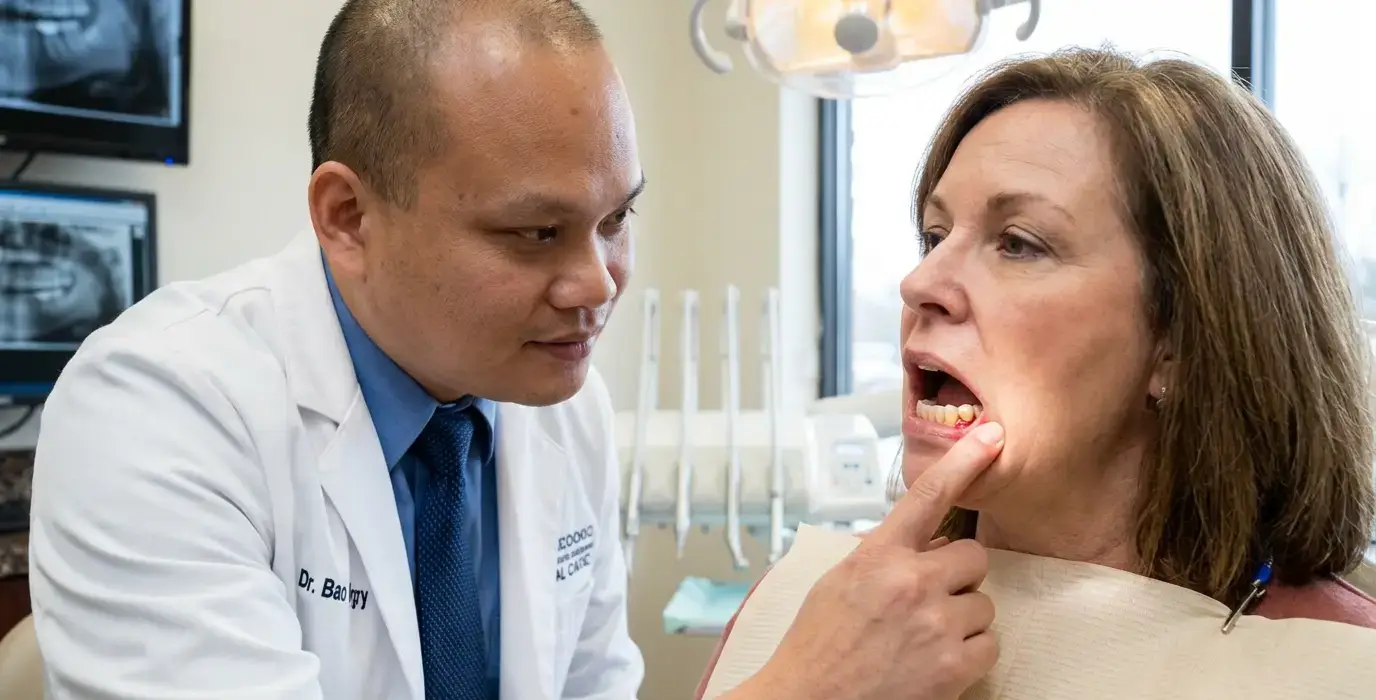
Patients often call a few days after a new crown, worried they did something wrong or the crown is bad. Usually neither is true. Most pain after a crown comes from one of a handful of causes, and most of them are quick to fix once you know which one it is. I'm Dr. Bao Nguyen, and this is how I sort them out in my Murrieta office.
The Short Answer
Is Some Pain After a Crown Normal?
| Symptom | Normal for | Not normal if |
|---|---|---|
| Sore, tender gum around the crown | 1 to 3 days | It's getting worse, swelling, or bleeding more each day |
| Quick zing with cold drinks | Up to about 2 weeks, fading | It lingers after the cold is gone, or gets stronger |
| Tooth feels "different" when you close | A day while you get used to it | It hits first, or hurts to chew after day two or three |
| Jaw or joint ache | 1 to 2 days after a long appointment | It keeps going, or you wake up with it |
| Throbbing or pain on its own | Never | Any time. Call. |
One thing to know up front: a tooth that's had a root canal shouldn't feel cold at all, because its nerve is gone. If a root-canal-treated tooth with a new crown hurts, the cause is the bite, the gum, or the bone around the root, not cold sensitivity.
Why It Hurts
Seven Reasons a Crowned Tooth Hurts
1. The bite is a hair high
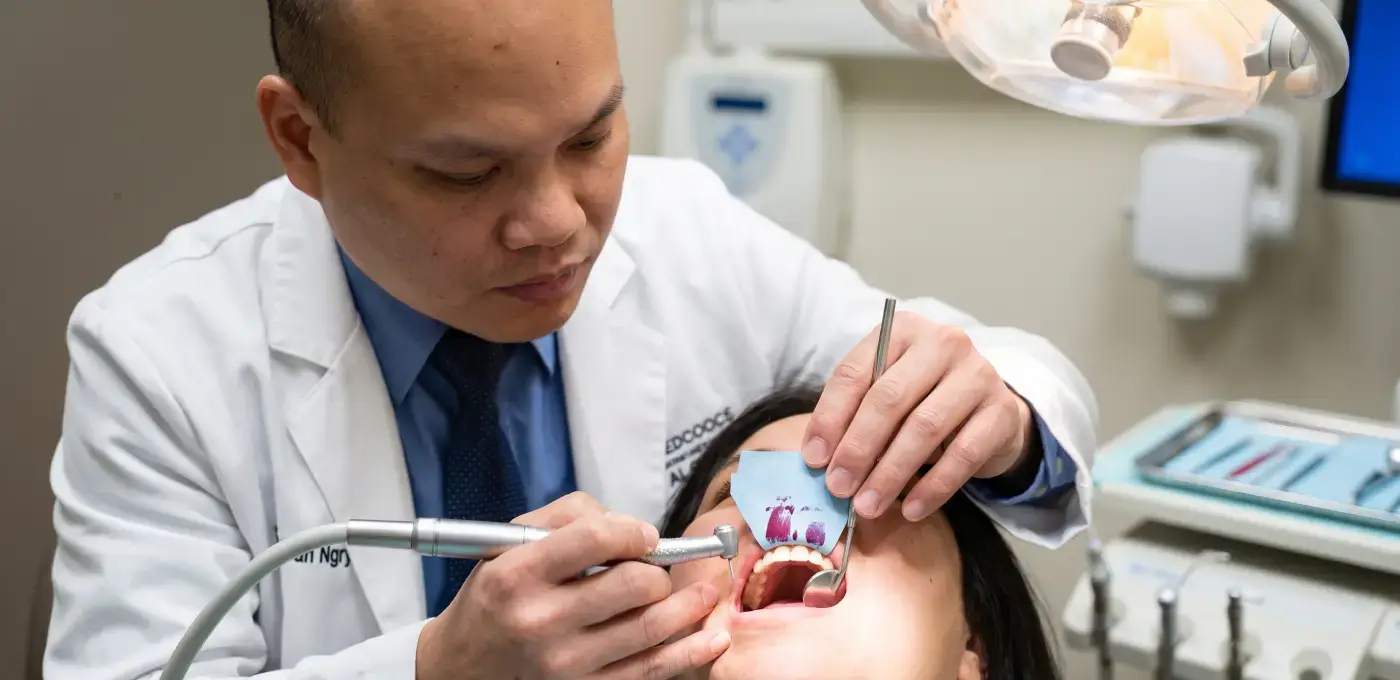
This is the most common cause I see, and the easiest to fix. If the new crown touches before your other teeth, all your bite force lands on that one tooth. Within a day or two the ligament around the root gets bruised and the tooth hurts to chew. It can happen even after a careful adjustment, because you were numb and couldn't feel your normal bite. A few minutes with marking paper and a polishing bur fixes it.
2. The nerve is irritated from the work
Shaping a tooth for a crown, especially one with deep decay or a big old filling, stirs up the nerve. That shows up as cold sensitivity that fades over a week or two. The Cleveland Clinic lists recent dental work as a common cause of short-term sensitivity. As long as it's getting better, the nerve is healing.
3. The nerve is dying
Sometimes the nerve was already badly stressed by decay, cracks, or years of fillings, and the crown preparation was the last straw. A 2023 systematic review found that about 5 percent of living teeth lose their nerve after a crown or similar restoration, more often in teeth that had a lot of previous damage. This pain gets worse instead of better, lingers after cold, throbs, or wakes you at night. It needs a root canal.
4. The gum is irritated
The edge of a crown sits at or just under the gumline, and the tissue there gets handled during the visit. A little soreness is normal. A bit of cement left under the gum can keep it inflamed, which is why I clear it carefully, and why gum soreness that's getting worse after a few days should be checked.
5. A crack under the crown
If the tooth was cracked before the crown, the crown usually stops the crack from spreading. Occasionally the crack had already reached deep into the root, and the tooth keeps hurting on biting. The American Association of Endodontists explains why a crack that runs into the root has a poorer outlook. See cracked tooth for how I tell the difference.
6. Grinding or clenching
A new crown changes how your teeth meet, and people who clench at night often notice the crowned tooth first. You'll feel it in the morning, sometimes along with a tired jaw. A night guard protects both the crown and the tooth. See Mayo Clinic on bruxism.
7. It isn't the crowned tooth at all
Pain is a poor map. An upper molar ache can be a sinus infection. A tooth across from the crown can be the one that's sore from the new contact. A long appointment can leave the jaw joint aching for a day or two. I test the neighbors and the opposing tooth before I blame the crown.
Symptom Guide
Match Your Pain to Its Likely Cause
| What you feel | Most likely cause | What usually fixes it |
|---|---|---|
| Sharp pain when you bite or chew, fine otherwise | High bite | A few-minute bite adjustment |
| Pain when you let go of a bite | A crack in the tooth under the crown | Exam and testing; depends on how deep it runs |
| Quick zing with cold that fades in seconds | Irritated but healing nerve | Time, sensitivity toothpaste, avoiding extremes |
| Cold pain that lingers, or throbbing on its own | Inflamed or dying nerve | Usually a root canal through the crown |
| Swelling, a pimple on the gum, or a bad taste | Infection at the root | Same-day visit; root canal or other treatment |
| Sore, puffy gum at the edge of the crown | Gum irritation or trapped cement | Cleaning the area; rarely, adjusting the edge |
| Ache in the morning, tired jaw | Clenching or grinding | Bite check and a night guard |
| Pain years later in an old crown | Decay at the edge, a crack, or recession | X-ray and exam; see loose or lost crowns too |
This table is a starting point, not a diagnosis. Two causes can overlap, and the only way to know is to test the tooth. If your symptoms don't fit any row, my page on why teeth hurt covers the broader patterns.
First-Hand
How I Find the Source of the Pain
The Navy taught me to listen to the history before I touch anything. When did it start? Does it hurt on biting, on letting go, with cold, or on its own? Does it wake you up? Those answers narrow it down to one or two causes before I pick up a mirror.
Bite check. You tap and slide on marking paper. If the crown marks heavier than its neighbors, I've found it.
Tapping and the bite tool. Tenderness to tapping points to the ligament or the bone. Pain on releasing the bite tool points to a crack.
Cold test. Cold is harder to read through ceramic than through natural enamel, so I test the neighboring teeth for comparison and repeat it rather than trusting one reading.
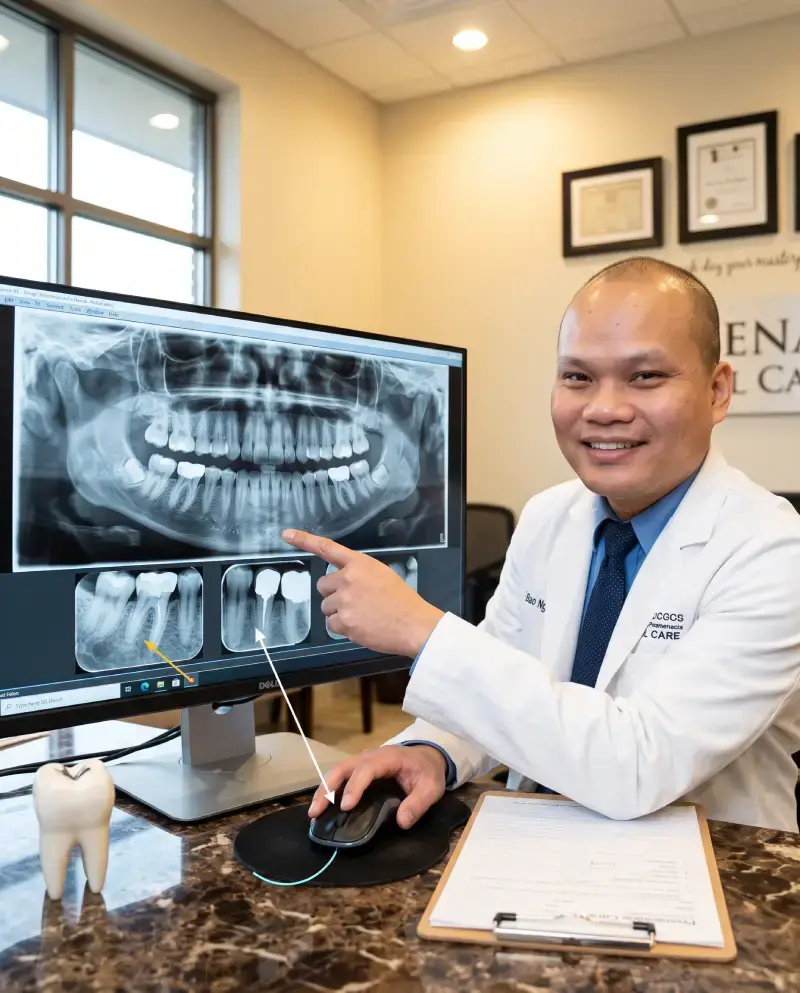
X-ray, and a 3-D scan if needed. I look at the bone around the root tip and the edge of the crown. When a cracked root is suspected, an in-office cone-beam scan can show bone loss that a flat X-ray misses.
Then I tell you what I found and what I'd do, including "let's give it another week" when that's the honest answer.
The Question Everyone Asks
Will I Need a Root Canal Through My New Crown?
Most people won't. The large majority of crowned teeth settle down and keep their nerves for life. For the roughly one in twenty that don't, the fix is usually simpler than people expect.
I make a small opening through the top of the crown, clean and seal the canals the same way I would in any root canal, and then close the opening with a bonded filling. The crown stays on. If the opening is large or the crown was already failing, a new crown may be the better plan, and I'll tell you before we start. The American Association of Endodontists has a good patient overview of what the procedure involves.
The warning signs that point this way are specific: cold pain that lingers for more than a few seconds, throbbing that comes on by itself, pain that wakes you up, or swelling. If you're in that group, don't wait it out. A tooth that's caught before it abscesses is more comfortable to treat. What the first week after feels like is on root canal recovery.
While It Settles
What Helps at Home After a Crown
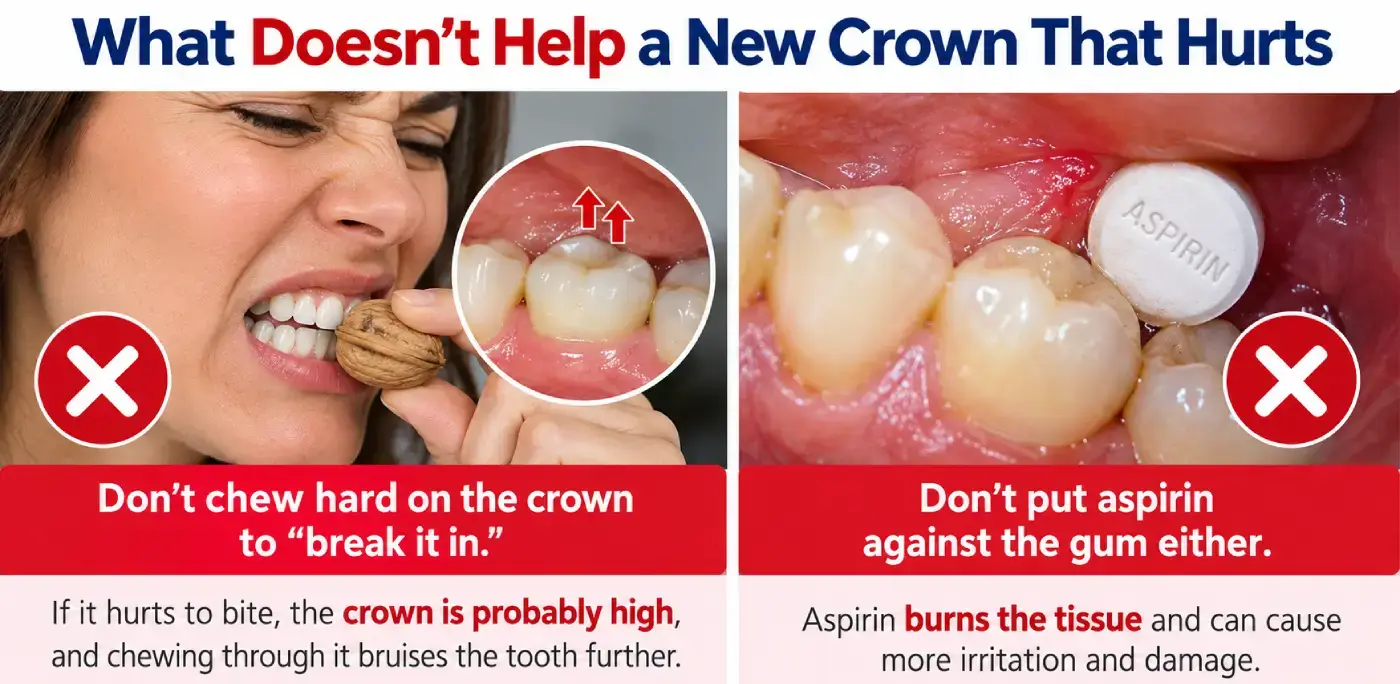
What doesn't help: chewing hard on the crown to "break it in." If it hurts to bite, the crown is probably high, and chewing through it bruises the tooth further. Don't put aspirin against the gum either, it burns the tissue.
Decision Boundary
When to Wait, and When to Call
I'd rather you call about something that turns out to be normal than sit on something that isn't. But plenty of post-crown discomfort really does just need time, and I won't bring you in or treat a tooth that's healing on its own.
| You can usually wait if | Call if |
|---|---|
| Cold sensitivity is brief and a little better each week | Cold pain lingers, or it's worse than the week before |
| Gum soreness is fading by day three | The gum is puffier, bleeds more, or has a bump on it |
| The bite feels a little new but doesn't hurt | The crown hits first or hurts to chew after two or three days |
| Your jaw is tired the day after a long visit | You wake up with jaw pain or a sore tooth most mornings |
| Nothing hurts on its own | It throbs, keeps you up, or you see swelling |
If your crown came from another office, you're still welcome here. Bring what you know about the tooth, and a $20 exam with X-rays will tell us what's going on.
Who Wrote This
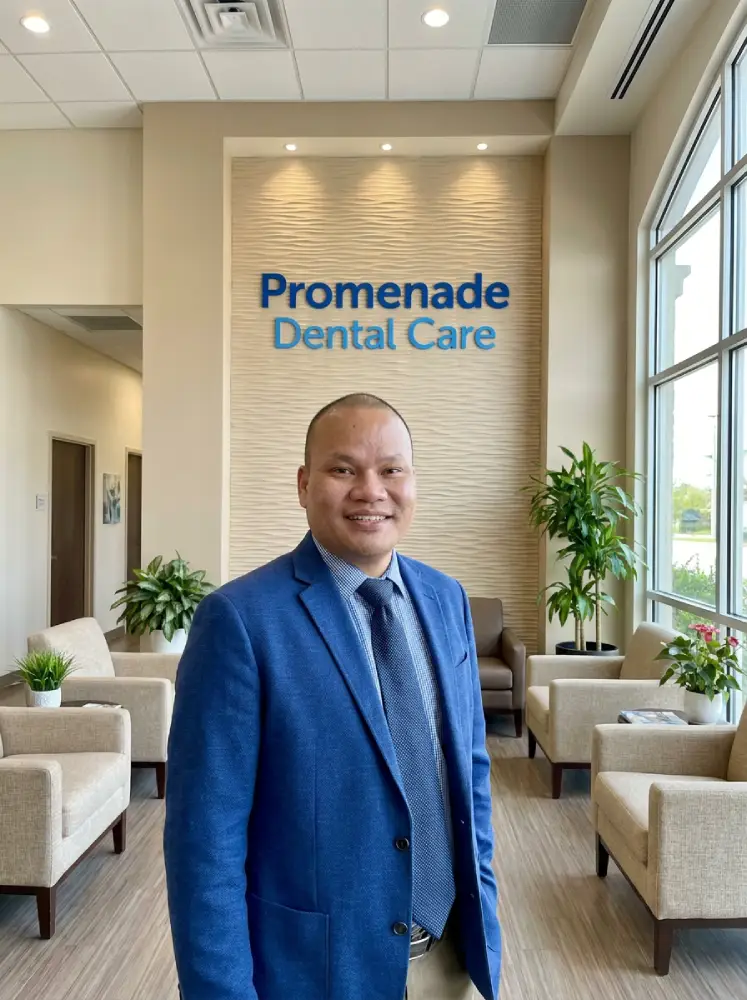
Reviewed by Dr. Bao Nguyen, DDS
I graduated from the UCLA School of Dentistry and served ten years as a Navy dentist, including an Advanced Education in General Dentistry residency at Naval Hospital Camp Pendleton. I've practiced for 26 years, the last sixteen in Murrieta, and take about 40 hours of continuing education a year. I'm a member of the ADA, the California Dental Association, and the Tri-County Dental Society.
I design, mill, and adjust my crowns myself, so when one of my patients calls with a sore crowned tooth, I already know that tooth's history. My approach is conservative: find the actual cause, fix the smallest thing that will solve it, and don't treat a tooth that's healing on its own. When a case needs an endodontist, I refer to one I trust.
In Our Patients' Words
What Patients Say About Honest Diagnosis
I saw doctor Bao Nguyen at Promenade Dental Care on three occasions. In these visits, Dr Nguyen took time to carefully examine my dental concerns and explained very clearly to me what my conditions are, and what treatment options available. He advised me against immediate treatments for conditions that can be improved or maintained with good oral hygiene. He was very gentle with treatments, especially with the local anaesthetic injections. Greatly appreciate his professional care.
— C. Nguyen · Google Review
I was in significant pain and Dr. Bao Nguyen was able to see me right away. The service was excellent and thorough. I needed a couple fillings done and it was quick, painless, and thorough. He made sure everything was done well and confirmed with imaging to ensure that I wouldn’t have any troubles or pain with the filling. A truly exceptional dentist that I would highly recommend!
— Kim V. · Google Review
The dentist / Owner is informative and concerned with the patient and their needs. He tells the truth. No sells pitch, just the right procedure advised with the patient as his prime concern.
— Larry H. · Google Review
This is a great place to go take care of your teeth. The team was very professional examining and providing with solutions by priority. I felt that I was in good hands. Very gentle and kind to me. They explained very well what was going on. The best dental care I have ever experienced! Will be coming back for all my future dental needs!
— Nancy R. · Google Review
Good to Know
Tooth Pain After a Crown: Common Questions
How long should a tooth hurt after a crown?
Gum soreness usually clears in one to three days. Mild cold sensitivity on a living tooth can last up to about two weeks, getting a little better each day. Pain when you bite that's still there after two or three days, or any pain that's getting worse, isn't part of normal healing and should be checked.
Why does my new crown hurt when I bite down?
Most often the crown is sitting slightly high, so it takes your whole bite before the other teeth touch. You couldn't feel that while you were numb. It bruises the ligament around the root, and the tooth gets sore to chew. A bite adjustment takes a few minutes and usually brings relief within a day or two.
Is it normal for a crowned tooth to be sensitive to cold?
For a week or two on a tooth with a living nerve, yes. The preparation irritates the nerve, and it needs time to calm down. A quick zing that fades in seconds and improves week to week is healing. Cold pain that lingers for more than a few seconds, or gets stronger, can mean the nerve is inflamed beyond recovery.
Can a tooth die after getting a crown?
Sometimes. Research puts it at about 5 percent of living teeth after crowns and similar restorations, more often in teeth that already had deep decay, large fillings, or cracks. It can happen weeks or even years later. Signs include lingering cold pain, throbbing, pain at night, or a pimple on the gum. A dying nerve is treated with a root canal, usually without removing the crown.
Can you do a root canal through a crown?
Yes, and it's the usual approach. I make a small opening through the top of the crown, treat the canals, and seal the opening with a bonded filling. The crown stays in place. If the opening would be large or the crown was already in poor shape, replacing the crown can be the better choice, and I'll explain that before starting.
Why does the gum around my new crown hurt?
The gum at the edge of the crown gets handled during preparation and scanning, so a few days of tenderness is normal. If it stays sore, swells, or bleeds more over time, a small piece of cement may be trapped under the gum, or plaque is collecting at the edge. Both are quick to clean up once I can see them.
Why does a crown I've had for years suddenly hurt?
An older crown that starts hurting usually has a problem underneath it: decay at the edge, a crack in the tooth, gum recession exposing the root, or a nerve that's slowly died. An X-ray and a few tests sort out which one. Don't wait on it, because decay under a crown spreads quietly.
Can grinding make a crowned tooth hurt?
Yes. Clenching and grinding at night put far more force on a tooth than chewing does. A newly crowned tooth often feels it first, usually as soreness in the morning along with a tired jaw. A bite check plus a custom night guard usually solves it and protects the crown from chipping.
Does sensitivity toothpaste help after a crown?
It can help with normal cold sensitivity, especially along the gumline where the edge of the crown meets the tooth. Brush with it twice a day and leave a thin layer on the tooth at night. It won't fix a high bite, a crack, or a dying nerve, so if it isn't helping after a week or two, get the tooth checked.
Can a new crown cause pain in my ear or jaw?
It can seem to. Holding your mouth open for a long appointment can leave the jaw joint sore for a day or two, and that ache can be felt near the ear. A high crown can also make the jaw muscles work harder. Pain from an inflamed nerve in a back tooth can spread toward the ear too, which is why I test the tooth rather than guess.
Why does my crowned tooth throb at night?
Throbbing that comes on by itself, especially lying down at night, is a sign of an inflamed or dying nerve rather than a simple bite problem. It rarely settles on its own. Call the office, and if you also have swelling or a fever, ask to be seen the same day.
Should I have the crown taken off if it hurts?
Almost never as a first step. Most pain after a crown is fixed by adjusting the bite, cleaning the gum, or treating the nerve through the crown. Removing a bonded crown usually means destroying it. I only recommend replacing a crown when there's decay or a crack under it that can't be reached any other way.
A Sore New Crown Is Usually a Quick Fix. Let's Find Out Which One.
Call and describe what you're feeling. We'll tell you whether to give it a few more days or come in, and you'll get the price before anything is done.
(951) 412-0127 Request an AppointmentPromenade Dental Care · Dr. Bao Nguyen, DDS
26957 Date St., Suite B4, Murrieta, CA 92563
Mon, Tue, Thu 9:00 AM–5:00 PM · Wed, Fri 9:00 AM–3:00 PM · Sat by appointment & emergencies · Sun closed