
After Your Root Canal · Murrieta, CA
Root Canal Recovery: What the First Week Should Feel Like
Most of the soreness is gone in two or three days. Here's what's normal, what isn't, and when I want a phone call.
The tooth that kept you up at night is fixed, and now it's tender for a different reason. That's expected, and for nearly everyone it fades fast. I'm Dr. Bao Nguyen. These are the same instructions I go over with patients in my Murrieta office before they leave the chair, written out so you can check them at 9 p.m. when you're wondering whether something is normal.
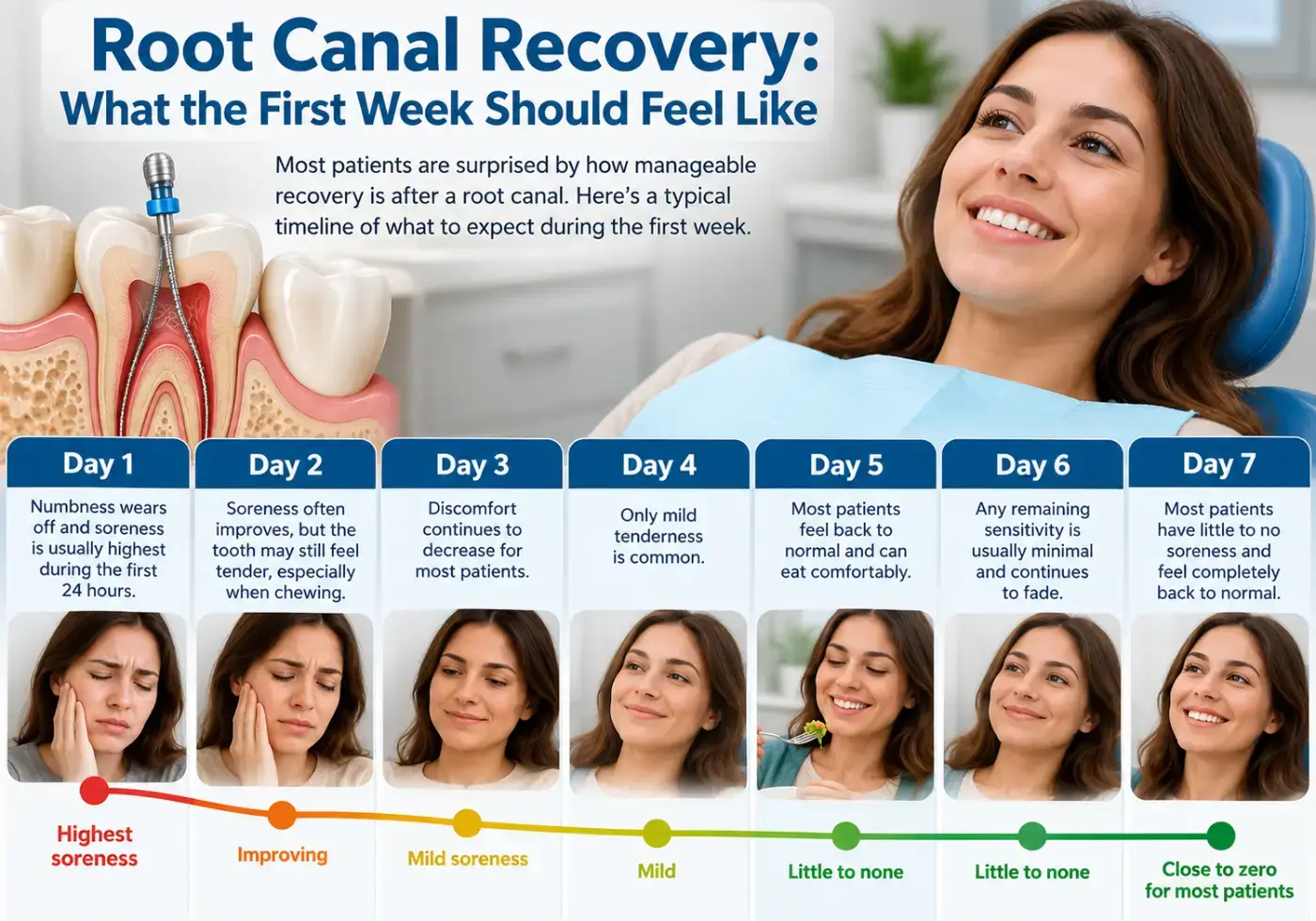
If You Only Read One Section
The Short Version
This page is the aftercare half of my root canal treatment page. That page explains why a tooth needs a root canal and what happens in the chair. This one is about the hours and days afterward.
- Numbness
- Two to four hours. Don't chew on that side until it's completely gone.
- Soreness
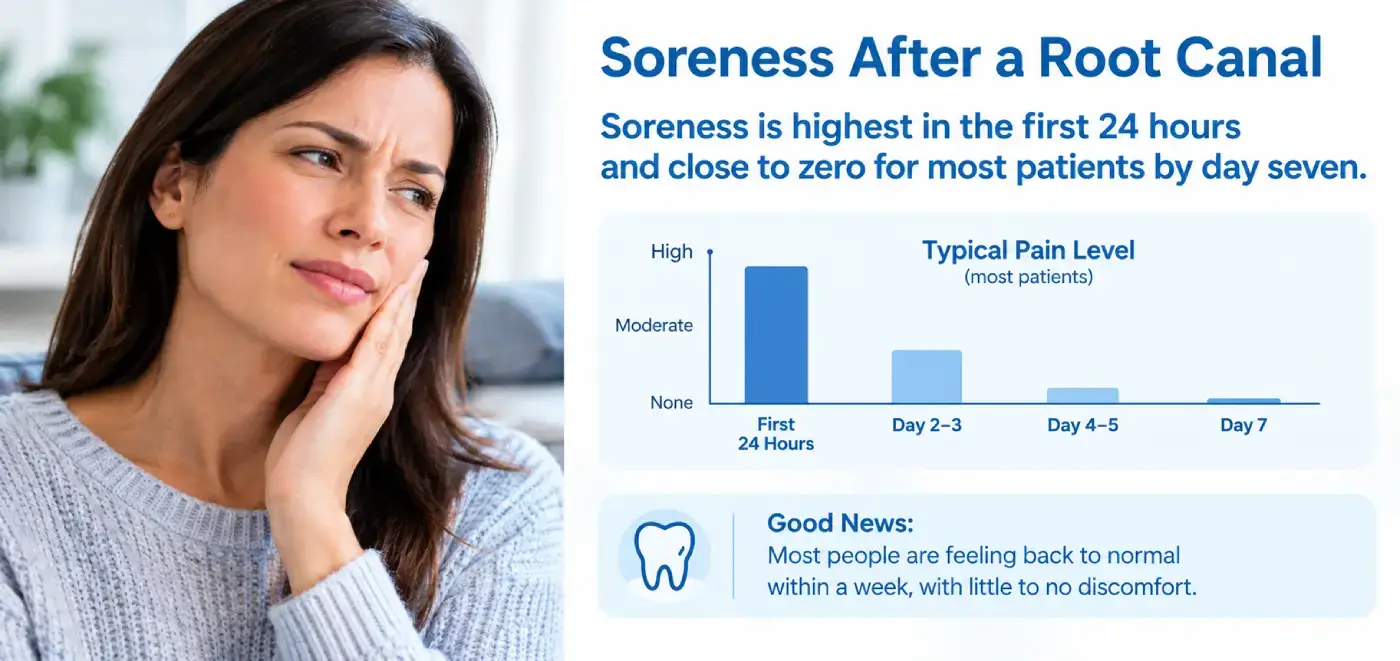
- Worst in the first day or two, mostly gone by day five
- Pain relief
- Over-the-counter ibuprofen handles it for most people
- Work or school
- Usually the same day or the next morning
- Chewing
- Soft food on that side for a day; normal once a permanent crown is on
- Antibiotics
- Usually not needed; I prescribe them only for spreading infection or fever
- Call me if
- Pain is getting worse after day three, swelling grows, or your bite feels high
The numbers behind that list are encouraging. A systematic review of pain before and after root canal treatment found that about 81 percent of patients had pain going in, about 40 percent still had some a day later, and only about 11 percent had any at the one-week mark. The severity dropped even faster than the numbers did.
What to Expect
Your Recovery, Day by Day
1The first two hours
Your lip and cheek are still numb. Take your first dose of pain reliever now, before the numbness wears off, so you're ahead of the soreness. Don't eat until you can feel your lip, or you'll bite it without knowing.
2The first evening
The tooth feels bruised, and your jaw may be stiff from being open for an hour. A cold pack on the outside of your cheek, ten minutes on and ten off, helps. Sleep with your head on an extra pillow.
3Days one and two
Tender when you bite or tap on it. That's the ligament around the root, not the tooth itself. Keep taking pain reliever on a schedule rather than waiting for it to hurt.
4Days three to five
Each day should feel better than the one before. Most people stop thinking about the tooth somewhere in here. Pain that's climbing instead of falling by now is a reason to call.
5The first two weeks
A faint awareness on hard biting can linger. If you left with a temporary filling, this is when the permanent crown goes on.
6Six to twelve months
The bone around the root tip rebuilds. I check it on an X-ray at your regular visits. You won't feel any of this happening.
The Reason
Why the Tooth Is Sore When the Nerve Is Gone
Patients ask me this all the time, and it's a fair question. If I took the nerve out, what's left to hurt?
The answer is the tissue around the tooth. Every root sits in a thin cushion of ligament that has its own nerve supply, and that ligament is what tells you when you're biting on something. The infection I just cleaned out was sitting right at the root tip, pressing on that cushion. Cleaning the canals irritates it a little more. It's sore the way a sprained ankle is sore, and it heals the same way, over a few days.
Three other things add to it. The rubber clamp that holds the protective sheet in place can bruise the gum. The injection site can ache for a day or two. And your jaw muscles have been holding your mouth open for an hour, which some people feel the next morning, especially if they already clench.
How much it hurts afterward tracks closely with how much it hurt before. A tooth that came in throbbing, with an infection at the root tip, usually has the sorest few days. A tooth I treated before it got that far often barely registers. The American Association of Endodontists describes the same pattern: a few days of tenderness that responds well to over-the-counter medicine.
Staying Comfortable
Pain Relief That Actually Works
For most adults, ibuprofen is the right medicine, because the soreness is inflammation and ibuprofen treats inflammation. Taking it with acetaminophen covers more than either one alone. Follow the doses on the labels, take them on a schedule for the first day or two instead of waiting for the pain to build, and stop when you no longer need them.
Tell me before you leave if you can't take ibuprofen. Kidney problems, stomach ulcers, blood thinners, pregnancy, and some heart conditions all change what I recommend. When the starting infection was severe, I sometimes prescribe something stronger for the first night, and if I do, don't drive or drink alcohol while you're taking it.
Why I don't hand out antibiotics by default
Plenty of people expect a prescription for antibiotics after a root canal. Most don't need one. The root canal itself removes the infection's source, and the American Dental Association's guideline on antibiotics for dental pain and swelling advises against them for healthy adults when the tooth has been treated. They add side effects without speeding recovery.
I do prescribe them when the infection has spread beyond the tooth: swelling into the face or neck, a fever, swollen glands, or a patient whose immune system needs the extra cover. If you get any of those after you leave, call me that day.
Skip the old tricks. Don't put aspirin or a numbing gel directly on the gum; it can burn the tissue. Heat on the outside of your face is a bad idea in the first two days, because it can draw swelling outward. Cold is the right choice.
Normal or Not?
What's Normal After a Root Canal and What Means You Should Call
| What you notice | Usually normal when | Call me when |
|---|---|---|
| Tender to bite | It eases a little each day over three to five days | It's worse on day three than on day one |
| Tooth feels tall | It's only in the first few hours while you're numb | The tooth hits first after the numbness is gone |
| Swelling | Mild puffiness of the gum that shrinks by day two | It grows, spreads into your face, or comes with fever |
| Sore gum beside the tooth | A bruise where the clamp sat, gone in a few days | A pimple or bump appears and drains a bad taste |
| Stiff jaw | Morning stiffness that loosens with gentle use | You can't open far enough to eat after two days |
| Temporary filling | A thin layer wears down on top | It falls out or you can feel a hole |
| Rash or itching | Never part of normal healing | Right away, and stop the medicine |
The bite that's too high
This is the most common fixable cause of soreness that won't settle. If the new filling or crown is a fraction of a millimeter too tall, that tooth takes the full force of every bite and the ligament never gets a chance to calm down. It feels like the tooth hits first when you close. The fix takes about ten minutes. I polish the high spot down and the soreness usually starts fading within a day.
A flare-up
A small minority of patients have a flare-up: the soreness gets noticeably worse instead of better, often with swelling, a day or two after treatment. It usually comes from the body reacting to bacteria and debris that were already at the root tip. It's uncomfortable, but it's treatable. I'll see you, check the bite, and, depending on what I find, relieve the pressure, adjust the tooth, or add an antibiotic if the infection is spreading. Flare-ups rarely mean the root canal has failed.
Getting Back to Normal
Work, Exercise, Food, and the Rest of Your Week
Most of my patients go back to work the same afternoon or the next morning, including those who had nitrous oxide, which clears within minutes.
Light exercise is fine the next day. I'd hold off on heavy lifting or hard workouts for 24 hours if the tooth had an active infection, because straining raises blood pressure in your head and can make a sore tooth throb.
The AAE's post-treatment guidance says not to smoke in the first hour, and I'd stretch that much longer. Smoking slows healing in the bone around the root. Alcohol doesn't mix with prescription pain medicine, and it's worth skipping for the first night either way.
For food, stay on the soft side until the soreness fades: eggs, pasta, soup that's warm rather than hot, yogurt, rice, fish. Chew on the other side. If you have a temporary filling, avoid anything sticky or hard on that tooth until the crown is on.
Brush and floss normally, gently around the treated tooth. If you floss beside a temporary filling, slide the floss out sideways instead of pulling it up, so you don't lift the temporary.
Finishing the Job
The Crown Is Part of the Recovery
A back tooth isn't finished when the root canal is. Without its nerve and blood supply, a treated molar slowly turns brittle, and the access opening I made weakens it further. The usual way a root canal tooth is lost isn't infection. It's a tooth that was never crowned and split down the middle years later, the same way a cracked tooth does.
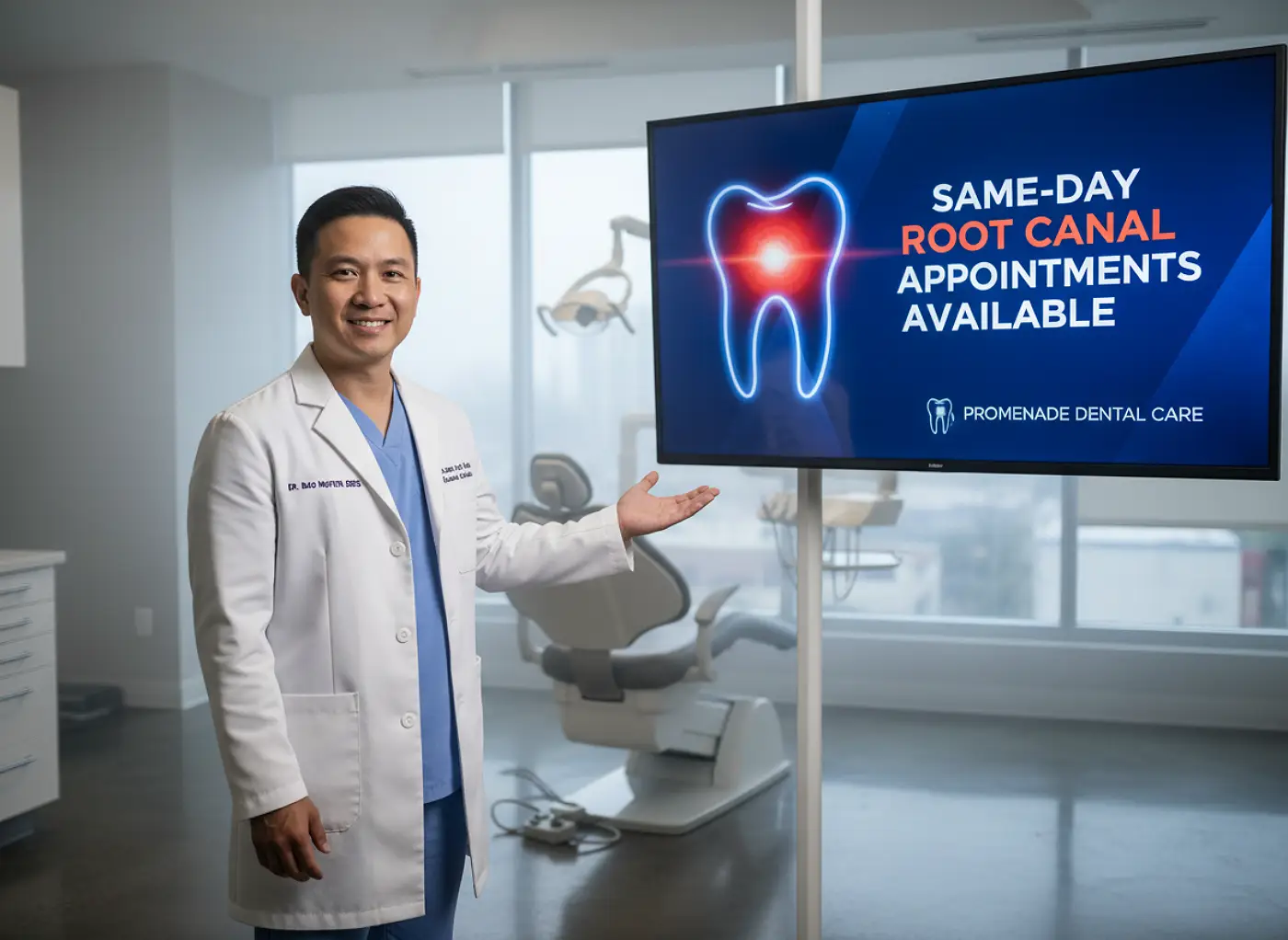
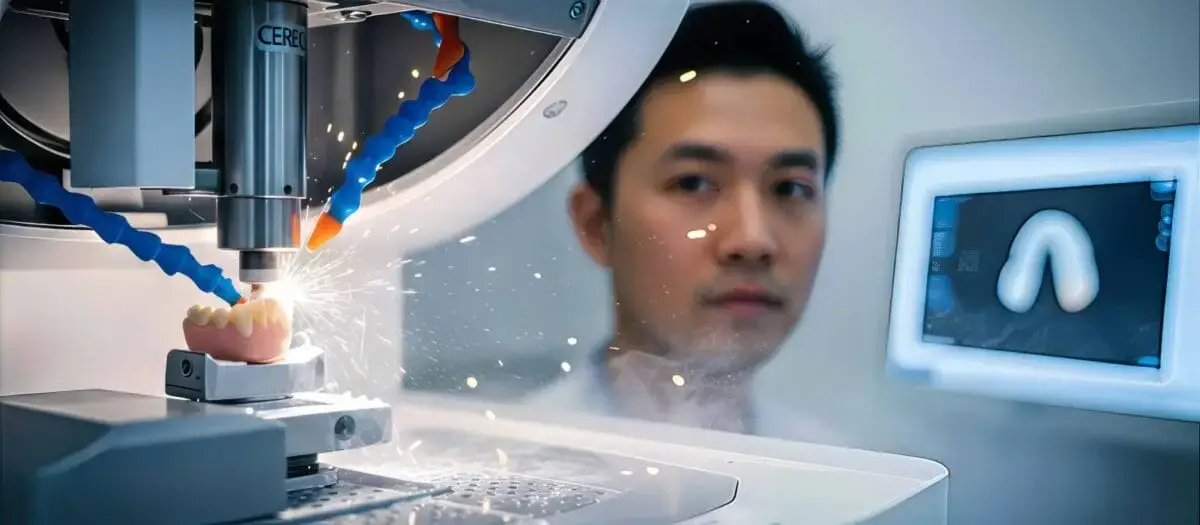
Most of my patients don't have to think about this, because I mill a same-day ceramic crown in the office and bond it at the same visit. No temporary, no second appointment, no two weeks of babying the tooth. The crown is $1,200 cash, quoted in writing with the root canal.
When I do place a temporary filling, usually because the tooth was badly infected and I want it to settle first, the crown visit should happen within a week or two. A temporary isn't built to take years of chewing, and a tooth left in one too long can crack or leak.
The Long Run
Months and Years Later
A treated tooth never feels exactly like its neighbors again. It doesn't sense hot or cold, but it still feels pressure through the ligament around the root, so you'll know when you bite on it. Many people say it feels a little different for a few months and then they forget which tooth it was.
A small number of teeth stay uncomfortable well past the first weeks. A systematic review of persistent pain after root canal therapy put the share of treated teeth still painful at six months or longer at about 5 percent. Some of those have a problem in the tooth, like a canal that was missed or a crack. Some don't; the pain comes from nearby nerves or the jaw muscles, and a second procedure on the tooth won't help. Sorting those apart takes testing, not guessing.
Watch for the signs that something has changed: a tooth that was fine for months starts hurting to bite, a pimple shows up on the gum beside it, or it starts to feel loose. Those can mean the seal broke down, a crack opened, or bacteria found a way back in. Caught early, many of those teeth can be retreated and kept. A complicated retreatment or a surgery on the root tip goes to an endodontist I work with, and I coordinate it. When the tooth can't be saved, extraction and replacement is the honest answer.
The Cleveland Clinic notes that most root canals last many years, often a lifetime. In my experience, the teeth that make it are the ones that got their crown promptly and come in for checkups so I can watch the X-rays.
Who Wrote This
Reviewed by Dr. Bao Nguyen, DDS
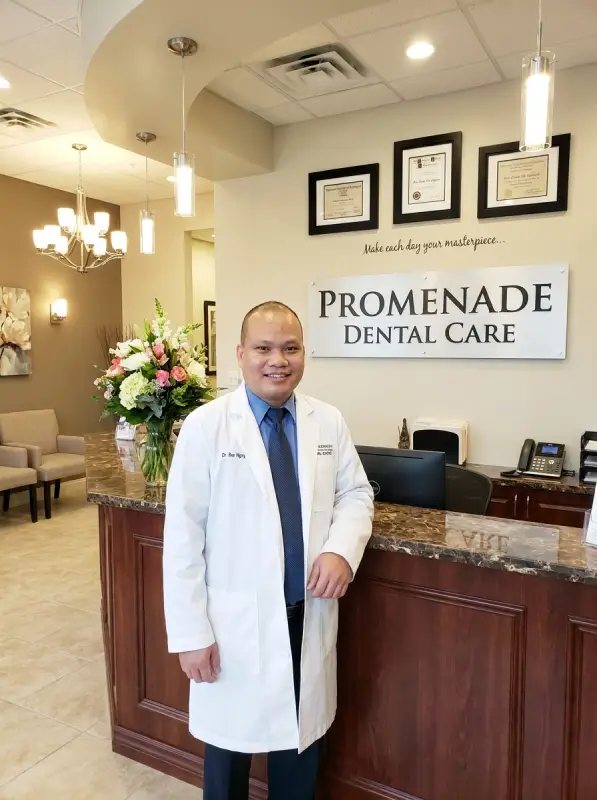
I graduated from the UCLA School of Dentistry and served ten years as a Navy dentist, including an Advanced Education in General Dentistry residency at Naval Hospital Camp Pendleton, where root canals were everyday work. I've been practicing for 26 years, and I've owned this practice since 2010. I take around 40 hours of continuing education a year and I'm a member of the ADA, the California Dental Association, and the Tri-County Dental Society.
I do most root canals myself, which means the dentist who treated your tooth is the one who answers when you call about it afterward. I'd rather you call about something that turns out to be normal than sit at home for three days wondering. My team can walk you through these instructions in English, Spanish, or Vietnamese.
In Our Patients' Words
What Murrieta Patients Say
I became a patient in July of last year and needed some emergency dental work. I was able to get in the same day and have a crown and root canal done with zero pain! I recently had another toothache and was again provided a prompt same day appointment. Hands down the best dental experience I’ve had — zero pain, zero wait time. Pricing is always up front and affordable.
— Alicia Alvarado · Google Review
I was in significant pain and Dr. Bao Nguyen was able to see me right away. The service was excellent and thorough. I needed a couple fillings done and it was quick, painless, and thorough. He made sure everything was done well and confirmed with imaging to ensure that I wouldn’t have any troubles or pain with the filling. A truly exceptional dentist that I would highly recommend!
— Kim V. · Google Review
I’ve been to a lot of different dentists through the years and have had several fillings/crowns done. I often times experience pain and pressure during procedures even after the anesthetic. This time, zero pain, zero pressure, no nonsense. I’ll be coming back for regular cleanings and any needed procedures. They have my business indefinitely!
— Dominic S. · Google Review
Very knowledgable and good prices. Does only what is necessary — does not just look for stuff to charge for. Got an appointment quickly when I thought it was an emergency. My favorite dentist ever!!
— Sheila O’Connor · Google Review
Good to Know
Root Canal Recovery FAQs
How long does a tooth hurt after a root canal?
For most people the soreness peaks in the first 24 to 48 hours and is mostly gone by day three to five. A slight awareness when you bite hard can last a week or two. If it's getting worse instead of better after the third day, call me.
Is it normal for my tooth to throb two days after a root canal?
Some tenderness on day two is normal, especially if the tooth was infected going in. A throb that's stronger than it was on day one, or that comes with new swelling, is not the usual pattern. That could be a flare-up or a high bite, and both are easy to check, so call (951) 412-0127.
Why does my tooth hurt when I bite down after a root canal?
The ligament that holds the root in the bone is inflamed from the infection and from the cleaning, and biting squeezes it. It settles over a few days. If biting still hurts after the first week, or the tooth seems to hit before the others, the bite may be a little high and needs a quick adjustment.
Why does my tooth feel too tall after the root canal?
While you're numb, every bite feels off, so wait until the anesthetic has completely worn off. If the tooth still touches first after that, the new filling or crown is slightly high. That puts extra force on a tooth that's already sore. It's a ten-minute fix, and it usually makes a big difference within a day.
Is swelling normal after a root canal?
A little puffiness of the gum beside the tooth can happen and should shrink by the second day. Swelling that keeps growing, spreads into your cheek or under your jaw, or comes with a fever is not normal. Call the office that day, and go to an emergency room if you have trouble swallowing or breathing.
Do I need antibiotics after a root canal?
Usually not. The root canal removes the source of the infection, and the American Dental Association advises against routine antibiotics for healthy adults whose tooth has been treated. I prescribe them when the infection has spread beyond the tooth, such as facial swelling, fever, or swollen glands, or when a patient's health calls for extra protection.
Can I go back to work the day after a root canal?
Yes. Most people go back the same afternoon or the next morning. If you're taking a prescription pain medicine, don't drive or operate machinery while you're on it.
When can I exercise after a root canal?
Light activity like walking is fine right away. I'd wait about 24 hours before heavy lifting or hard workouts, especially if the tooth was infected, because straining can make a sore tooth throb. If exercise makes the tooth hurt, back off for another day.
Can I drink alcohol after a root canal?
Not with a prescription pain medicine, and I'd skip it the first night either way. With ibuprofen alone, a drink after the first day is generally fine, though alcohol can irritate a sore stomach when combined with ibuprofen. Water is the better choice while the tooth is healing.
What should I do if my temporary filling falls out?
Call the office and we'll replace it, usually the same day or the next. Until then, keep the area clean, chew on the other side, and avoid sticky or hard food. Losing a thin top layer of a temporary is normal; losing the whole thing lets bacteria back into the tooth, so don't wait on it.
Why is my gum sore next to the root canal tooth?
Usually it's a bruise from the small clamp that holds the protective sheet in place, or from the injection. It should fade within a few days, and warm salt-water rinses help. A pimple or bump that appears on the gum and drains a bad taste is different and needs to be looked at.
Can a tooth still hurt months after a root canal?
It can, though it's uncommon. A tooth that's still sore months later may have a missed canal, a crack, or a leaking seal, and some of those can be retreated. Sometimes the pain is coming from nearby nerves or the jaw muscles rather than the tooth, so I test before recommending anything more.
When should I call you after a root canal?
Call if pain is getting worse after the third day, swelling is growing, your bite feels high, the temporary filling comes out, you get a rash, or symptoms you had before the root canal come back. You don't need a perfect reason. A five-minute call is better than three days of wondering.
Questions About Your Recovery? Call Me.
If something doesn't match what you've read here, call the office. The dentist who treated your tooth is the one who will call you back.
(951) 412-0127 Request an AppointmentPromenade Dental Care · Dr. Bao Nguyen, DDS
26957 Date St., Suite B4, Murrieta, CA 92563
Mon, Tue, Thu 9:00 AM–5:00 PM · Wed, Fri 9:00 AM–3:00 PM · Sat by appointment & emergencies · Sun closed