
Patient Guide · Murrieta, CA
Sinus Lift for Dental Implants in Murrieta
Building enough bone under the upper back teeth to place implants that last, from the dentist who does the grafting himself.
If an implant consultation for an upper back tooth turned up the words "sinus lift," this page covers what the procedure involves, why the upper jaw needs it more often than the lower jaw, how it's done, what recovery looks like, when I'd talk you out of one, and what decides the cost. It's a different topic from a sinus opening after an extraction. That's a rare complication covered on the oral surgery page. A sinus lift is a planned procedure that makes an implant possible in the first place.
The Short Answer
What a Sinus Lift Actually Does
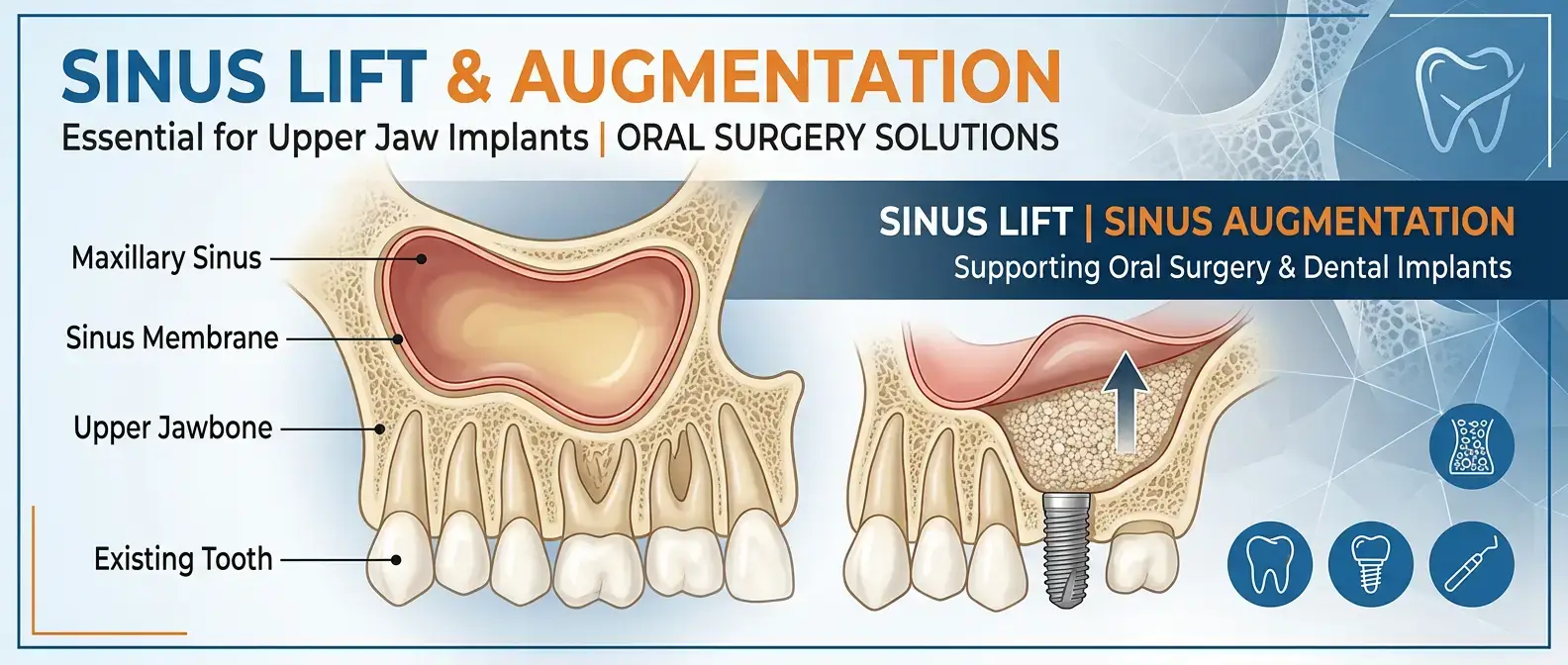
A sinus lift, also called sinus augmentation, is a bone-grafting procedure that raises the floor of the maxillary sinus so there's enough bone underneath it to anchor a dental implant. It's planning ahead, not fixing a mistake. Nothing about it is an emergency, and nothing about it is a complication. It's one extra step in an implant plan for the upper back teeth, done because the anatomy up there leaves less bone to work with than almost anywhere else in the mouth.
That point trips a lot of patients up, because "sinus" also shows up on this site in a completely different context: a small opening that can occur during an upper molar extraction, discussed on the oral surgery page. That's an occasional side effect of pulling a tooth. A sinus lift is the opposite kind of event, a planned, elective procedure that happens before an implant goes in.
- What it is
- Bone grafting that raises the maxillary sinus floor to build height for an implant post.
- Who needs it
- Patients getting an implant in an upper back tooth (premolar or molar area) where bone height has been lost.
- Who does it
- Dr. Bao Nguyen, DDS, in-house. No referral to an oral surgeon or specialist office for a single-tooth case.
- Two approaches
- Lateral window (more bone needed) or crestal / osteotome (a smaller lift done through the implant site itself).
- Healing before implant
- Typically 4 to 9 months after a standalone lateral window lift. A crestal lift usually goes in the same day as the implant.
The Anatomy Behind It
Why the Upper Back Jaw Runs Short on Bone
The maxillary sinuses are two air-filled spaces behind your cheekbones. Their floor sits directly above the roots of your upper premolars and molars, and in some people the roots and the sinus lining actually touch. Two things work against you here at once. The bone in that spot is naturally thinner and softer than bone almost anywhere else in the jaw. And when an upper back tooth is lost, the ridge that held it starts shrinking, while the sinus tends to expand downward into the space the root used to occupy. That second process is called pneumatization. The longer a tooth has been missing, the more vertical bone is usually gone.
None of this is unusual, and it isn't a sign anything went wrong. The American Association of Oral and Maxillofacial Surgeons' patient guide to sinus augmentation describes the same chain of events: lose an upper back tooth, the bone thins, the sinus drops, and there's no longer enough height for an implant. Most people who need a lift find out from a scan, not from any symptom.
Matching the Method to the Gap
Lateral Window vs. Crestal Sinus Lift
There are two ways to raise the sinus floor, and which one applies depends almost entirely on how much height is already there.
| Factor | Lateral window | Crestal (osteotome) |
|---|---|---|
| Best for | Significant bone shortage, often 5mm or less | Modest shortage, usually more than 5mm already present |
| Access | Small window opened in the side of the jawbone | Worked through the same site the implant will occupy |
| Implant timing | Usually a separate procedure first, implant follows after healing | Often done at the same visit as implant placement |
| Swelling | More noticeable, typically a few days | Usually minimal |
| Height gained | Larger gains possible | Smaller, more conservative gains |
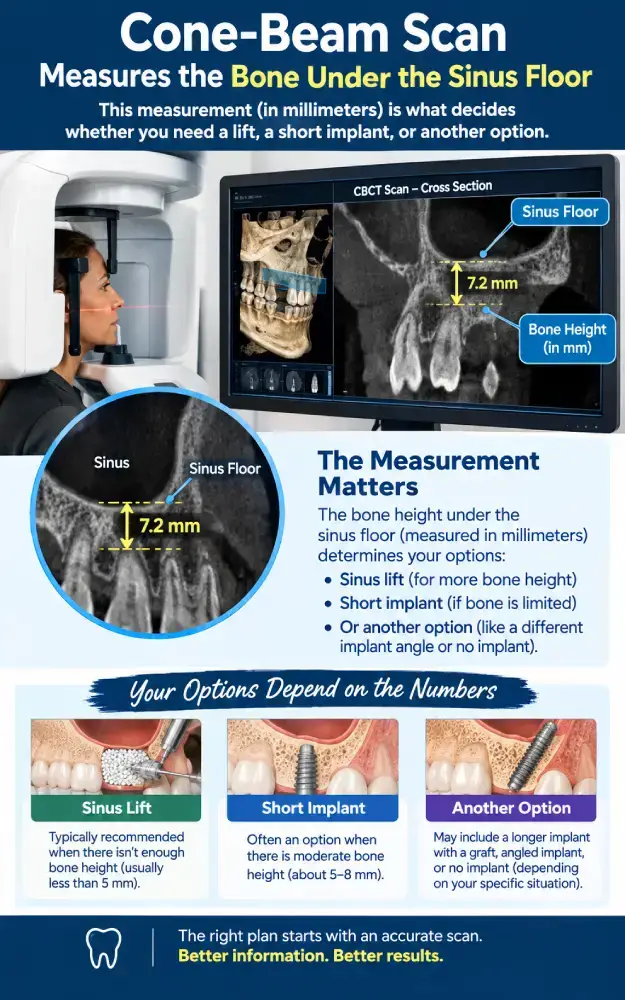
Neither approach is the "better" one in the abstract. They solve different amounts of missing bone. A review of sinus floor augmentation techniques in the Journal of Oral & Maxillofacial Research lands on roughly the same dividing line I use: more than about 5mm of existing bone usually means a crestal lift with the implant placed at the same visit, and 5mm or less usually means a lateral window. I make that call off your cone-beam scan, not a rule of thumb, because a millimeter or two is often what tips it.
What Actually Happens
The Sinus Lift Procedure, Step by Step
1Imaging and planning
A cone-beam CT scan measures the exact sinus floor height and shows the sinus outline in three dimensions before anything is scheduled. This is what decides lateral window versus crestal, not a guess made in the chair.
2Local anesthesia
The procedure is done under local anesthetic, the same as a filling or extraction. If you'd like to be more relaxed for it, ask about the sedation options I offer.
3Accessing the sinus floor
For a lateral window, a small opening is made in the side wall of the jawbone and the thin sinus membrane is gently lifted off the bone beneath it. For a crestal lift, the same lifting happens through the narrower implant site itself.
4Placing the graft material
Bone graft material is packed into the space under the lifted membrane. It doesn't become bone on its own. It's a scaffold your body grows new bone into over the following months.
5Closing and healing
The site is closed. After a standalone lateral window lift, the graft is left to mature before an implant goes into it. A crestal lift done alongside the implant skips that separate wait.
What to Expect Afterward
Sinus Lift Recovery and Healing Time
The first few days after a sinus lift look a lot like recovery from any bone graft: some swelling along the cheek and upper lip, mild discomfort handled with the pain medication you go home with, and a short list of precautions built around protecting the healing sinus membrane.
Those precautions matter more here than after most procedures, because pressure changes in the sinus can disturb a graft that hasn't stabilized yet. For the first one to two weeks: no blowing your nose, no sneezing with your mouth closed, no straws, no smoking, and no flying or scuba diving until I clear you. If a sneeze is coming, let it out with your mouth open. If I recommend a saline nasal spray, it keeps the area moist without the pressure a hard nose-blow creates.
Full graft maturation, the point where there's enough new bone to anchor an implant safely, generally takes four to nine months, depending on how much height we needed and which technique was used. The AAOMS guide describes the same thing: over several months the graft fuses with the surrounding jaw into a stable base for the implant.

Being Direct About It
Sinus Lift Risks, Honestly Stated
A sinus lift is a well-established, predictable procedure, and serious complications are uncommon. Being straight with you about what can happen is part of getting a real yes before you consent to one.
The same Journal of Oral & Maxillofacial Research review reports implant survival well above 90% across the main sinus lift techniques, and found that a membrane perforation, the most common complication, didn't change the final outcome. It also flags smokers as more prone to wound breakdown and infection after the procedure, which matches what I see in the chair. If you smoke, we'll talk about that before we schedule anything.
The Conversation Most Offices Skip
When I Don't Recommend a Sinus Lift
A sinus lift adds surgery, healing time, and cost to an implant plan. It's worth it when it's the only way to get a solid implant in the right spot. It isn't worth it just because the option exists. Here's when I'll suggest something else.
When a shorter implant will do the job
If your scan shows moderate height, say 6 to 8mm, a shorter implant can sometimes go straight into the bone you already have, with no lift at all. A 2023 meta-analysis of randomized trials with at least five years of follow-up found short implants to be a reasonable alternative to a standard implant plus a sinus lift. Survival was slightly better on the lift side after five years, but the difference wasn't statistically significant. I weigh that against your bite, the tooth being replaced, and whether you grind.
When a bridge makes more sense
If the teeth on both sides of the gap already need crowns, a bridge can replace the missing tooth without touching the sinus. I walk through that trade-off on the bridge vs. implant page.
When the tooth may not need replacing
A missing upper second molar with no lower tooth biting against it sometimes doesn't need to be replaced at all. I'll tell you if I think that's your situation rather than sell you a graft you don't need.
When the timing is wrong
An active sinus infection, a smoker who isn't ready to quit, or health issues that aren't under control yet all mean waiting. Postponing a lift is far better than having one fail.
Money, Plainly
What Drives Sinus Lift Cost
There's no single number that fits every sinus lift, because the procedure isn't one fixed thing. A few factors move the price more than any other.
Lateral window vs. crestal
A lateral window lift is a longer, more involved procedure than a crestal lift, and it costs more accordingly. A crestal lift bundled into the same visit as implant placement is usually the more economical path when the case allows it.
Amount of graft material
How much height we need to gain determines how much graft material goes in, and material cost scales with volume.
Whether it's bundled with the implant
When a crestal lift happens at the same appointment as implant placement, you're paying for one combined visit instead of two separate procedures with two separate healing periods.
Insurance and financing
Some PPO plans pay toward sinus augmentation as a covered oral surgery procedure. Others treat it as part of the implant benefit or exclude it. Promenade Dental Care accepts all PPO plans and is in-network with Delta Dental PPO, Cigna, MetLife, Guardian, Aetna, and United Concordia. Uninsured patients get flat written cash pricing before anything is scheduled, plus CareCredit financing with up to six months at zero interest for qualified applicants.
Who Wrote This
Reviewed by Dr. Bao Nguyen, DDS
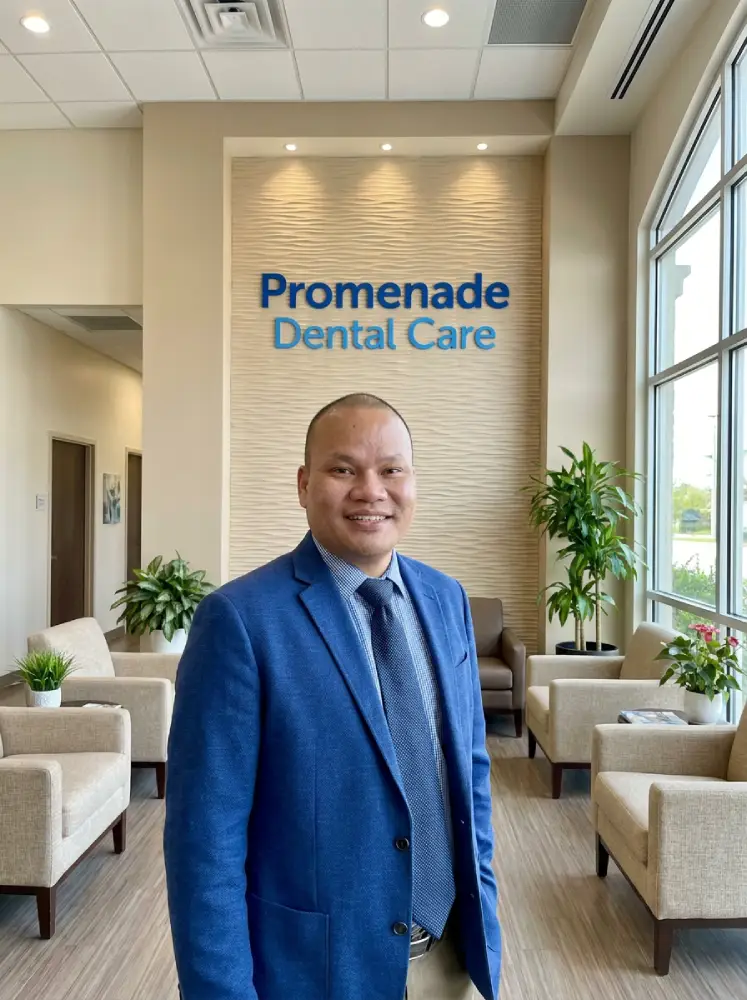
My Navy residency at Camp Pendleton put me through periodontics and oral surgery training alongside restorative work, so grafting has never been something I hand off. When a patient needs a sinus lift ahead of a single implant, I plan it, perform it, and place the implant myself once the site is ready. One dentist, one chart, no second facility fee for a specialist across town.
I'd rather show you the sinus floor height on your own cone-beam scan than quote a lift off a description over the phone. Most patients from Murrieta, Temecula, and Menifee are relieved to learn it's a planned, well-understood step rather than the setback they were expecting. And some leave having learned they don't need one at all.
Related Care
Other Steps in an Implant Plan
Dental Implants
The full picture: candidacy, process, gum and bone health, and cost.
Bone Grafting
Socket preservation and ridge grafting, the other way we build bone for an implant.
Guided Implant Surgery
How cone-beam imaging and a surgical guide plan the placement precisely.
How Long Implants Take
A realistic timeline from consultation to final crown, grafting included.
Oral Surgery
Extractions, wisdom teeth, and the extraction-related sinus complication this page isn't about.
From Our Google Reviews
What Implant and Surgical Patients Say
"Skilled, friendly, and includes you every step of the way. Love that I could do a full cap replacement in one visit. Thank you Dr. Bao, you're my new go-to man for dental work. Yessica at the front desk is a big help too."
"I got a tooth extraction, a crown, a handful of cavities, and a deep cleaning all done at the exact same time. The doctor gave me some anxiety meds which completely relaxed me. Three days later everything is healing beautifully."
"Very knowledgeable and good prices. Does only what is necessary, does not just look for stuff to charge for. Got an appointment quickly when I thought it was an emergency. My favorite dentist ever."
"Dr. Nguyen is very quick but very gentle. He has more practical experience than most others, so my wife and I recommend his fine dentistry."
"I have been a patient of Dr. Nguyen's now for over a decade. Doctor and staff are incredibly wonderful, so kind, caring and compassionate, yet professional. Dr. Nguyen met me at his office for an emergency visit during the height of COVID and I will forever be thankful for it!"
Sinus Lift FAQs
Common Questions About Sinus Lifts
Is a sinus lift the same thing as a sinus infection or a sinus complication from an extraction?
No, and this is the most common mix-up patients have about the term. A sinus lift is a planned bone-grafting procedure done to prepare the upper jaw for a dental implant. A sinus opening, or "sinus communication," is an occasional, unplanned event that can happen during an upper molar extraction, and it's covered separately on the oral surgery page. The two share the word "sinus" and nothing else.
How do I know if I need a sinus lift?
You won't know from a symptom, because a short sinus floor doesn't hurt or feel like anything. A cone-beam CT scan taken as part of implant planning measures the exact bone height at the site and tells us directly whether a lift is needed, and if so, which type.
Does a sinus lift hurt?
The procedure is done under local anesthetic and isn't painful while it happens. Afterward, most patients compare it to recovering from a molar extraction: some swelling and soreness for a few days, managed with the prescribed pain medication.
How long after a sinus lift can I get my implant?
After a standalone lateral window lift, typically four to nine months, once imaging confirms the graft has matured into stable bone. A crestal lift done at the same visit as implant placement skips that separate wait, because the implant goes in the same day.
Can I fly after a sinus lift?
Air travel is generally best avoided for about one to two weeks, since cabin pressure changes can affect a healing sinus. I'll give you a specific timeframe based on your case and how the procedure went.
What happens if I don't get a sinus lift when one is recommended?
Either the implant can't be placed safely in that spot, or it goes in with too little bone around it, which raises the risk of early failure. Skipping a lift that's truly needed just to save time or money up front is one of the more common reasons an upper back implant fails.
Do you refer sinus lifts out to a specialist?
Not for single-tooth implant cases. I do sinus lifts and other bone grafting in-house, which means no second office, no separate consultation fee, and no re-imaging because a different provider wants their own scan.
Will insurance cover a sinus lift?
Coverage varies by plan. Some PPO plans pay toward sinus augmentation as an oral surgery procedure, some fold it into implant benefits, and some exclude it. Promenade Dental Care is in-network with major PPO carriers and gives a written estimate before anything is scheduled, so there are no surprises.
Can a shorter implant let me skip the sinus lift?
Sometimes. If the scan shows moderate bone height, a shorter implant can go into the bone you already have with no graft. Long-term studies put short implants in the same range as a standard implant with a lift, with a slight edge to the lift at five years that wasn't statistically significant. Whether it fits you depends on your bite, which tooth is missing, and whether you grind.
Is a sinus lift the same as the bone graft I'd get after an extraction?
No. A socket graft fills the hole a tooth leaves behind so the ridge doesn't shrink. A sinus lift adds bone upward, under the sinus floor, after height has already been lost. Some upper molar cases need one, some need the other, and a few need both. The bone grafting page covers socket preservation in detail.
I need a full upper arch of implants. Will you do the sinus lifts for that?
No. I place single implants. Full-arch implant cases, including any sinus grafting they need, go to a periodontist I work with, while I plan the case with you and build the final teeth. That's the honest split, and it's the one I'd want for my own family.
Can I have a sinus lift if I get sinus infections or allergies?
Seasonal allergies alone usually aren't a problem. Frequent sinus infections, or a scan that shows a thickened or blocked sinus, need to be sorted out first, sometimes with help from your physician or an ENT. I'd rather delay a lift a few weeks than graft into a sinus that isn't healthy.
Think You Might Need a Sinus Lift?
A cone-beam scan gives you a real answer in one visit, not a guess. Call and we'll get you scheduled at the Date Street office in Murrieta.
(951) 412-0127 Call Promenade Dental Care