
The good news is that fixing these kinds of cosmetic concerns doesn’t always mean lengthy procedures, multiple appointments, or a significant hit to your wallet. Tooth bonding has become one of the most popular services in cosmetic dentistry because it’s fast, pretty affordable, and far less invasive than expected. In most cases, a dentist can complete the entire procedure in a single visit.
If you’ve heard the term but aren’t quite sure what it means – or if it’s the right option for you – this guide breaks it all down. This article will provide you with a comprehensive understanding of tooth bonding, including its definition, the dental problems it can address, and a step-by-step overview of the procedure. There’s also a look at the cost, how long the results last, and how bonding stacks up against alternatives like veneers and crowns.
Think of it as everything you’d want to know before bringing it up with your dentist.
Key Takeaways

- Tooth bonding uses color-matched composite resin to fix chips, gaps, discoloration, and exposed roots in a single visit.
- The procedure typically takes 30–60 minutes per tooth, requires no drilling, and is largely painless with no recovery time.
- Bonding costs $100–$400 per tooth and may be partially covered by insurance if the purpose is restorative rather than cosmetic.
- Results last 3–10 years depending on habits; avoiding hard foods, nail biting, and staining drinks extends longevity significantly.
- Compared to veneers and crowns, bonding is faster and cheaper but shorter-lasting, making it best suited for minor cosmetic fixes.
What Tooth Bonding Actually Does
Tooth bonding uses a tooth-colored composite resin – a malleable, putty-like material – that a dentist applies directly to your tooth. Once it’s shaped and hardened, it becomes part of the tooth’s surface. If you want to change how that tooth looks, that means changing its shape, size, or color.
It’s one of the more flexible cosmetic treatments out there because it can fix quite a few different problems in a single visit – it’s used to help with:
A chipped or cracked tooth is probably the most common reason to look into bonding – it also works for gaps between teeth, patches of discoloration that whitening can’t touch, and teeth that are slightly too small or oddly shaped. If your gums have receded and left some of the root exposed, bonding can cover that too – and cut back on the sensitivity that comes with it.

None of these have to be dramatic to be worth fixing. A small chip on a front tooth, a gap you’ve always disliked, a grey patch from an old injury – these are the types of things bonding was built to manage. The resin is color-matched to your natural teeth so the result blends in instead of standing out.
If you’ve been sitting on a minor cosmetic concern because it didn’t seem worth a big procedure, bonding is worth learning about.
How the Bonding Procedure Works, Step by Step
The whole thing usually takes 30 to 60 minutes per tooth and is completed in a single visit. No waiting around for a dental lab to make something – the dentist does everything chair-side, start to finish.
It starts with shade matching. Your dentist uses a color guide to find a resin that closely matches the natural color of your teeth – this part is worth taking time with, because a good match is what makes the result look natural.
Next, the surface of the tooth gets lightly roughened, and a conditioning liquid is applied – this helps the resin bond to the tooth. What matters too is that this step does not remove enamel the way a crown or veneer preparation does. The change to your tooth is minimal and the process is not considered irreversible.

Then comes the resin itself. The dentist applies it in layers, sculpts and shapes it to fill gaps, cover stains, or rebuild the edge of the tooth. Once the shape looks right, a UV light is used to harden each layer.
The polish is what gives it that natural sheen. By the time you leave the chair, the work is already done – there’s nothing to wait for.
Does Tooth Bonding Hurt – and What Does It Cost?
For most people, bonding is painless. The procedure doesn’t need anesthetic because it doesn’t involve drilling or removing tissue. You might feel a little pressure or mild sensitivity if the work is close to the gumline or near a decayed area. But that tends to be minor and short-lived.
Any sensitivity after the appointment usually fades within a day or two. There’s no recovery time, and most people go back to their normal schedule right away.

On the cost side, bonding is one of the cheaper ways to change how a tooth looks. A single tooth usually runs between $100 and $400, though that range changes depending on where you live, which tooth it is, and how much work it involves.
| Factor | How It Affects Cost |
|---|---|
| Number of teeth | Each tooth is priced separately |
| Location | Urban or specialist clinics tend to charge more |
| Complexity | Larger repairs or detailed shaping take more time |
| Purpose | Restorative work may be covered by insurance |
That last point is worth checking with your insurance provider. If bonding is done to repair a chipped or decayed tooth instead of for cosmetic reasons, your plan may cover part of the cost.
How Long Bonding Lasts and How to Keep It Looking Good
Bonding usually lasts anywhere from 3 to 10 years, and that’s a wide range for a reason. Where you fall in that range comes down mostly to habits.
Certain behaviors wear bonding down faster than anything else. Nail biting, chewing ice, and biting into hard foods put stress on the resin and can chip it. Composite resin also stains more than porcelain, so drinks like coffee, tea, and red wine will slowly dull the color of bonded teeth over time.
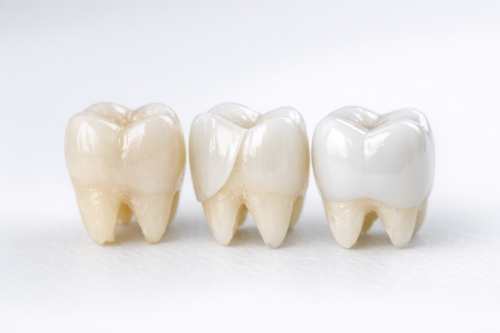
A few minor adjustments can have a significant impact. In the first couple of days after bonding, it’s worth being extra careful with staining drinks – the resin is more vulnerable early on. Then the main things to keep in mind are to not bite hard objects with bonded teeth and to keep up with your dental cleanings so the surface stays polished. A dentist can also touch up or replace bonding when it starts to wear, which is much less involved than replacing a crown or veneer.
You won’t have to change your lifestyle or be overly careful with your bonded teeth. Treat them a little more carefully than the rest, and the results will hold up much longer, on the closer end of that 3- to 10-year window.
Bonding vs. Veneers vs. Crowns: Which One Makes Sense?
Bonding is one of three common ways dentists restore or change teeth, and each one fits a different situation. Knowing the difference helps you walk into a dental appointment with a clearer idea of what to ask about.
Veneers are thin shells that attach to the front of a tooth to improve its appearance. They last longer than bonding. But the dentist has to shave down a small amount of enamel to fit them. That change is permanent. Crowns cover the entire tooth, making them the preferred choice for severely damaged or broken teeth.

| Treatment | Best for | Approximate lifespan | Enamel removal |
|---|---|---|---|
| Bonding | Minor chips, gaps, discolouration | 3-10 years | Little to none |
| Veneers | Cosmetic improvement across multiple teeth | 10-20 years | Yes, some removal needed |
| Crowns | Heavily damaged or weakened teeth | 15-25 years | Yes, substantial reshaping |
Bonding is the most helpful option for small cosmetic fixes where a fast and affordable result matters. For a more long-term cosmetic change across a few teeth, veneers are worth a conversation with your dentist.
Your dentist will look at the condition of your teeth and point you toward the most helpful path. No comparison table replaces that.
So, Is Tooth Bonding Right for You?
What matters is learning about whether your situation is a fit. Bonding works well with minor cosmetic problems. But it isn’t the right tool for every job; it’s why your dentist is the best person to make that call with you.
Before your next appointment, it helps to go in with a couple of questions ready:
- Is bonding a good option for what I want to fix, or would something else serve me better?
- How long can I expect it to last given my habits and bite?
- What will it cost, and is it likely to be covered?
You don’t need to arrive with a treatment plan in mind – just an idea of what’s been bothering you. A dentist will take it from there and help you choose if bonding makes sense or if another path is worth thinking about.
FAQs
What is tooth bonding?
Tooth bonding is a cosmetic dental procedure where a tooth-colored composite resin is applied directly to a tooth, shaped, and hardened to improve its appearance or repair damage.
What dental problems can tooth bonding fix?
Bonding can fix chipped or cracked teeth, gaps between teeth, discoloration, oddly shaped teeth, and exposed roots caused by gum recession.
How long does the tooth bonding procedure take?
The procedure typically takes 30 to 60 minutes per tooth and is completed in a single dental visit with no lab work required.
Is tooth bonding painful?
Tooth bonding is largely painless and usually requires no anesthetic. Minor sensitivity may occur if work is near the gumline, but it typically fades within a day or two.
How much does tooth bonding cost?
Tooth bonding typically costs between $100 and $400 per tooth, depending on location, complexity, and the number of teeth treated.
Does dental insurance cover tooth bonding?
Insurance may partially cover bonding if it’s performed for restorative purposes, such as repairing a chipped or decayed tooth, rather than purely cosmetic reasons.
How long does tooth bonding last?
Tooth bonding typically lasts between 3 and 10 years, depending on habits like nail biting, chewing hard foods, and consuming staining beverages.
Can bonded teeth be stained or discolored?
Yes, composite resin stains more easily than porcelain. Coffee, tea, and red wine can gradually discolor bonded teeth over time.
How does bonding compare to veneers and crowns?
Bonding is faster, cheaper, and minimally invasive but shorter-lasting. Veneers last 10–20 years and crowns 15–25 years, but both require enamel removal.
Is tooth bonding reversible?
Yes, tooth bonding is considered reversible because it requires little to no enamel removal, unlike veneers or crowns which permanently alter the tooth structure.