How Sedation Dentistry Helps Patients Overcome Dental Anxiety | Promenade Dental Care Murrieta

Promenade Dental Care · Murrieta, CA · Sedation Dentistry · Pain-Free Treatment

How Sedation Dentistry Helps Patients Overcome Dental Anxiety

You deserve dental care that is comfortable, calm, and completely pain-free — and it exists right here in Murrieta.

Nitrous Oxide  ·  Pain-Free Dentist Murrieta  ·  Sleep Dentistry  ·  Dental Anxiety Treatment  ·  Dr. Bao Nguyen, DDS

Call or Text for a Calm, Comfortable Appointment — (951) 412-0127

Sedation helps dental anxiety

If the thought of sitting in a dental chair makes your heart race, your palms sweat, or your mind immediately search for reasons to reschedule — you are not alone. Dental anxiety is one of the most common barriers to preventive care, and it costs people far more in the long run than any dental appointment ever would.

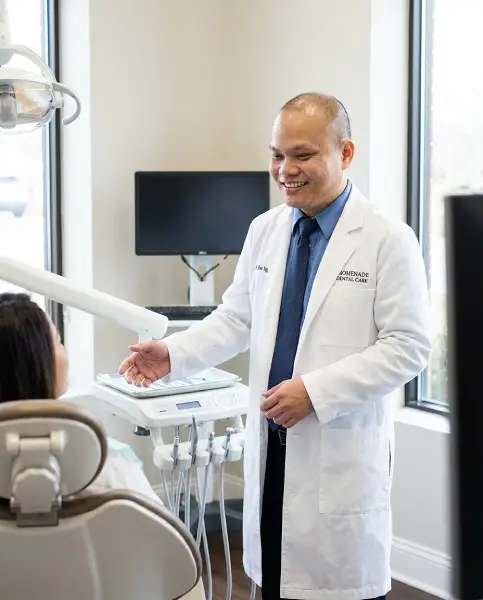
At Promenade Dental Care in Murrieta, Dr. Bao Nguyen and his team understand that anxiety is real, that past dental experiences shape present fear, and that the solution isn’t to simply tell you to “relax.” The solution is sedation dentistry — safe, proven, and specifically designed to make dental treatment accessible to every patient, including the ones who have avoided the dentist for years. This guide explains how sedation dentistry works, who it helps, and what to expect when you choose Promenade Dental Care for your treatment.

Dental Anxiety: Why It’s Not “Just Nerves” — and Why It Matters

Dental anxiety is a real, recognized psychological response — not a character flaw, not a sign of weakness, and not something you can simply overcome with willpower. It ranges from mild apprehension before appointments to severe dental phobia that makes routine care genuinely impossible without specialized support. And the consequences accumulate silently.

36%

Of the general population experiences dental anxiety, with 12% reporting extreme dental phobia. An estimated 22% of American adults avoid the dentist entirely due to fear — allowing small, easily treatable problems to develop into painful, expensive emergencies that require exactly the invasive procedures they were trying to avoid.

A patient who avoids the dentist for five years because of anxiety doesn’t avoid dental problems — they defer them with interest. A cavity that would have been a 20-minute filling becomes a root canal or extraction. Gum disease that would have been managed with a cleaning becomes bone loss requiring surgery. The anxiety that was meant to protect them from discomfort ends up creating dramatically more of it. Promenade Dental Care sees this pattern regularly — and the introduction of sedation dentistry is what breaks the cycle for good.

Dental anxiety isn’t a reason to avoid the dentist. It’s a reason to find the right dentist — one who takes your anxiety seriously, has the tools to address it, and creates an environment where treatment feels manageable, not terrifying. That’s what Promenade Dental Care in Murrieta is designed to be.

Patient reviews at Promenade Dental Care consistently cite the practice’s calming atmosphere, Dr. Bao Nguyen’s gentle technique, and the team’s patience with anxious patients as the specific reasons they finally returned to dental care after years of avoidance. One patient wrote: “I am completely terrified of the dentist. I neglected getting anything done for years and years because of bad experiences and just general fear and anxiety. Promenade changed that for me.”

What Is Sedation Dentistry? Types, Levels, and How Each Works

Sedation dentistry is the use of medication to help patients relax during dental procedures. It doesn’t replace anesthesia — it works alongside it. The local anesthetic addresses physical pain; the sedation addresses emotional and psychological distress. Together, they create a dental experience that is both pain-free and anxiety-free.

Sedation dentistry ranges from very mild (you’re relaxed but fully awake and aware) to deep (you’re conscious but have little memory of the procedure afterward). Understanding the spectrum helps clarify which approach is right for your situation.

Minimal Sedation — Nitrous OxideInhaled through a small nose mask. Produces warmth, relaxation, and mild euphoria. Patient is fully conscious and responsive. Wears off within minutes. No recovery time — most patients drive themselves home. Ideal for mild-to-moderate anxiety and most routine procedures.

Moderate Sedation — Oral Conscious SedationA prescription medication taken by mouth before the appointment. Produces a deeper state of relaxation. Patient is conscious but may feel drowsy and have limited memory of the procedure. Requires a driver — effects last several hours. Appropriate for moderate-to-severe anxiety.

Deep Sedation — IV SedationMedication delivered intravenously produces deep relaxation and near-unconsciousness. Patient is at the edge of consciousness but can be awakened. Memory of the procedure is typically minimal. Requires a driver and recovery period. Used for more complex procedures or severe phobia.

General Anesthesia — Sleep DentistryThe patient is fully unconscious throughout the procedure. Used for extensive oral surgery, patients with special needs, or extreme phobia. Administered by an anesthesiologist in a surgical setting. Not typically used for routine dental work. “Sleep dentistry” sometimes refers to oral or IV sedation, not always true general anesthesia.

At Promenade Dental Care, the primary sedation option is nitrous oxide — the safest, most widely studied, and fastest-acting sedation available in general dentistry. For most anxious patients in Murrieta, nitrous oxide combined with Dr. Bao Nguyen’s pain-free technique is all that’s needed to make dental treatment genuinely comfortable. Call (951) 412-0127 to discuss which option is right for you.

Nitrous Oxide Sedation: How Laughing Gas Actually Works

Nitrous oxide — colloquially called “laughing gas” — has been used in dentistry since the 1840s and remains one of the most trusted and widely studied sedation options in all of medicine. At Promenade Dental Care, it’s the cornerstone of the sedation dentistry program for anxious patients.

1

The Mask Is Placed — Gently

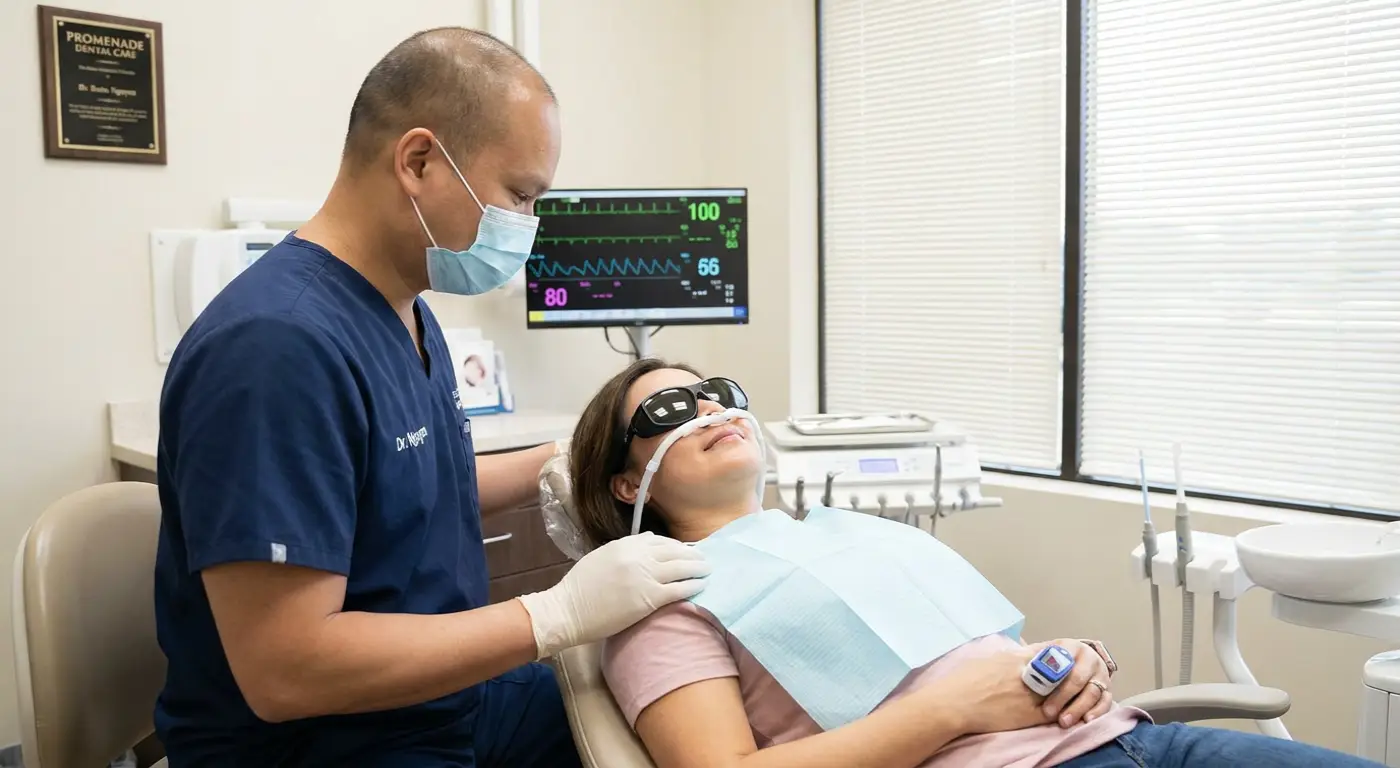
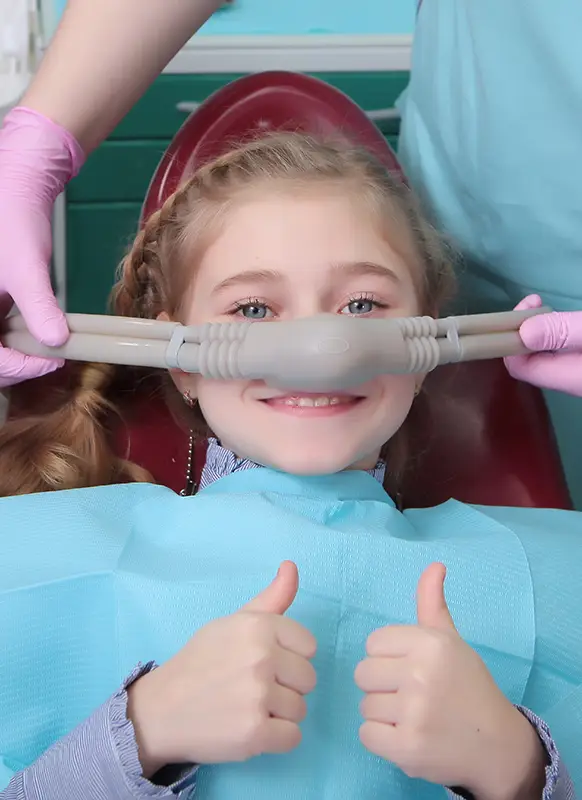
A small, comfortable mask is placed over your nose before treatment begins. It’s lightweight and non-claustrophobic — just a gentle presence delivering a mixture of nitrous oxide and oxygen. You breathe normally through your nose throughout. The delivery system is precise — Dr. Bao Nguyen controls the concentration to ensure you receive exactly the level of relaxation you need.

2

Relaxation Sets In Within 2–3 Minutes

Within a few minutes of breathing the gas, most patients notice a pleasant warm, tingling sensation — typically in the hands, feet, and face — followed by a feeling of calm. Some describe a light, floaty feeling. Some laugh a little (hence the name). Most simply feel like their worry has been gently turned down several notches. You remain fully conscious, fully able to communicate with your dentist, and in control of your responses throughout.

3

Local Anesthetic Is Administered — You May Barely Notice

While nitrous oxide itself doesn’t numb pain (it relaxes anxiety), it significantly reduces the discomfort and apprehension around receiving the local anesthetic injection. Dr. Bao Nguyen uses pain-minimizing injection techniques — slow delivery, micro-needle gauges, and topical anesthetic applied first — so the numbing shot that anxious patients often dread most is typically barely felt.

4

Treatment Proceeds — Calmly and Comfortably

Once you’re relaxed and numb, treatment proceeds. You may feel pressure, vibration, or sound — but not pain, and without the emotional intensity that anxiety amplifies into distress. Many patients describe being surprised by how different the experience feels compared to previous dental appointments. Time passes more quickly. The sounds of equipment feel less threatening. The overall experience is calm rather than tense.

5

The Mask Is Removed — You’re Fully Recovered in Minutes

When treatment is complete, the nitrous oxide is turned off and you breathe 100% oxygen for a few minutes. The sedation effects dissipate completely within 5 minutes. Unlike oral or IV sedation, there is no lingering grogginess, no requirement for a driver, and no significant recovery period. Most patients return to normal activities — including driving — immediately after leaving the office. This is one of the most significant practical advantages of nitrous oxide over other sedation options.

Eat lightly before a nitrous oxide appointment. A full stomach can increase nausea risk with nitrous oxide. A light snack 1-2 hours before is typically fine. Avoid a heavy meal in the 2-3 hours before your appointment. Tell Dr. Bao Nguyen’s team if you’ve ever felt nauseous with nitrous oxide in the past — the concentration can be adjusted.

Who Is a Good Candidate for Sedation Dentistry Near Me?

Sedation dentistry isn’t only for patients with severe phobia. It’s appropriate for a wide range of situations where anxiety, physical factors, or procedure complexity make treatment more difficult than it needs to be.

Dental Anxiety and PhobiaFrom mild pre-appointment nerves to severe dental phobia that prevents attendance entirely — nitrous oxide and sedation options are specifically designed to make the range of anxiety manageable. There is no minimum anxiety level required to ask for sedation support.

Past Traumatic Dental ExperiencesPatients whose previous dental experiences involved pain, insensitive care, or traumatic procedures often develop conditioned fear responses. Sedation breaks the cycle by replacing those anxious associations with genuinely calm experiences that rebuild confidence over time.

Needle PhobiaFear of injections is one of the most common specific phobias associated with dental anxiety. Nitrous oxide reduces the emotional intensity of the injection moment, while Dr. Bao Nguyen’s pain-free injection technique minimizes the physical discomfort. Together, they address needle phobia from both directions.

Strong Gag ReflexA pronounced gag reflex can make routine dental work physically difficult or impossible — for both patient and dentist. Nitrous oxide relaxes the gag reflex along with general anxiety, making procedures like impressions, full-mouth X-rays, and posterior restorations much more manageable.

Sensitive Teeth or Difficulty Getting NumbSome patients require more local anesthetic than average to achieve adequate numbness, or have teeth that are simply more sensitive to stimulation. Nitrous oxide reduces sensitivity to physical sensation and extends the comfort window during longer procedures.

Extensive Treatment in One VisitPatients who need significant restorative work — multiple fillings, crown preparations, extractions — often benefit from sedation to make long appointments comfortable and efficient. Sedation allows more treatment to be completed in fewer visits, reducing overall appointment burden.

Children with Significant Dental AnxietyNitrous oxide is one of the safest and most commonly used pediatric dental sedation options. Children who are cooperative but anxious, or who have a strong gag reflex, often benefit significantly from nitrous oxide — making their first dental experiences positive rather than traumatic, setting a healthy pattern for life.

Patients with Special NeedsPatients with autism spectrum disorder, ADHD, cognitive disabilities, or other conditions that make stillness or cooperation during dental procedures difficult often benefit from sedation options. Dr. Bao Nguyen’s team creates individualized plans for patients with special needs — call ahead to discuss your specific situation.

Dental Anxiety Treatment: Which Procedures Sedation Helps With Most

Sedation dentistry doesn’t change the procedure — it changes the experience of the procedure. With nitrous oxide, the dental work itself remains exactly as it would be; what changes is the patient’s emotional state during it. These are the procedures that most commonly benefit from sedation support at Promenade Dental Care:

Routine Cleanings and ExamsFor patients with severe dental anxiety, even routine cleanings can trigger significant distress. Nitrous oxide makes the 45-minute cleaning appointment feel like a manageable, calm experience rather than an endurance test — helping patients establish consistent preventive care habits they’ve previously avoided.

Tooth FillingsDental fillings are among the most common procedures performed under sedation for anxious patients. The combination of nitrous oxide plus local anesthesia ensures the procedure is both anxiety-free and pain-free — the two primary concerns most patients cite about fillings.

Root Canal TherapyRoot canals are the procedure most commonly associated with fear — often unfairly, as modern root canal technique is designed to relieve pain, not cause it. Dr. Bao Nguyen is highly experienced in root canal therapy and uses sedation when appropriate to make the procedure as comfortable as any other dental treatment.

Tooth Extractions and Wisdom TeethSimple and surgical extractions, including wisdom teeth removal, benefit from sedation for anxious patients. The sounds and sensations involved in extractions can be distressing even when pain is fully managed — nitrous oxide reduces the emotional response to these stimuli significantly.

Dental Crowns and Same-Day CrownsCrown preparation appointments involve tooth reduction and impression-taking — both procedures that can be challenging for patients with significant anxiety or gag reflexes. Promenade Dental Care offers same-day crowns using CEREC CAD/CAM technology, meaning sedation support is available for the complete crown procedure in a single appointment.

Dental ImplantsDental implant placement is an oral surgical procedure that most patients do extremely well with under local anesthesia alone — but for highly anxious patients, sedation is available to ensure the experience is completely calm. Promenade Dental Care offers dental implant placement alongside sedation support when indicated.

When Sedation Dentistry Requires Special Consideration

Nitrous oxide is safe for most healthy adults and children, but certain conditions require discussion with Dr. Bao Nguyen before sedation is used. The following are situations where additional evaluation or alternative approaches may be appropriate:

First Trimester of PregnancyElective use of nitrous oxide is generally avoided during the first trimester due to theoretical developmental concerns. Urgent dental treatment with other anesthetic options may still be appropriate — discuss with your OB and Dr. Bao Nguyen to evaluate the risk-benefit balance for your specific situation.

Severe Chronic Obstructive Pulmonary Disease (COPD)Patients with significantly reduced lung capacity may not be able to breathe in adequate concentrations of nitrous oxide. Alternative sedation or anxiety management strategies are discussed on an individual basis. Always disclose your complete respiratory history before scheduling a sedation appointment.

Vitamin B12 DeficiencyNitrous oxide inactivates vitamin B12, which plays a role in nerve function. Patients with documented B12 deficiency or conditions linked to it (pernicious anemia, certain neurological conditions) may require evaluation before nitrous oxide use. This is rare but clinically important — disclose all medical conditions at your appointment.

Active Upper Respiratory InfectionNitrous oxide is delivered through the nose. A blocked or congested nasal passage from a cold, sinus infection, or severe allergies significantly reduces effectiveness. If you have an active respiratory infection on the day of your appointment, call Promenade Dental Care — it may be advisable to reschedule the sedation portion of your visit.

Certain Psychiatric MedicationsSome medications used to treat depression, anxiety, and psychosis may interact with nitrous oxide or alter its effects. Disclose all current medications — prescription, over-the-counter, and supplements — at your appointment. This is standard dental practice regardless of sedation, but especially important for sedation consultations.

Severe Nausea or Motion Sickness HistoryA minority of patients experience nausea with nitrous oxide. Patients with a strong history of motion sickness or medication-induced nausea should mention this to Dr. Bao Nguyen before sedation is administered. Eating lightly before the appointment, adjusting nitrous concentration, and ensuring adequate oxygenation all help minimize this risk.

Always disclose your complete medical history, current medications, and any recent illnesses to Promenade Dental Care before any sedation appointment. This information allows Dr. Bao Nguyen to make the safest sedation decision for your individual situation — and to provide the best possible care during your visit. When in doubt, call the office at (951) 412-0127 before your appointment to discuss any concerns.

Why Anxious Patients Choose Promenade Dental Care in Murrieta

Sedation dentistry is a tool — but the environment and provider using it matter as much as the medication itself. Patients with dental anxiety who have had negative experiences elsewhere are understandably skeptical of promises that a new dentist will be “different.” At Promenade Dental Care, the difference is built into the practice’s foundational values — not just the marketing language.

Dr. Bao Nguyen — Advanced Training and Military ExperienceDr. Bao Nguyen brings advanced military and postgraduate training to every patient. Military dental programs are known for producing highly skilled, efficient, and composed practitioners — skills that translate directly to gentle, confident, pain-minimizing care for anxious civilian patients.

20+ Years of Murrieta Community ServicePromenade Dental Care has served the Murrieta and Temecula Valley community for over 20 years. That longevity reflects patient trust earned through consistent, quality, respectful care. Over 200 5-star Google reviews — many specifically mentioning the practice’s gentleness with anxious patients — document this track record.

Upfront Pricing — No OversellingFinancial anxiety compounds dental anxiety. Promenade Dental Care operates on a core principle: up-front, transparent pricing and no overselling. Every treatment plan and cost is discussed before any work begins. New patients receive a $20 dental exam with digital X-rays — one of the most accessible entry points to dental care in the region.

Pain-Free Technique — Not Just SedationSedation is part of the comfort approach at Promenade — but so is technique. Dr. Bao Nguyen uses slow-delivery injection methods, appropriate needle gauges, and topical anesthetics to minimize injection discomfort. For many anxious patients, it’s the combination of sedation plus technique that makes the difference.

Calming Atmosphere Designed for Anxious PatientsEvery minute a patient spends in the dental chair matters for an anxious patient. Promenade Dental Care’s team is trained to work calmly, explain what they’re doing before they do it, and check in regularly throughout treatment. Patient reviews describe “painless treatments in a calming atmosphere” as the consistent hallmark of the practice.

Emergency Appointments — Available When You Need ThemFor anxious patients, a dental emergency can feel even more overwhelming than a scheduled appointment. Promenade Dental Care answers the phone 24 hours a day for dental emergencies and offers same-day appointments whenever possible — so anxious patients in pain aren’t left waiting and spiraling.

One of the most frequently cited patient experiences at Promenade Dental Care: arriving terrified, leaving relieved — and making their next appointment before they leave. That transition — from avoidant to engaged — is what a genuinely patient-centered dental practice makes possible.

How to Prepare for Your Pain-Free Dentist Appointment

Knowing what to expect significantly reduces anticipatory anxiety. Here is the practical preparation guide for a sedation dentistry appointment at Promenade Dental Care in Murrieta:

1

Call or Text to Request Your Sedation Appointment

When you call Promenade Dental Care at (951) 412-0127, let the team know upfront that you experience dental anxiety and are interested in sedation dentistry. This flags your appointment appropriately so the team is prepared to support you from the moment you arrive — not just during the treatment itself. New patients receive a $20 exam with digital X-rays to assess your dental needs before any treatment is planned.

2

Disclose Your Full Medical History

Before your appointment, gather information about your current medications (including supplements and over-the-counter medications), any known allergies, your respiratory health history, and any relevant medical conditions. Disclosing this information completely allows Dr. Bao Nguyen to confirm that nitrous oxide is appropriate for you and to adjust any aspect of the sedation protocol for your individual situation.

3

Eat Lightly Before the Appointment

For nitrous oxide appointments: eat a light meal 1-2 hours before your appointment. Avoid a heavy meal in the 2-3 hours immediately prior. A light snack — not fasting, not a full meal — is typically the right balance. If you are receiving oral or IV sedation (discussed with Dr. Bao Nguyen beforehand), you will receive specific fasting instructions — follow these carefully.

4

Arrange Transportation If Needed (Not Usually Required for Nitrous Oxide)

For nitrous oxide: because the effects wear off completely within 5 minutes of removing the mask, most patients drive themselves to and from their appointment without any issue. If you are receiving oral conscious sedation or IV sedation, you will need a responsible adult to drive you home and stay with you for a few hours afterward. Confirm the transportation requirement with Dr. Bao Nguyen’s team when you schedule.

5

Arrive Early — Give Yourself Time to Settle

Rushing to a dental appointment creates pre-existing stress that compounds anxiety in the chair. Aim to arrive 10-15 minutes before your scheduled time. Let the front desk know you’re there. Use those minutes to breathe, look around the calming space, and remind yourself that the team is prepared for and experienced with patients exactly like you. Anxiety peaks most before and during the first few minutes — once you’re settled and the nitrous starts working, it typically drops significantly.

6

Communicate — Before, During, and After

Tell Dr. Bao Nguyen and his team exactly what you’re anxious about. Which part of dental treatment has felt worst in the past? Is it the sounds? The feeling of losing control? The injection? The anticipation? Specific information allows the team to address your specific fears — not just “dental anxiety” in the abstract. During treatment, raise your hand any time you need to pause. Promenade Dental Care’s team will stop — without irritation, without rushing you. After treatment, share what helped and what could have been better.

Dental Anxiety Treatment Checklist: Signs You’re Ready to Take the Next Step

If several of these apply to you, sedation dentistry at Promenade Dental Care may be exactly what you’ve been waiting for.

You’ve Avoided the Dentist for a Year or MoreDue to anxiety, fear, or past negative experiences — not a lack of need
You Experience Anxiety at the Thought of SchedulingNot just at the appointment — the anticipation itself causes real distress
You Have a Strong Gag ReflexThat makes X-rays, impressions, or posterior work physically difficult
You’re Afraid of Needles or InjectionsThe prospect of the numbing injection causes more dread than the procedure itself
You Know You Have Dental Problems That Need AttentionBut anxiety has been the barrier to getting them treated — creating a cycle of avoidance and guilt
You Had Traumatic Dental Experiences in the PastThat have made subsequent dental visits feel dangerous even when intellectually you know they’re not
You Struggle to Stay Still for Extended ProceduresDue to anxiety, restlessness, special needs, or chronic pain that makes long appointments difficult
You Want to Consolidate Multiple Treatments Into Fewer VisitsSedation enables longer, more comprehensive appointments — fewer trips to the office
You’re Ready to Stop Letting Fear Make Your Dental DecisionsThe anxiety has controlled the outcome for long enough — you’re ready to reclaim it
You Want a Dentist Who Has 200+ 5-Star Reviews Specifically for Gentle, Comfortable CareThe track record matters — and Promenade Dental Care’s patient reviews speak directly to anxious patients’ experiences
Medical Disclaimer: This article is for informational and educational purposes only. It is not intended to replace professional dental or medical advice. Sedation dentistry involves medical considerations that must be evaluated individually by a qualified dental professional. Always consult directly with Dr. Bao Nguyen or a qualified dental provider before making decisions about sedation or dental treatment. If you are experiencing a dental emergency, call Promenade Dental Care at (951) 412-0127 or seek immediate care.

You’ve Waited Long Enough. Your Comfortable, Pain-Free Appointment Is One Call Away.

Promenade Dental Care serves Murrieta, Temecula, Menifee, and the surrounding Temecula Valley. Dr. Bao Nguyen and his team are ready to meet you where you are — no judgment about how long it’s been, no pressure, and no overselling. Just honest, pain-free, sedation-supported dental care at one of Southern California’s most trusted family dental practices.

New Patient Offer: $20 Dental Exam with Digital X-Rays · $95 Dental Cleanings · Up-Front Pricing Always

(951) 412-0127

26957 Date St., Suite B4, Murrieta, CA 92563  ·  Mon–Tue & Thu 9 AM–5 PM · Fri 9 AM–3 PM · Sat 9 AM–1 PM

Book Online  ·  promenadedentalcare.com

Sedation Dentistry and Dental Anxiety: Your Questions Answered

Everything anxious patients want to know before their first sedation dentistry appointment at Promenade Dental Care in Murrieta.

  • What is sedation dentistry?

    Sedation dentistry uses medication to help patients relax during dental procedures. It ranges from mild relaxation (nitrous oxide) to deeper conscious sedation (oral medication or IV). The patient remains able to respond to the dentist throughout most forms of sedation — it is not the same as general anesthesia, which renders the patient fully unconscious.

    At Promenade Dental Care in Murrieta, the primary sedation option offered is nitrous oxide (laughing gas), which produces a pleasant, relaxed feeling during treatment while wearing off quickly enough that most patients can drive themselves home afterward.

  • Does Promenade Dental Care offer sedation dentistry?

    Yes. Promenade Dental Care offers nitrous oxide sedation dentistry for patients who experience dental anxiety, needle phobia, a strong gag reflex, or difficulty sitting still for extended procedures. Dr. Bao Nguyen and his team prioritize patient comfort — creating a calming atmosphere and using pain-free techniques alongside sedation to ensure every patient can receive the dental care they need.

    Call (951) 412-0127 to ask about sedation options for your next appointment.

  • What is nitrous oxide and is it safe?

    Nitrous oxide — commonly called “laughing gas” — is a colorless, odorless gas mixed with oxygen and inhaled through a small mask placed gently over the nose during dental treatment. It produces feelings of warmth, relaxation, and mild euphoria. It does not put you to sleep — you remain conscious and can communicate with your dentist throughout.

    Nitrous oxide is one of the most widely studied and used sedation options in dentistry and is considered safe for both children and adults. Its effects wear off within minutes after the mask is removed, and most patients can drive home and return to normal activities immediately after treatment.

  • How common is dental anxiety?

    Dental anxiety affects approximately 36% of the general population, with 12% experiencing extreme dental phobia. An estimated 22% of American adults avoid the dentist entirely due to fear — making dental anxiety one of the most prevalent specific phobias reported by adults.

    The consequences of avoidance accumulate: small problems become larger, more painful, and more expensive to treat. Patients who have delayed care for years due to anxiety are some of the most common patients Dr. Bao Nguyen sees — and helping them get back on track is one of the practice’s most important services.

  • Who is a good candidate for sedation dentistry?

    Good candidates include patients who: experience significant anxiety or fear at the prospect of dental treatment; have had traumatic previous dental experiences; have a strong gag reflex; require extensive dental work; have sensitive teeth or difficulty getting fully numb; have special needs that make cooperation during procedures challenging; or simply want a more comfortable, stress-free experience.

    Most healthy adults and children are suitable for nitrous oxide sedation. Patients with certain respiratory conditions, first-trimester pregnant women, and those with specific medical conditions should discuss options with Dr. Bao Nguyen before their appointment.

  • Is sedation dentistry the same as sleep dentistry?

    Not exactly. “Sleep dentistry” is a term sometimes used to describe sedation dentistry — but in most forms, including nitrous oxide and oral conscious sedation, you are not actually asleep. You are relaxed, calm, and responsive, but fully conscious.

    Only IV sedation and general anesthesia produce a truly sleep-like state with minimal memory of the procedure. At Promenade Dental Care, sedation dentistry helps patients feel so calm and comfortable that the experience feels easy — even if they remain aware throughout the appointment.

  • How should I prepare for a sedation dentistry appointment?

    For nitrous oxide: eat lightly 1–2 hours before the appointment (not fasting, not a full meal). Wear comfortable clothing. Disclose all current medications and medical conditions. Most patients drive themselves home — no driver required.

    For oral conscious sedation or IV sedation: you will need a responsible adult driver to and from the appointment; you will need to fast for several hours before the procedure; and arrange for someone to stay with you for a few hours after returning home. Always follow the specific preparation instructions provided by Dr. Bao Nguyen’s office.

  • Will I feel any pain during sedated dental treatment?

    Sedation dentistry is used alongside — not instead of — local anesthesia. The sedation (nitrous oxide) relaxes you and reduces anxiety; the local anesthesia numbs the area being treated so you feel no pain. Together, they eliminate both the emotional distress of anxiety and the physical sensation of pain.

    At Promenade Dental Care, Dr. Bao Nguyen is known for his pain-free approach — using techniques that minimize discomfort even during the injection of local anesthetic. Patient reviews consistently describe their experience as “painless” — the result of skilled technique, appropriate anesthesia, and nitrous oxide working together.

  • How much does sedation dentistry cost at Promenade Dental Care?

    The cost of sedation dentistry varies depending on the type of sedation and the length of the procedure. At Promenade Dental Care, upfront, transparent pricing is a core practice value — all costs are discussed before any treatment begins, with no overselling and no surprise charges.

    Nitrous oxide sedation is generally the most affordable sedation option and may be partially covered by some dental insurance plans when medically indicated. Call (951) 412-0127 to discuss pricing for your specific situation. New patients can start with a $20 dental exam with digital X-rays.

  • Can children receive sedation dentistry at Promenade Dental Care?

    Yes. Nitrous oxide is one of the safest and most commonly used sedation options for children in dentistry. It is appropriate for many anxious young patients who need dental treatment but struggle to tolerate procedures. Promenade Dental Care treats patients of all ages, including children, and Dr. Bao Nguyen is experienced in creating a calm, comfortable environment for young patients.

    Parents should discuss their child’s specific anxiety level, medical history, and the procedure planned with Dr. Bao Nguyen to determine whether nitrous oxide is appropriate. Call (951) 412-0127 to schedule a consultation.