
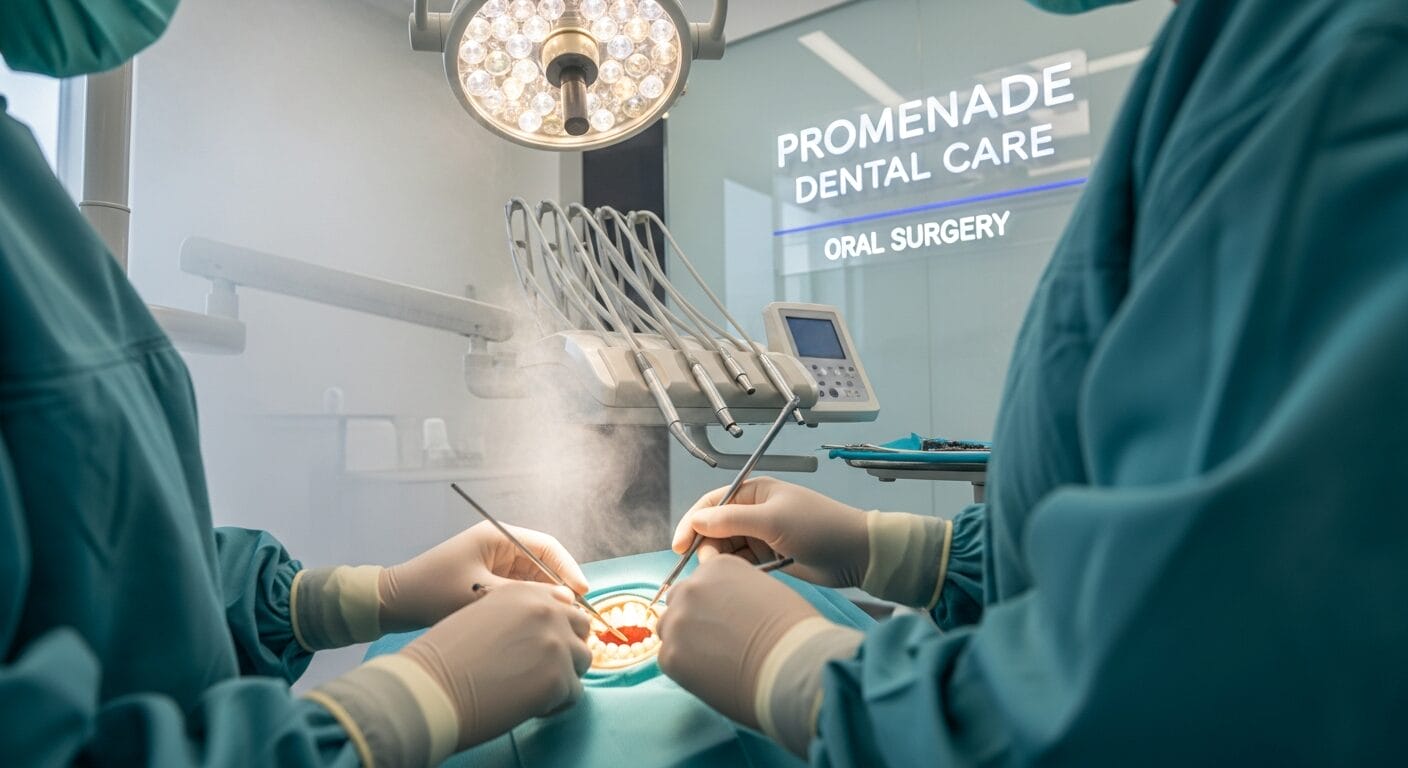
Oral surgery is performed to resolve various issues in your mouth, jaw, and teeth. Oral surgery includes everything from basic procedures to more complex treatments involving the facial area. Whether you need wisdom teeth removal, treatment for impacted teeth, or advanced reconstruction, oral surgery can improve both oral health and quality of life.
If you are feeling nervous about oral surgery, learning what to expect, including your sedation dentistry options, recovery process, and results, can help you feel more confident.
 Key Takeaways
 Key Takeaways
- Oral surgery covers procedures from simple tooth extractions to complex jaw surgery, improving oral health and quality of life.
- Multiple sedation options exist, including nitrous oxide, oral sedation, IV sedation, and general anesthesia for complex cases.
- Common risks include dry socket, infection, nerve irritation, and post-surgical bleeding, though oral surgery is generally safe.
- Costs vary widely, from $150 – $400 for a tooth extraction to $40,000 or more for complex jaw surgery.
- Recovery time ranges from 1–2 weeks for simple extractions to several months for dental implants or bone grafting.
What is oral surgery?
Oral surgery refers to surgical procedures performed inside the mouth or jaw by an oral surgeon. These procedures can range from a simple tooth extraction to complex reconstruction of the jaw. An oral surgeon is a dentist with advanced training in treating conditions affecting teeth, gums, jawbones, and facial structures.
Common Oral Surgery Procedures
Common oral surgery procedures performed by an oral surgeon include wisdom teeth removal, tooth extraction, dental implants, bone grafting, jaw surgery, treatment of impacted teeth, biopsies of oral lesions, and facial trauma repair. These procedures are designed to restore oral health, relieve pain, and improve function when other treatments are not sufficient.

Reasons for Oral Surgery
Oral surgery may be needed due to severe decay requiring tooth extraction, infection, overcrowding, or problems with impacted teeth. It is also commonly used for wisdom teeth removal, placement of dental implants, or corrective jaw surgery when non-surgical treatments are no longer effective.
Sedation Dentistry and Anesthesia Options
Modern sedation dentistry makes oral surgery more comfortable and stress-free. Local anesthesia numbs the surgical area during procedures such as tooth extraction. Nitrous oxide, often used during wisdom teeth removal, provides mild relaxation while keeping you awake. Oral sedation uses prescription medication to help you relax before oral surgery. IV sedation is commonly used for procedures like dental implants and allows for deep relaxation with little or no memory of the procedure. General anesthesia is reserved for complex cases such as advanced jaw surgery and is typically performed in a hospital setting.
Risks and Complications
While oral surgery is generally safe, patients should be aware of possible risks. Dry socket is a painful complication that can occur after tooth extraction or wisdom teeth removal when the blood clot is lost too early. Infection may develop at the surgical site and may require antibiotics. Nerve irritation can cause temporary numbness or tingling, and some patients may experience post-surgical bleeding. In rare cases, allergic reactions to anesthesia or medication may occur, and upper jaw procedures may lead to temporary sinus complications.

Recovery and Aftercare
Recovery after oral surgery varies depending on the procedure, whether it involves bone grafting, dental implants, or wisdom teeth removal. Patients are advised to rest for 24–48 hours following surgery and to avoid strenuous activity. Soft foods such as yogurt, mashed potatoes, and smoothies are recommended after tooth extraction. Smoking and drinking through straws should be avoided to reduce the risk of dry sockets. Gentle saltwater rinses can begin after 24 hours, and ice packs may be used to reduce swelling. All medications prescribed by your oral surgeon should be taken as directed, and follow-up appointments are essential for proper healing.
Preparing for Oral Surgery
Preparation for oral surgery includes discussing your full medical history with your oral surgeon, including medications, supplements, and allergies. If sedation dentistry is used, you may be required to fast for 6–8 hours before the procedure. Patients undergoing wisdom teeth removal or other sedated procedures must arrange transportation home. It is also important to prepare a comfortable recovery space in advance and follow instructions regarding medications that may need to be paused before surgery.
Cost of Oral Surgery
The cost of oral surgery varies depending on the procedure and complexity. A simple tooth extraction typically ranges from $75 to $300 per tooth. Wisdom teeth removal generally costs between $150 and $400 per tooth. Dental implants range from $1,500 to $6,000 per implant, while complex jaw surgery may cost $20,000 to $40,000 or more depending on the case.

Insurance Coverage
Many dental insurance plans cover medically necessary oral surgery, including tooth extraction, treatment of infection, or trauma-related procedures. However, cosmetic procedures are usually not covered. Patients should confirm benefits, deductibles, and coverage limits with their insurance provider before treatment. Financing options and payment plans are often available through oral surgeon offices.
Healing Time and Follow-Ups
Healing after oral surgery depends on the procedure. Simple tooth extraction sites typically heal within 1–2 weeks, while initial recovery from wisdom teeth removal usually takes 3–5 days. Dental implants may require 3–6 months to fully integrate with the bone, and bone grafting may take several months to heal. Complex jaw surgery often requires an extended recovery period. Follow-up visits with your oral surgeon are essential to monitor healing, remove sutures if needed, and ensure there are no complications such as infection or dry socket.

Trusted External Resources
- American Association of Oral and Maxillofacial Surgeons
- Cleveland Clinic Oral Surgery Guide
- Mayo Clinic – Tooth Extraction
- NHS – Wisdom Teeth Removal
- American Dental Association Oral Surgery
Conclusion
Oral surgery is a safe and effective way to treat conditions such as impacted teeth, severe decay requiring tooth extraction, or restorative procedures like dental implants. With modern sedation dentistry, advanced techniques, and skilled Murrieta Oral Surgery Services, patients can expect comfortable treatment and successful outcomes. If you need wisdom teeth removal, bone grafting, or jaw surgery, consult a qualified provider to explore your options.
FAQs
What is oral surgery?
Oral surgery refers to surgical procedures performed inside the mouth or jaw, ranging from simple tooth extractions to complex jaw reconstruction, performed by a specially trained oral surgeon.
What are the most common oral surgery procedures?
Common procedures include wisdom teeth removal, tooth extractions, dental implants, bone grafting, jaw surgery, treatment of impacted teeth, and facial trauma repair.
What sedation options are available for oral surgery?
Options include local anesthesia, nitrous oxide, oral sedation, IV sedation, and general anesthesia, depending on the complexity of the procedure.
What is a dry socket, and how can I prevent it?
Dry socket occurs when the blood clot is lost too early after a tooth extraction. Avoid smoking and using straws to reduce your risk.
How long does recovery from oral surgery take?
Recovery ranges from 1–2 weeks for simple extractions to several months for dental implants, bone grafting, or complex jaw surgery.
How should I prepare for oral surgery?
Discuss your medical history and medications with your surgeon, refrain from eating for 6–8 hours if sedation is used, and arrange transportation home in advance.
How much does oral surgery typically cost?
Costs range from $75 for a basic extraction to $40,000 or more for complex jaw surgery. Dental implants typically cost $1,500–$6,000 per implant.
Does dental insurance cover oral surgery?
Most plans cover medically necessary procedures like extractions or infection treatment, but cosmetic procedures are usually excluded. Please verify your coverage with your provider in advance.
What foods can I eat after oral surgery?
Stick to soft foods like yogurt, mashed potatoes, and smoothies following a tooth extraction or other oral surgery procedure.
Why are follow-up appointments after oral surgery important?
Follow-up visits allow your oral surgeon to monitor healing, remove sutures, and catch complications like infection or dry socket early.