What Causes Bad Breath — and How Promenade Dental Treats It
Schedule Your Halitosis Evaluation — (951) 412-0127
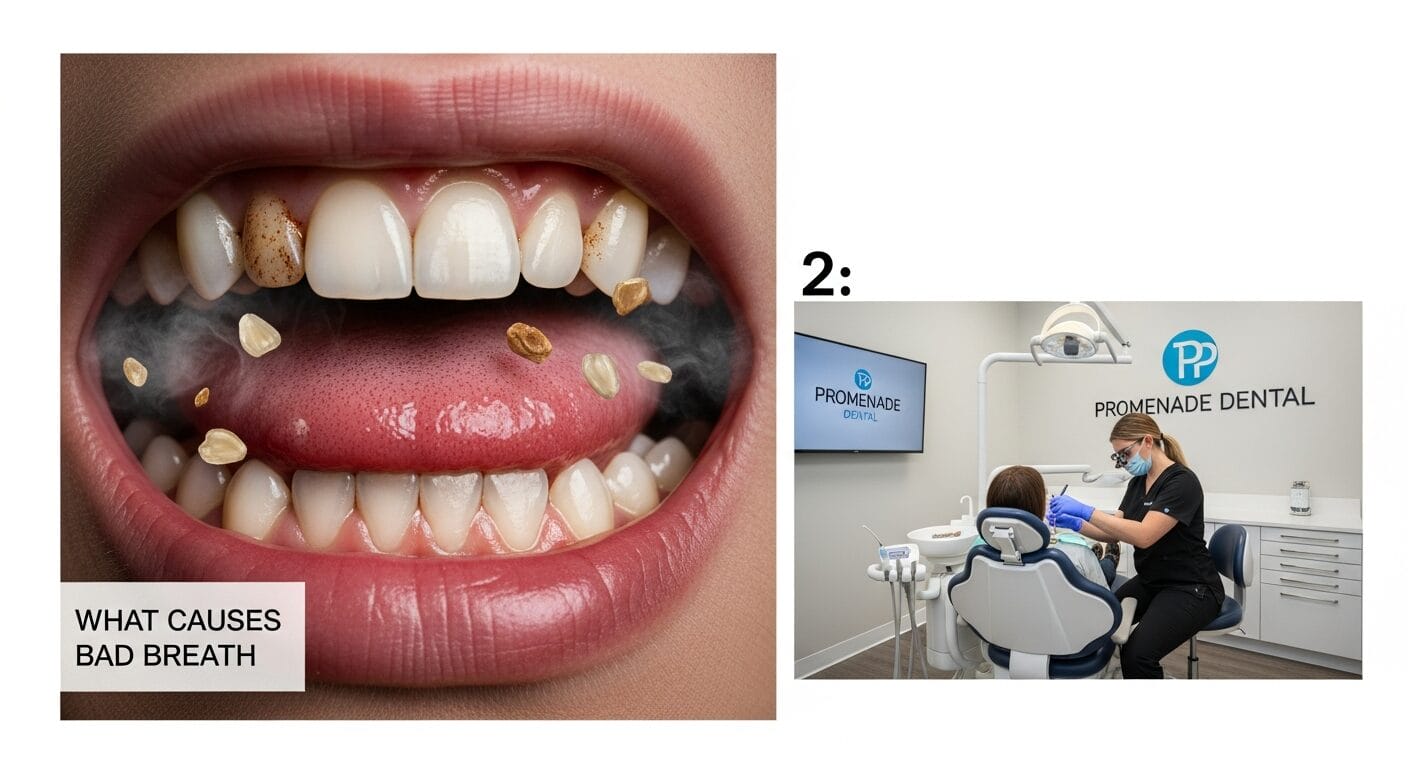
Bad breath — clinically known as halitosis — affects roughly one in four people globally. It is one of the most common reasons patients seek dental care, and one of the most consistently under-discussed: most people dealing with chronic halitosis have never been told the specific cause, only handed a toothbrush and a recommendation to floss more.
The reality is that persistent bad breath almost always has an identifiable clinical cause — and most of those causes are completely treatable by a skilled, thorough dentist. At Promenade Dental Care in Murrieta, Dr. Bao Nguyen approaches chronic bad breath treatment with the same diagnostic rigor he brings to every clinical concern: identify the cause first, then treat it with the most effective and least invasive approach available. This guide explains what is actually causing your bad breath, what warning signs indicate a more serious underlying condition, and exactly how Promenade Dental Care addresses each cause at its root.
What Is Halitosis? Chronic Bad Breath vs. Normal Morning Breath
Not all bad breath is halitosis. Understanding the distinction matters — because the appropriate response is completely different. Transient bad breath is temporary and caused by food (garlic, onions, coffee), alcohol, tobacco, or simply waking up with a dry mouth after hours of reduced saliva flow during sleep. It resolves within an hour or two of brushing, flossing, and eating. It requires no clinical intervention.
Halitosis — persistent, chronic bad breath — is different. It returns within hours of thorough brushing. It does not respond adequately to mouthwash. It may have been present for months or years. It is often noticed by others before the person experiencing it becomes fully aware of its consistency. According to the Mayo Clinic, approximately 25% of people experience some form of chronic halitosis — yet the condition is significantly underdiagnosed because many patients are too embarrassed to raise it directly with their dentist.
Of chronic bad breath cases originate inside the mouth — from bacteria producing volatile sulfur compounds (VSCs) on tooth surfaces, in gum pockets, and on the tongue. The remaining 10% originate from systemic conditions. This means the overwhelming majority of halitosis cases are directly treatable by a halitosis dentist — without requiring medical referral or lifestyle overhaul.
Chronic bad breath is a clinical finding, not a personal failing. The patients who struggle with it most consistently are often those with the most diligent home care routines — who brush twice daily, use mouthwash regularly, and still cannot understand why the problem persists. The answer is almost never effort. It is almost always an underlying condition that home care cannot reach.
What Causes Bad Breath: The 8 Primary Sources
The Journal of Clinical Periodontology’s landmark halitosis review establishes a clear hierarchy of bad breath causes: the majority of chronic bad breath is oral in origin, with a specific, identifiable source in nearly every case. Understanding halitosis causes is the first step to effective treatment — here are the eight primary sources and what each one means for your care:
1 · Oral Bacteria and Volatile Sulfur CompoundsThe direct mechanism behind most bad breath. Anaerobic bacteria in the mouth metabolize food particles and dead cells, producing hydrogen sulfide, methyl mercaptan, and other volatile sulfur compounds (VSCs) — the actual odor molecules responsible for the characteristic smell of halitosis. Professional cleaning removes the bacterial deposits home care can’t reach.
2 · Gum Disease (Periodontal Disease)The most significant oral cause of chronic halitosis in adults. Bacteria in infected gum pockets produce especially concentrated VSCs. NIH data shows nearly half of adults over 30 have some form of gum disease — many undiagnosed. See the gum disease section below for detailed symptom information.
3 · Tongue Bacterial CoatingThe rough, papillated surface of the tongue is the largest anaerobic environment in the mouth — harboring bacteria, dead cells, and food debris in a coating that brushing the tongue’s surface reduces but rarely eliminates. Tongue scrapers and professional cleaning target this source more effectively than toothbrushes.
4 · Dry Mouth (Xerostomia)Saliva is nature’s oral antiseptic — it washes, buffers, and chemically inhibits bacterial growth. Dry mouth, caused by over 500 common medications, systemic diseases, or mouth breathing, allows bacteria to multiply unchecked. Many patients with medication-related dry mouth have no idea the medication is causing their halitosis.
5 · Untreated Cavities and Failing RestorationsCavities create enclosed bacterial environments that home care cannot access. Old fillings or crowns with gaps harbor biofilm at the margins. Advanced cavities reaching the pulp create infected environments with particularly potent bacterial activity. Dental X-rays at Promenade identify these even before they become painful.
6 · Diet and Certain FoodsSulfur-rich foods (garlic, onions, cruciferous vegetables) produce odorous compounds that enter the bloodstream and are exhaled from the lungs for hours after consumption — making them impervious to mouthwash. Low-carbohydrate diets induce ketosis, producing a distinctive fruity or acetone-like breath. These cases are dietary rather than infectious and resolve with dietary modification.
7 · Tobacco ProductsTobacco use causes bad breath through multiple mechanisms: direct chemical odor from tobacco compounds, promotion of gum disease (which causes its own halitosis), reduction of saliva production, and reduced immune response to oral bacteria. Halitosis in tobacco users requires addressing both the tobacco habit and its oral health consequences.
8 · Systemic and Medical ConditionsAcid reflux, diabetes, kidney disease, liver disease, respiratory infections, and tonsil stones (tonsilloliths) all produce characteristic breath odors that cannot be resolved through oral hygiene alone. When Promenade’s examination identifies no oral cause, referral to your primary care physician is the appropriate next step.
The most reliable way to determine the causes of bad breath in your specific case is a professional dental examination — not a self-assessment. Most people cannot accurately detect their own chronic halitosis because olfactory adaptation (habituation to your own odors) prevents objective self-assessment. Dr. Bao Nguyen’s examination identifies the cause systematically — without guesswork. Call (951) 412-0127 to schedule.
Gum Disease Symptoms and Bad Breath: What the Connection Looks Like
Periodontal (gum) disease is the most common cause of chronic halitosis in adults who maintain otherwise reasonable oral hygiene. According to the CDC’s oral health data, 47.2% of adults aged 30 and older have some form of periodontal disease — yet the condition is frequently asymptomatic in its early stages, meaning many patients don’t know they have it. The halitosis it causes is often the first noticeable symptom. Recognizing gum disease symptoms early is the most effective way to prevent the progressive bone and tissue loss that makes treatment more complex.
Gum disease produces bad breath through a specific mechanism: anaerobic bacteria colonize the space between the tooth root and the gum (the periodontal pocket), where they are protected from both home care and standard cleaning. As they metabolize tissue and food debris in this oxygen-poor environment, they produce hydrogen sulfide and methyl mercaptan in concentrated amounts — producing breath that is characteristically unpleasant and persistent regardless of oral hygiene effort. Patients who notice any of the classic gum disease symptoms — bleeding, swelling, recession, or persistent bad odor — should seek a periodontal evaluation promptly.
Gingivitis — Stage 1 (Reversible)Inflammation confined to the gum tissue. Characterized by red, swollen, tender gums that bleed with brushing or flossing. No bone loss at this stage. Fully reversible with professional cleaning and improved home care. The bad breath associated with gingivitis often resolves significantly after a single thorough cleaning.
Mild Periodontitis — Stage 2Bacterial infection has begun to destroy the bone and connective tissue supporting the teeth. Pocket depths of 4-5mm measured by the periodontal probe. May still appear mild externally. Requires scaling and root planing (deep cleaning) rather than standard cleaning for effective treatment. Bad breath is typically more persistent at this stage.
Moderate Periodontitis — Stage 3Significant bone and attachment loss. Pocket depths of 5-7mm. Teeth may appear longer as gums recede. Some mobility possible. Scaling and root planing with possible antibiotic therapy. See Promenade’s gum recession treatment services for comprehensive care at this stage.
Severe Periodontitis — Stage 4Profound bone loss and tooth mobility. Pocket depths exceeding 7mm. High risk of tooth loss without intervention. Requires intensive periodontal therapy and possibly oral surgery. The halitosis at this stage is typically severe and profoundly impacts quality of life and social confidence.
Bleeding gums are never normal — even if it’s only occasional or light bleeding. Healthy gum tissue does not bleed in response to normal brushing or flossing. Any consistent gum bleeding is a diagnostic signal of active bacterial infection and inflammation that requires professional evaluation — not more vigorous brushing. If your gums bleed regularly, schedule an examination at Promenade Dental Care: (951) 412-0127.
Dry Mouth and Bad Breath: Why Your Medication May Be the Problem
Dry mouth (xerostomia) is dramatically underrecognized as a cause of chronic halitosis. The connection is direct: saliva is the mouth’s natural antibacterial defense system. It physically rinses bacteria and food debris, it contains lysozyme and other antimicrobial proteins that inhibit bacterial growth, and it maintains the slightly alkaline pH that makes the oral environment less hospitable to odor-producing anaerobic bacteria.
When saliva production is reduced, bacteria multiply far more rapidly and produce more volatile sulfur compounds per unit of time — meaning even the same quantity of oral bacteria produces significantly worse halitosis in a dry-mouth environment. According to the American Dental Association, over 500 commonly prescribed medications list dry mouth as a side effect — including many antihistamines, blood pressure medications, antidepressants, antipsychotics, diuretics, and pain medications.
If your bad breath worsened significantly after starting a new medication, the medication may be the direct cause. Never stop a prescribed medication without consulting your prescribing physician — but do report the dry mouth and halitosis symptom at your next appointment. Many medications have alternatives with less pronounced dry mouth effects, and specific strategies exist for managing medication-related xerostomia. Dr. Bao Nguyen evaluates medication lists as part of every halitosis assessment.
Systemic Conditions That Cause Bad Breath: When Dentistry Isn’t Enough
Approximately 10% of chronic halitosis cases originate outside the oral cavity. These require identifying and managing the underlying systemic condition — and cannot be resolved by dental treatment alone. Recognizing these cases and referring appropriately is part of the comprehensive care Promenade Dental Care provides.
Acid Reflux (GERD)Stomach acid and partially digested food material return to the esophagus and throat, producing a characteristic sour or acidic breath odor that originates from the stomach rather than the mouth. Standard oral hygiene has no impact on GERD-related halitosis. Managed through dietary modification, medication, and gastroenterology referral when needed.
Diabetes — UncontrolledUncontrolled diabetes produces ketone bodies as an alternative fuel source when glucose cannot be used effectively. Ketone metabolism produces a fruity or acetone-like breath odor distinctive enough that it can sometimes be recognized clinically. Halitosis in diabetic patients improves with better glucose control. Also: diabetes significantly worsens gum disease, creating a compound effect on halitosis.
Kidney and Liver DiseaseBoth organs process metabolic waste products. When they fail to function adequately, these compounds accumulate in the bloodstream and are excreted through the lungs. Kidney disease produces an ammonia-like or fishy odor (uremic fetor). Liver disease produces a characteristic musty or sulfurous odor (fetor hepaticus). These are potentially serious diagnostic signals.
Tonsil Stones (Tonsilloliths)Calcified deposits that form in the crypts (folds) of the tonsils, composed of bacteria, food debris, and dead cells. Produce a potent, distinctively unpleasant odor that is often resistant to dental treatment because it originates in the throat rather than the mouth. Common but under-recognized. ENT referral addresses refractory cases. Regular ultrasonic cleaning at Promenade can help manage the oral component.
Chronic Sinusitis and Postnasal DripChronic sinus infections produce bacterial-laden mucus that drains to the back of the throat, contributing both bacteria and odorous compounds to the oral environment. The oral contributions of sinusitis-related halitosis can be reduced through professional cleaning, but the underlying sinus condition requires medical management.
Respiratory Tract InfectionsActive throat infections, lung infections, and bronchiectasis can produce breath odors from infected secretions in the respiratory tract. These resolve with appropriate medical treatment of the infection. Persistent halitosis after apparent resolution of a respiratory infection warrants further medical evaluation.
Red Flags: When Bad Breath Signals Something More Serious
Most chronic halitosis is oral in origin and responds to dental treatment. But certain patterns and accompanying symptoms warrant prompt professional evaluation — both dental and medical. The following are conditions that should not be monitored or self-managed:
Fruity or Acetone Breath with Excessive Thirst or UrinationThis combination is a potential indicator of undiagnosed or uncontrolled diabetes. Seek medical evaluation promptly — this is not a dental emergency but warrants same-week physician contact. Uncontrolled diabetes has serious systemic consequences beyond halitosis.
Ammonia-Like or Fishy Breath Not Explained by DietPersistent ammonia or fish-like odor unrelated to seafood consumption can indicate kidney disease. This requires medical evaluation, not dental treatment. If accompanied by fatigue, swelling, or changes in urination, seek urgent medical attention.
Musty or Sulfurous Breath with Jaundice or Abdominal PainA musty, sweet-sulfurous odor (fetor hepaticus) combined with yellowing skin or eyes, or abdominal discomfort, is a potential indicator of liver disease. Seek medical evaluation — this symptom combination warrants urgent assessment.
Bleeding Gums That Do Not Improve After 2 Weeks of Careful CleaningWhile bleeding gums alone indicate gum disease (a treatable dental condition), persistent bleeding that does not improve at all with careful twice-daily brushing and flossing over two weeks warrants evaluation for systemic causes including blood thinning medications and, rarely, blood disorders.
Sudden or Rapidly Worsening Halitosis Without Dietary ExplanationA sudden and significant change in breath odor — particularly if not explained by diet or illness — warrants dental and possibly medical evaluation. Sudden new halitosis can indicate rapidly developing gum disease, dental abscess, or a new systemic condition requiring attention.
Loose Teeth Accompanied by Persistent Bad BreathTooth mobility combined with chronic bad breath is a strong indicator of severe periodontal disease with significant bone loss. This combination requires urgent periodontal evaluation — untreated, it progresses to tooth loss. Contact Promenade Dental Care at (951) 412-0127 for prompt evaluation.
Bad Breath Accompanied by Visible Pus Near the GumlinePus discharge near the gum or tooth is a sign of active dental abscess or advanced gum disease — a dental emergency. This requires same-day or next-day professional evaluation. Do not use antibiotics without professional diagnosis — they address symptoms without treating the infection source.
Halitosis That Returns Immediately After Professional CleaningIf bad breath returns within days of a thorough professional cleaning, this suggests either a very active bacterial condition (advanced gum disease requiring more intensive treatment), or a non-oral source. This pattern should be reported to Dr. Bao Nguyen explicitly at the follow-up — it changes the treatment approach.
If your bad breath is accompanied by chest pain, difficulty swallowing, unexplained weight loss, or persistent fatigue — seek medical evaluation before or alongside dental evaluation. These symptom combinations can indicate conditions unrelated to oral health that use halitosis as one of many clinical signs. Promenade Dental Care treats the oral component of your care; your primary care physician manages the rest of the picture.
Chronic Bad Breath Treatment: The 6-Step Process at Promenade Dental Care
Treatment of chronic halitosis at Promenade Dental Care follows a systematic, cause-first approach. The same bad breath symptom may require very different treatment depending on its specific source — which is why examination precedes intervention.
Comprehensive Examination and Halitosis Assessment
Dr. Bao Nguyen conducts a complete oral examination specifically aimed at identifying halitosis sources: full periodontal assessment with pocket depth measurements at six points per tooth, visual examination of all tooth surfaces and restorations, tongue and soft tissue evaluation, and review of medical history and medications for systemic contributing factors. Digital X-rays reveal below-gumline bone loss, interproximal cavities, and failing restoration margins that direct examination cannot fully assess.
New patients at Promenade Dental Care access this comprehensive examination for just $20 — one of the most affordable entry points to professional halitosis evaluation in the Temecula Valley.
Professional Ultrasonic Cleaning — The Primary Treatment for Most Cases
For the majority of halitosis cases caused by bacterial buildup, a professional ultrasonic cleaning is the primary and most effective treatment. Promenade Dental Care’s ultrasonic teeth cleaning uses high-frequency vibration to disrupt and remove calcified bacterial deposits (tartar/calculus) from both above and below the gumline — reaching areas that no amount of home brushing or flossing can access.
Most patients with halitosis caused by bacterial accumulation notice significant improvement within 24-72 hours of their professional cleaning. The $95 standard cleaning appointment at Promenade Dental Care includes this comprehensive cleaning service.
Scaling and Root Planing for Active Gum Disease
When gum disease beyond gingivitis is identified, a deep cleaning procedure called scaling and root planing is the evidence-based standard of care. This procedure removes calcified deposits from root surfaces below the gumline, disrupts the bacterial environment in infected periodontal pockets, and creates clean root surfaces to which healthy gum tissue can reattach.
Scaling and root planing at Promenade Dental Care is performed under local anesthesia using Dr. Bao Nguyen’s pain-free technique — the same approach that has earned the practice its consistent 5-star reviews for comfortable care. For patients with gum disease as the source of their halitosis, this procedure typically produces dramatic improvement in breath quality within 1-2 weeks of treatment.
Restorative Treatment for Cavities and Failing Restorations
Identified cavities and failing restorations are treated with tooth-colored composite fillings or, where needed, crowns. Promenade Dental Care’s CEREC technology enables same-day crown fabrication in the office — eliminating the need for a temporary crown, a second appointment, and weeks of a temporary restoration harboring bacteria at the margins.
When a cavity has progressed to the point of pulp infection, root canal therapy eliminates the infected tissue and seals the tooth — removing the bacterial source entirely. Root canals at Promenade are performed with the same pain-free technique that characterizes all of Dr. Bao Nguyen’s care.
Personalized Home Care Instruction
After professional treatment, the team at Promenade Dental Care provides individualized home care guidance based on your specific examination findings — not generic advice. This includes: correct tongue-scraping technique (the most underused and effective halitosis home intervention), targeted flossing approaches for identified problem areas, appropriate mouthwash selection for your specific situation (alcohol-free, zinc-containing, or prescription chlorhexidine where indicated), hydration guidance for dry mouth management, and specific dietary recommendations where diet is contributing.
Patients with medication-related dry mouth receive specific strategies for managing this condition alongside their regular medications — without requiring medication changes.
Maintenance Schedule and Long-Term Management
Chronic halitosis — particularly when associated with gum disease — requires ongoing professional management, not a single treatment event. Promenade Dental Care establishes a recall schedule appropriate to your condition: typically every 3-4 months for active gum disease, transitioning to every 6 months once the condition is stable and breath is consistently improved.
Follow-up appointments reassess pocket depths, identify any recurrence or progression, confirm the effectiveness of home care improvements, and maintain the clean oral environment that keeps breath fresh between visits. For patients whose halitosis has a systemic component, Dr. Bao Nguyen coordinates care with your primary care physician to ensure both dimensions of the problem are being addressed concurrently.
Bad Breath Solutions You Can Start Today
Professional treatment is the definitive intervention for chronic halitosis — but home care quality determines how much of the benefit you retain between appointments. Understanding the reasons for bad breath in your specific case guides which home strategies will be most effective. These are the most evidence-supported bad breath solutions, ranked by impact:
Tongue Scraping — Most Underused, Highest ImpactA tongue scraper removes the bacterial coating on the tongue’s dorsal surface far more effectively than a toothbrush. Use it once daily before brushing — morning is most effective because overnight bacterial accumulation is highest. Scrape from back to front with gentle pressure 5-10 times, rinsing between strokes. Most patients who add tongue scraping to their routine notice improvement within days.
Daily Interdental CleaningFloss, interdental brushes, or a water flosser — used consistently every day — removes the bacterial biofilm between teeth where brushing cannot reach. This is the zone where gum disease begins and where some of the most potent bacterial VSC production occurs. No amount of mouthwash substitutes for daily mechanical removal of this material.
Thorough Twice-Daily BrushingTwo minutes minimum, covering all tooth surfaces including the gumline and the biting surfaces. Use a soft brush (stiff bristles can damage gums) and fluoride toothpaste. Electric toothbrushes consistently outperform manual for plaque removal — worth considering if halitosis is a consistent issue. Brush after meals when possible and always before bed.
Appropriate Mouthwash SelectionAvoid alcohol-based mouthwashes if dry mouth is a factor — alcohol dries the mouth further. Zinc-containing rinses (Listerine Total Care with zinc, TheraBreath) neutralize volatile sulfur compounds. Cetylpyridinium chloride (Colgate Total) reduces bacterial counts. Prescription chlorhexidine is highly effective short-term for active infection. Ask Dr. Bao Nguyen which formulation is appropriate for your specific pattern.
Hydration — Simple and Consistently UnderestimatedDrinking adequate water throughout the day physically rinses bacteria and food debris, and supports saliva production. For patients with medication-related dry mouth, frequent small sips of water throughout the day are the most practical management strategy — along with sugar-free gum or lozenges that stimulate saliva flow without sugar feeding bacterial growth.
Diet Modifications When IndicatedReduce garlic, onions, and cruciferous vegetables if they consistently worsen your breath. If you are following a very low carbohydrate diet and experiencing ketone breath, increasing complex carbohydrate intake modestly may resolve the odor. Fresh herbs including parsley, mint, and fennel seeds have mild deodorizing properties and can provide temporary relief after odor-producing foods.
Home care addresses the symptoms of halitosis; professional treatment addresses the cause. If you are brushing thoroughly twice daily, flossing daily, scraping your tongue, and using appropriate mouthwash — and your bad breath still returns within a few hours — this is not a sign that you need to do more at home. It is a sign that there is an underlying condition that home care cannot reach. Patients who find themselves asking “why does my breath smell despite good hygiene?” are exactly who a professional halitosis evaluation is designed for. At that point, a dental examination at Promenade Dental Care is the most effective next step.
Why Patients Choose Promenade Dental Care for Bad Breath Treatment
Comprehensive Diagnostic First — AlwaysPromenade Dental Care doesn’t treat symptoms; it identifies causes. The $20 new patient exam includes a complete periodontal assessment, digital X-rays, and a full soft tissue examination — providing the diagnostic foundation for effective halitosis treatment rather than generic recommendations.
Pain-Free Technique Including Deep CleaningDr. Bao Nguyen’s military-trained, pain-minimizing approach extends to scaling and root planing — the procedure most commonly associated with anxiety in halitosis patients who need gum disease treatment. Patient reviews consistently describe deep cleaning as “more comfortable than expected” at Promenade Dental Care.
No-Overselling Policy — Transparent PricingPromenade Dental Care operates on a core principle of upfront pricing and no unnecessary treatment recommendations. The treatment plan for your halitosis reflects what your examination actually shows — not what generates the most revenue. $20 exam, $95 cleaning, clear communication before every procedure.
20+ Years Serving Murrieta and Temecula ValleyDr. Bao Nguyen has served the Murrieta and Temecula Valley community for over 20 years. The 200+ 5-star Google reviews documenting that tenure are the most reliable measure of what patients actually experience — including those who came in specifically for halitosis concerns.
Ultrasonic Cleaning TechnologyPromenade’s ultrasonic teeth cleaning is the most effective mechanical approach to removing the bacterial deposits that cause most bad breath — significantly more thorough than hand scaling alone. This is standard at Promenade, not an upgrade.
Emergency Appointments — Including Dental AbscessDental abscess — which produces severe, acute halitosis alongside pain and swelling — is a dental emergency. Promenade Dental Care answers the phone 24 hours for emergencies and offers same-day appointments when possible. Contact (951) 412-0127 immediately for suspected abscess.
Bad Breath Self-Assessment Checklist: Is a Dental Visit Overdue?
Check every item that applies to your current situation. Each checked box is a reason to schedule an evaluation at Promenade Dental Care.
Fresh Breath Starts with One Appointment
Chronic bad breath has a cause — and most causes are completely treatable. Dr. Bao Nguyen at Promenade Dental Care provides comprehensive halitosis evaluation, professional ultrasonic cleaning, gum disease treatment, and personalized home care guidance for patients throughout Murrieta, Temecula, Menifee, and the surrounding Temecula Valley. New patient exam: $20. Professional cleaning: $95. No overselling. No surprise charges. Transparent pricing always.
26957 Date St., Suite B4, Murrieta, CA 92563 · Mon–Tue & Thu 9 AM–5 PM · Fri 9 AM–3 PM · Sat 9 AM–1 PM
Book Online · yourpromenadedentist@yahoo.com · promenadedentalcare.com
Bad Breath and Halitosis Treatment: Your Questions Answered
The most common questions patients ask Dr. Bao Nguyen about chronic bad breath, halitosis causes, gum disease symptoms, and bad breath solutions at Promenade Dental Care in Murrieta.
What is halitosis and how is it different from ordinary bad breath?
Halitosis is the clinical term for persistent, chronic bad breath that does not resolve with brushing, flossing, or mouthwash. Ordinary bad breath is temporary — caused by food (garlic, onions) or morning dry mouth — and resolves within hours of oral hygiene. Chronic halitosis returns within hours of thorough brushing because it stems from an underlying condition: gum disease, tongue bacteria, dry mouth, untreated cavities, or systemic factors.
According to the Mayo Clinic, approximately 25% of people experience some form of chronic halitosis. The key test: if bad breath returns within hours of careful brushing and does not respond to mouthwash, a dental examination at Promenade Dental Care is the appropriate next step.
What are the most common causes of bad breath?
The most common causes, in order of prevalence: (1) Oral bacteria producing volatile sulfur compounds — 90% of chronic halitosis originates in the mouth. (2) Gum disease — anaerobic bacteria in infected gum pockets produce especially concentrated odor compounds. (3) Tongue bacterial coating — the dorsal tongue surface harbors significant bacterial populations. (4) Dry mouth — reduced saliva allows bacteria to multiply unchecked. (5) Untreated cavities and failing restorations.
If you’re wondering what causes bad breath specifically in your case, a comprehensive oral examination at Promenade is the most reliable diagnostic path. According to the Journal of Clinical Periodontology, the remaining ~10% of chronic halitosis is systemic in origin — from acid reflux, diabetes, kidney or liver disease, or respiratory conditions.
What are gum disease symptoms that contribute to bad breath?
Gum disease symptoms accompanying or contributing to bad breath include: persistent bad breath that doesn’t resolve with brushing; red, swollen, or tender gums; bleeding when brushing or flossing (even light bleeding is not normal); receding gums making teeth appear longer; tooth sensitivity; loose teeth; pus between teeth and gums; and changes in how teeth fit together.
The CDC reports that nearly half of adults over 30 have some form of gum disease — and gum disease is the leading cause of chronic halitosis in adults who otherwise maintain adequate oral hygiene. A periodontal examination at Promenade Dental Care measures gum pocket depths precisely and identifies gum disease at any stage.
How does Promenade Dental Care treat chronic bad breath?
Chronic bad breath treatment at Promenade Dental Care begins with a comprehensive examination to identify the specific cause — because treatment varies by cause. The process includes: comprehensive oral exam with periodontal assessment; digital X-rays; professional ultrasonic teeth cleaning; scaling and root planing for active gum disease; restorative treatment for cavities; and personalized home care instruction.
New patients access this evaluation for $20 — including digital X-rays. Most patients with bacterial-source halitosis notice significant improvement within days of professional cleaning. Call (951) 412-0127 to schedule.
Can dry mouth cause bad breath?
Yes — dry mouth (xerostomia) is one of the most underrecognized causes of chronic bad breath. Saliva washes bacteria, contains antibacterial proteins, and maintains pH that inhibits bacterial growth. When saliva is reduced, bacteria multiply rapidly and produce more volatile sulfur compounds.
The American Dental Association notes that over 500 common medications list dry mouth as a side effect — including many antihistamines, blood pressure medications, and antidepressants. If your bad breath worsened after starting a new medication, discuss this with both your prescribing physician and Dr. Bao Nguyen at Promenade.
Are there bad breath solutions I can try at home?
Effective at-home bad breath solutions: (1) Tongue scraping daily — the most underused and highest-impact home intervention. (2) Daily interdental cleaning (floss or water flosser). (3) Thorough twice-daily brushing including the gumline. (4) Staying hydrated throughout the day. (5) Alcohol-free mouthwash — zinc-containing or CPC formulas outperform alcohol-based rinses for halitosis.
If bad breath persists after 2-4 weeks of consistent improved home care, a professional examination is the appropriate next step. Home care addresses symptoms; professional treatment addresses causes.
Does mouthwash cure bad breath?
No — commercial mouthwash masks bad breath temporarily (typically 30-60 minutes) but does not cure chronic halitosis. Most over-the-counter mouthwashes freshen breath rather than eliminating the bacterial source. Alcohol-containing mouthwashes can worsen halitosis over time by drying the mouth and reducing saliva.
Clinically proven options include: zinc-containing rinses (neutralize VSCs), cetylpyridinium chloride (reduces bacterial counts), and prescription chlorhexidine (for active gum disease treatment, short-term use). Ask Dr. Bao Nguyen which formulation is appropriate for your specific pattern.
Can a cavity cause bad breath?
Yes. Untreated cavities create enclosed spaces where bacteria accumulate and produce volatile sulfur compounds that home care cannot reach. Advanced cavities reaching the pulp create infected environments with particularly potent odor. Old or failing restorations with gaps harbor biofilm at the margins — also inaccessible to home care.
Digital X-rays at Promenade Dental Care identify cavities and failing restorations even before they become painful — making the $20 new patient examination one of the most cost-effective diagnostic investments available for patients with unexplained chronic halitosis.
What systemic conditions cause bad breath?
Systemic conditions producing characteristic breath odors: Acid reflux (GERD) — sour, acidic odor from stomach contents. Diabetes (uncontrolled) — fruity or acetone-like odor from ketone production. Kidney disease — ammonia or fishy odor from waste product accumulation. Liver disease — musty or sulfurous odor (fetor hepaticus). Tonsil stones — intensely unpleasant odor from cryptic deposits. Chronic sinusitis — bacterial mucus drainage contributing to oral odor.
When Promenade’s examination identifies no oral cause, referral to your primary care physician for systemic evaluation is the appropriate next step. The NIH confirms that comprehensive evaluation combining dental and medical assessment produces the highest diagnostic accuracy for refractory halitosis.
How often should I see the dentist if I have chronic bad breath?
If you have chronic bad breath, an initial evaluation at Promenade Dental Care is the first step — even if you maintain good home care and have never been told you have gum disease. After initial evaluation and treatment, most halitosis patients benefit from 3-4 month cleaning intervals until the underlying condition is controlled and breath is consistently improved.
Once stabilized, standard twice-yearly maintenance is typically appropriate. Chronic halitosis is a clinical finding that responds to professional treatment — not an embarrassing trait to manage indefinitely. Call (951) 412-0127 to schedule your evaluation.