
Just Got a Bridge, or About to?
Living With a Dental Bridge in Murrieta: Recovery, Eating, and Daily Care
The questions patients actually ask me after the bridge is cemented. What to eat the first week, how to clean under it, what is normal soreness, and when something genuinely needs a phone call.
This page is not about choosing a bridge. It is about the weeks and years after one is in your mouth. If you are still deciding between a bridge, an implant, and a partial, start on the Murrieta dental bridges page instead, where I compare the options and explain what each one costs.
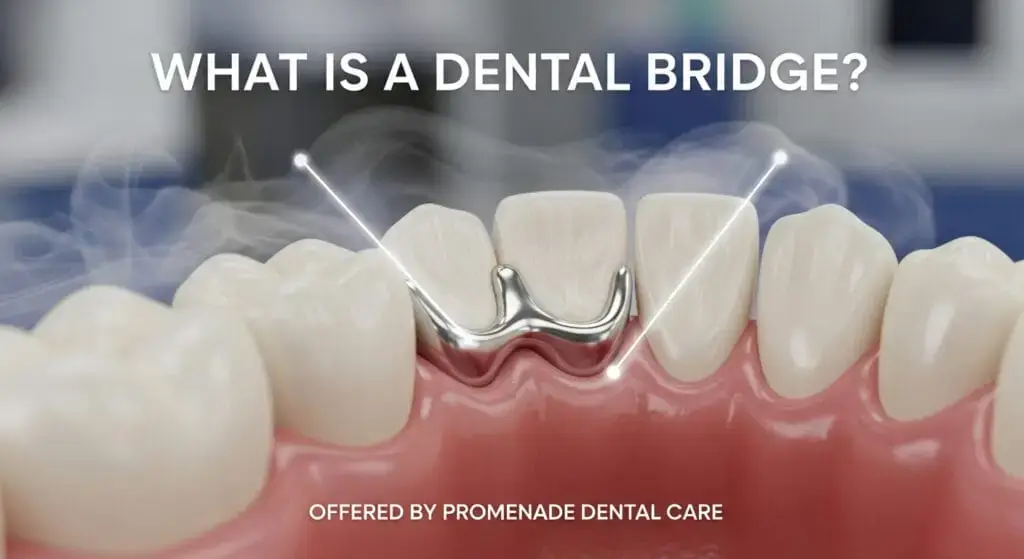
Start Here
Most Bridge Problems Are Care Problems, Not Lab Problems
In sixteen years in my own practice, I have replaced very few bridges because the porcelain broke. What fails first is almost always the tooth or the gum underneath, and that is decided by what happens at home between visits, not by what happens in my chair.
That is good news, because it means the outcome is largely yours to control. A bridge that gets cleaned underneath every day and seen every six months routinely runs past fifteen years. One that never gets flossed under can decay at the anchor tooth in three or four, and by then the fix is bigger than the original treatment was.
What follows is the plain version of the aftercare talk I give every patient at the cementation appointment, plus the questions people call back with a week later.
- Adjustment period
- Most people stop noticing the bridge within one to two weeks
- Soft food window
- About 24 hours after cementation, then normal texture as comfort allows
- Daily care
- Brushing twice a day plus one cleaning pass beneath the pontic
- Professional visits
- Hygiene and a bridge check every six months
- Typical lifespan
- 10 to 15 years, longer when the gums stay healthy
- Dentist
- Dr. Bao Nguyen, DDS. UCLA School of Dentistry, ten years as a U.S. Navy dentist, in private practice since 2010
Days One Through Seven
What the First Week Actually Feels Like
The temporary bridge phase and the permanent bridge phase feel different, and patients often expect the second one to be more dramatic than it is.
1The first 24 hours
Numbness wears off over two to four hours. Stay on soft food and lukewarm drinks until it does, so you do not bite your cheek without feeling it. Mild tenderness at the gumline is expected.
2Days two to four
Cold sensitivity in the anchor teeth is common and fades. Your tongue will find the new surface constantly. Speech may feel slightly off if the bridge is toward the front.
3Days five to seven
Bite should feel even. Chewing on that side should feel unremarkable. If either is still not true, the bridge needs a two-minute adjustment, not more patience.
The single most useful thing you can tell me: whether the bite feels high. A bridge that sits even a fraction proud puts every chewing force onto two anchor teeth instead of spreading it. Patients often assume it will settle. It does not. Call and I will adjust it.
Food
Eating With a Bridge: The Honest Timeline
With a temporary bridge
Temporaries are held with mild cement on purpose, because I have to remove them cleanly. Skip anything sticky enough to lift it: caramel, taffy, chewing gum, crusty bread pulled apart with your teeth. Chew on the other side when it is easy to do so.
With the permanent bridge
After the first day you can eat normally. Steak, apples, corn on the cob, all of it. The realistic limits are the ones that would threaten a natural tooth too: ice, popcorn kernels, hard candy, olive pits, and using your teeth to open packaging.
What to expect from taste and temperature
Porcelain does not conduct temperature the way enamel does, so hot and cold register differently over the bridge for the first few weeks. Taste is unaffected. If a metal-backed bridge sits near the tongue, some patients notice a faint difference for a while, then stop noticing.
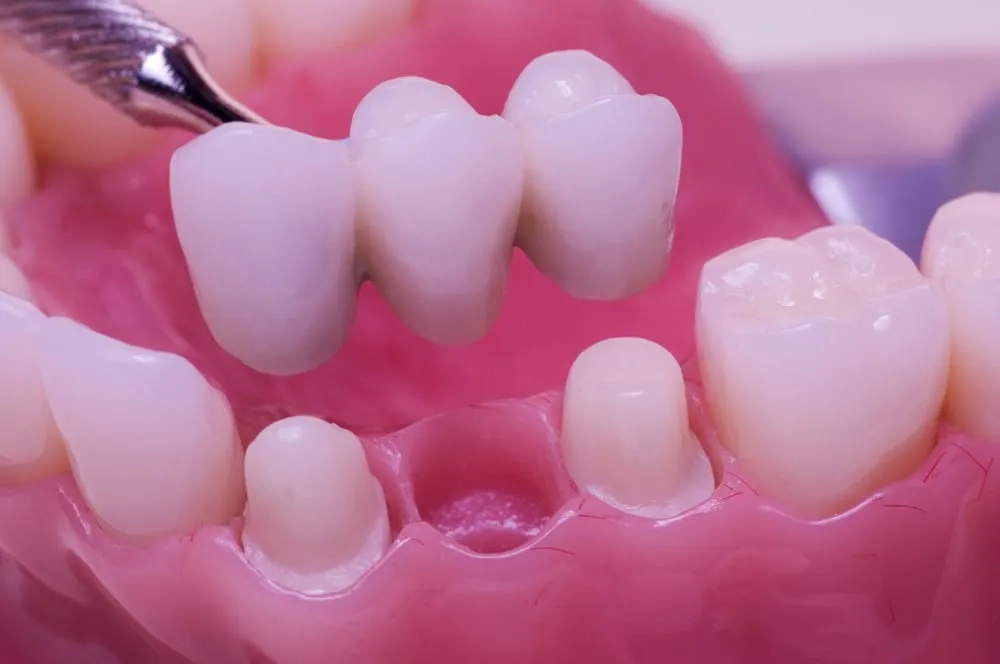
The Part That Decides Everything
Cleaning Under the Bridge
A bridge is joined across the top, so ordinary floss cannot drop between the units. The replacement tooth in the middle, the pontic, rests against your gum with a small space underneath it. That space collects plaque exactly like any other spot in your mouth, and it is the one place a toothbrush cannot reach.
You need one tool that gets under there, used once a day. Which tool matters far less than the daily part.
Show me at your next visit. Bring your tool of choice to your hygiene appointment and clean under the bridge in front of me. Thirty seconds of coaching fixes technique problems that no amount of reading does. The hygiene visit is the right place for it.
Judgment Calls
Normal, Watch It, or Call Me
| What you notice | What it usually means | What to do |
|---|---|---|
| Cold sensitivity in an anchor tooth | Normal after tooth preparation | Give it two to three weeks |
| Gum tenderness at the margin | Normal for several days | Warm salt water rinses |
| Bite feels high or uneven | Needs adjustment | Call this week |
| Temporary bridge came off | Common, not an emergency | Keep it, call the office |
| Bleeding when you clean under it | Often inflammation from missed cleaning | Keep cleaning; if it persists past two weeks, call |
| Persistent ache or throbbing | Anchor tooth may need evaluation | Call promptly |
| Permanent bridge feels loose | Cement seal or anchor tooth issue | Call the same day |
| Bad taste or odor under the bridge | Leakage or decay under a margin | Call promptly |
A loose permanent bridge is the one on that list I want to hear about immediately. Cement that has washed out lets saliva and bacteria under the crown, and a bridge left loose for months usually turns a re-cementation into something larger. Same-day and urgent problems go through emergency dental care.
Year Two and Beyond
Making a Bridge Last Fifteen Years
Protect the anchor teeth
The two crowned teeth carry the whole load. Decay at the crown margin is the most common reason a bridge comes out early, and it is preventable with daily cleaning and fluoride toothpaste.
Protect the gums
Gum disease loosens the anchors from underneath. If you have a history of recession or periodontal treatment, three or four cleanings a year beats two.
Handle the grinding
Nighttime clenching is hard on any restoration. A night guard costs a fraction of a replacement bridge and is the best insurance available for one.
Keep the six-month checks
I check the margins, the bite, and the tissue under the pontic at every hygiene visit. Catching a margin early means a small repair. Catching it late usually means an implant or a longer bridge.
If your bridge is already ten or twelve years old and starting to give you trouble, that visit is worth booking before something breaks. A planned replacement gives you options. An emergency one gives you fewer. Start with a $20 exam with digital X-rays and we will look at what is actually going on under there.
What Patients Say
Real Reviews from Murrieta and Temecula Valley Patients
Dr. Nguyen is a wonderful dentist, very friendly, compassionate, and skilled. I had a root canal done in less than two hours with the crown completed the same day. WOW!
Google Review · Restorative patient
Great dentist. No upselling, and it is easy to make an appointment. Exactly what you want when you are weighing a big decision about your teeth.
Google Review · Long-time patient
I have been a patient of Dr. Nguyen’s for over a decade. The doctor and staff, including Edith, are kind, caring, and professional. Painless treatment in a calming atmosphere.
Google Review · Debby, 10+ year patient
Questions We Hear Every Week
Dental Bridge Aftercare: FAQs
What can I eat the first week after a dental bridge is placed?
Stay soft for the first 24 hours while the anesthetic wears off and the cement fully sets, then return to normal texture as comfort allows. Most patients are eating everything again by day two or three. The exception is a temporary bridge, which is held with mild cement so I can remove it cleanly, so avoid caramel, taffy, chewing gum, and anything else sticky enough to lift it off. Once the permanent bridge is cemented, the only lasting limits are the ones that would threaten a natural tooth too: ice, popcorn kernels, hard candy, and opening packaging with your teeth.
Why is my temporary bridge sensitive to cold?
Preparing a tooth for a crown removes enamel and exposes dentin, which carries temperature signals to the nerve much more readily. A temporary bridge is not a perfect seal, so cold reaches that dentin. It is one of the most common calls I get, and it is expected rather than a sign that something went wrong. It typically settles within two to three weeks of the permanent bridge going on. Sensitivity toothpaste helps in the meantime. What is not routine is a spontaneous throbbing ache that wakes you at night, and that one deserves a call.
My temporary bridge came off. Is that an emergency?
It is common and not an emergency, but do not leave it. Keep the temporary in a clean container and call the office so we can re-seat it. Prepared teeth drift within days, and if the neighboring teeth shift even slightly, the permanent bridge may not seat properly when it comes back from the lab. Do not use household glue or over-the-counter repair kits on it. If it comes off outside office hours, keep the area clean, chew on the other side, and call us when we open.
How long does it take to talk normally with a new bridge?
Most patients speak normally within a few days, and bridges toward the back of the mouth usually cause no speech change at all. Front bridges are different because your tongue and lip use those tooth surfaces to shape sounds, and s and th sounds are the ones people notice first. Reading aloud for ten minutes a day speeds the adjustment considerably. If speech still feels off after two weeks, tell me, because a small contour adjustment often solves it.
Do I need a special toothbrush or floss for a dental bridge?
Your regular soft toothbrush is fine for the outer surfaces. What you do need is one tool that reaches under the pontic, the replacement tooth in the middle, because a bridge is joined across the top and ordinary floss cannot drop between the units. A floss threader, pre-cut super floss, or a correctly sized interdental brush all work. Which one you choose matters far less than using it once every day. Bring your tool to your next hygiene visit and clean under the bridge in front of me so I can correct technique on the spot.
Can I use a water flosser on a dental bridge?
Yes, and it works particularly well under a bridge because the stream reaches the space beneath the pontic that a brush cannot. Use a low or medium pressure setting, angle the tip at the gumline, and take your time along the bridge. I recommend it as an addition rather than a replacement, because water flushes debris but does not physically disrupt the sticky plaque film the way floss or an interdental brush does. The combination of both is what keeps anchor teeth healthy over a decade.
Is bleeding around a dental bridge normal?
A little bleeding in the first days after cementation is expected while the tissue settles. Bleeding that starts when you begin cleaning under a bridge you have been neglecting is also common, and it usually stops within one to two weeks once the inflammation resolves, so keep cleaning rather than backing off. What concerns me is bleeding that persists beyond two weeks of consistent care, or bleeding paired with a bad taste or odor. That combination points to a margin problem or gum disease under the bridge, and it should be examined.
I grind my teeth at night. Will that damage my bridge?
It can, and grinding is one of the more common reasons a bridge fails earlier than it should. Clenching loads the two anchor teeth with forces well beyond normal chewing, which can fracture porcelain, break the cement seal, or stress the anchor roots. A custom night guard is the fix. It costs a small fraction of what replacing a bridge costs, and it protects your natural teeth at the same time. If you wake with a sore jaw, morning headaches, or worn-flat front teeth, tell me before we plan the bridge, not after.
Can I whiten my teeth after getting a dental bridge?
Whitening gel lightens natural enamel but has no effect on porcelain or the cement holding a bridge in place. If you whiten after the bridge is made, your natural teeth will lighten around a restoration that stays exactly the same shade, and the mismatch can be obvious. The right sequence is to whiten first, let the shade stabilize for about two weeks, then match the bridge to the new color. If your bridge is already in place and the shade no longer matches, we can discuss options, but the bridge itself cannot be bleached.
Will a dental bridge affect an MRI or set off a metal detector?
Airport metal detectors are not triggered by dental restorations, so a bridge causes no problem at security. MRI is also safe with standard dental alloys, though metal in a bridge can create a local distortion in images of the head and jaw. Tell the imaging technician you have a bridge and roughly where it sits so they can account for it. All-ceramic and zirconia bridges contain no metal and do not cause distortion at all. Nothing about a bridge requires you to avoid or postpone an MRI.
What is the recovery like after a dental bridge is cemented?
Straightforward for most patients. Numbness fades within two to four hours, mild gum tenderness at the margins lasts a few days, and cold sensitivity in the anchor teeth resolves over two to three weeks. There is no incision and no stitches with a traditional bridge, so most people return to work and normal activity the same day. The one thing I ask you to pay attention to is your bite. If it feels high or uneven after the numbness is gone, that needs a two-minute adjustment rather than more patience.
What happens at my six-month checkup after getting a bridge?
Hygiene cleans around and under the bridge, then I check three things specifically. First, the margins where each crown meets the anchor tooth, since decay there is the most common reason a bridge is replaced early. Second, the bite, because it changes gradually as other teeth wear. Third, the tissue under the pontic, which tells me whether the daily cleaning is actually reaching. Radiographs at the appropriate interval show what I cannot see, including bone levels around the anchor roots. Catching a margin early means a small repair rather than a new bridge.
Something About Your Bridge Not Feeling Right?
Whether it is a high bite, a loose feel, or a bridge that has quietly reached the end of its life, the answer starts with a look and current X-rays. No pressure to decide anything on the spot.
(951) 412-0127 Request an Appointment Online26957 Date St, Suite B4, Murrieta, CA 92563
Mon, Tue, Thu 9:00 AM – 5:00 PM · Wed, Fri 9:00 AM – 3:00 PM · Sat by appointment & emergencies