Dental Implants in Murrieta
Single tooth, full arch, or same-day ā Dr. Bao Nguyen, DDS places every implant with guided surgery, evaluates gum and bone health first, and quotes you a real number before anything touches your jaw. Implant dentist near me on the Date Street corridor, serving French Valley, Winchester, and the Temecula Valley.
Call (951) 412-0127 Request a Consultation

Tooth Replacement in Murrieta
What Is a Dental Implant ā and Why Is It Different from Every Other Option?
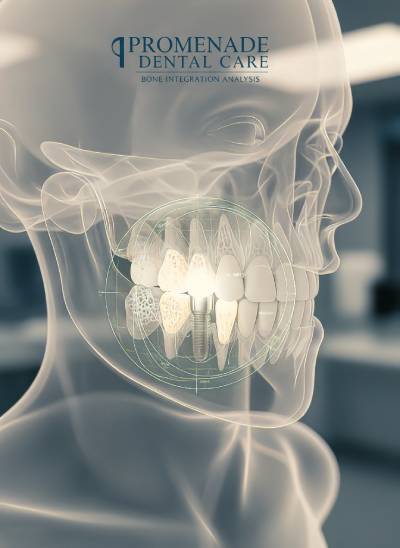
A dental implant is a small titanium post that a dentist places directly into the jawbone where a tooth root used to be. Over three to six months, the bone grows around and fuses to the post ā a process called osseointegration ā and that post becomes a permanent anchor for a crown, a bridge, or a full-arch set of teeth.
What makes implants fundamentally different from bridges or dentures is that they replace the root, not just the visible tooth. The root is what the jawbone needs to stay dense and full. Without it, the bone resorbs ā slowly, silently, and irreversibly once enough time passes. Bridges and conventional dentures sit on top of the gum and do nothing for the bone underneath. The American Dental Associationās patient guide to implants explains the anatomy in plain terms.
Dental implants in Murrieta are not new, but the technology Dr. Bao Nguyen uses to place them is. Guided surgery, 3D cone-beam imaging, and digital planning have transformed implant dentistry from an educated guess into a precision procedure ā and that precision is what makes same-day implants possible for patients who qualify.

Are You a Candidate?
Who Can Get Dental Implants?
Most adults missing one or more teeth are candidates. The deciding factors are bone volume, gum health, and overall medical fitness ā not age.
The jawbone needs enough height and width to anchor the post securely. If bone has been lost ā from years without a tooth, from periodontal disease, or from a traumatic extraction ā bone grafting can often rebuild the site. A sinus lift may be needed for upper-jaw implants near the sinus cavity. Neither procedure disqualifies you; they add a healing step before the implant goes in.
Gum tissue must be healthy and free of active infection. Active gum disease dramatically raises the risk of implant failure and must be treated first ā which is why Dr. Nguyenās implant consultation starts with a periodontal evaluation, not a sales pitch.
Medical conditions that affect healing ā uncontrolled diabetes, certain autoimmune disorders, radiation therapy to the jaw, heavy smoking ā increase risk and may require additional planning. None of them are automatic deal-breakers. The Cleveland Clinicās implant overview offers a useful summary of candidacy factors. A $20 exam with digital X-rays at Promenade Dental Care gives Dr. Nguyen the information to tell you definitively whether implants are realistic for your mouth.
From Our Google Reviews
What Murrieta Patients Say About Treatment Here
āSkilled, friendly, and includes you every step of the way. Love that I could do a full cap replacement in one visit. Thank you Dr. Bao, youāre my new go-to man for dental work. Yessica at the front desk is a big help too.ā
āDr. Nguyen is a wonderful dentist. Very friendly and compassionate. Very skilled. I had a root canal done in less than 2 hours with the crown completed the same day. WOW!!!ā
āBao was a military doctor and was sent to all the best post-graduate dental clinics and courses available in the USA. Dr. Nguyen did an amazing job ā not just fixed my forever-problem front teeth but also gave me a new smile!ā

Precision Placement
Guided Implant Surgery: How Technology Replaces Guesswork
Traditional implant placement relied on the surgeonās skill and a two-dimensional X-ray. Guided surgery adds a third dimension ā and removes most of the uncertainty.
The process starts with a cone-beam CT scan that creates a three-dimensional map of your jawbone, including density variations, nerve canals, sinus boundaries, and adjacent tooth roots. Dr. Nguyen imports that scan into planning software and positions the virtual implant exactly where it needs to go ā angle, depth, and proximity to vital structures all locked in before the appointment.
A custom surgical guide is then printed from that plan. During placement, the guide fits over your teeth or ridge and restricts the drill to the exact trajectory programmed in software. The result is a smaller incision, less tissue disruption, faster healing, and a more predictable outcome. For patients who qualify, guided surgery is what makes same-day implants possible: when the position is pre-planned to that tolerance, the implant achieves immediate stability and a temporary crown can go on the same day.
Research published in peer-reviewed journals ā including studies indexed in the National Library of Medicine ā consistently shows guided placement improves accuracy and reduces complications compared to freehand techniques. At Promenade Dental Care, itās the standard, not the upsell.
Which Implant Option Is Right for Me?
Four Paths to Replacing Missing Teeth ā and How to Choose
The right tooth replacement in Murrieta depends on how many teeth are missing, the condition of the bone, and what you value most: speed, stability, or cost. Hereās the honest comparison.
Best for replacing one tooth
Single Dental Implant
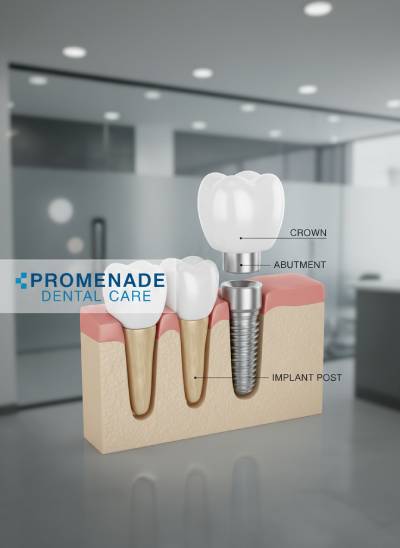
One post, one abutment, one crown. The neighboring teeth stay untouched, the bone stays stimulated, and the implant looks, feels, and cleans like a natural tooth. This is the gold standard for a single missing tooth when the bone supports it. Our missing teeth solutions page compares every option side by side. When the adjacent teeth are already compromised, a bridge may make more sense, and Dr. Nguyen will tell you when thatās the case.
Best for several missing teeth
Implant-Supported Bridge
Two implants anchor a multi-tooth bridge, replacing three or more teeth without touching any natural tooth. This spreads the chewing load the way roots are supposed to and preserves bone along the entire span. The implant-supported bridge page covers the design in detail. For long spans, this approach costs less per tooth than individual implants and outperforms traditional bridges by years.
Best for full-arch replacement
Implant-Supported Dentures
Four to six implants anchor a full arch of teeth ā either a snap-on overdenture you remove for cleaning or a fixed hybrid prosthesis (All-on-4) that stays in your mouth permanently. Chewing strength returns to near-natural levels, the jawbone is preserved, and adhesive is a thing of the past. This is the most transformative procedure we offer, and for many patients the per-year cost over the life of the restoration is lower than conventional dentures.
Lower upfront investment but less stability
Traditional Dentures
No surgery, faster delivery, and the lowest upfront price. But conventional dentures rest on the gum without engaging the bone ā so the ridge beneath them shrinks over time, the fit loosens, and relines and replacements add up. For patients on a tight budget, well-made conventional dentures still improve quality of life significantly ā and they keep the door open for implant support later when finances allow.
What to Expect
The Dental Implant Process: Step by Step
From the first phone call to biting into an apple, here is what the implant timeline actually looks like ā with realistic durations and no surprises.
Consultation & 3D Imaging
$20 exam with digital X-rays and, when needed, cone-beam CT scan. Dr. Nguyen evaluates bone volume, gum health, bite, and medical history. You leave with a written plan and quote for every option that fits your mouth.
Pre-Treatment (If Needed)
Gum disease treatment, bone grafting, sinus lift, or extraction of a failing tooth. Not every patient needs this step, but when the foundation isnāt ready, building on it anyway is how implants fail early.
Implant Placement
The titanium post is placed into the jawbone through a small, guided incision. Local anesthesia keeps the procedure pain-free; sedation is available for anxious patients. Most placements take 30ā60 minutes per implant.
Osseointegration
Three to six months of healing while the bone fuses to the implant surface. You eat, work, and smile normally during this period ā often with a temporary crown or bridge in place so youāre never without teeth.
Abutment & Final Crown
Once integration is confirmed, the abutment connector is attached and a final crown, bridge, or denture is seated ā color-matched, bite-adjusted, and built to last.
Follow-Up & Maintenance
Annual checkups monitor the implant, the crown, and the surrounding bone and tissue. Implants donāt get cavities, but peri-implantitis is real ā long-term monitoring keeps the investment safe.
The Foundation Most Offices Rush Past
Why Gum and Bone Health Matter for Dental Implants
An implant is a post in bone surrounded by gum tissue. If the bone is thin or the gums are diseased, the post doesnāt hold ā and no amount of surgical skill compensates for a compromised foundation.
Bone: The Anchor Bed
Implant success requires a minimum width and height of dense bone. When a tooth has been missing for months or years, the bone beneath it resorbs ā the CDCās oral-health data shows how common this cycle is in American adults. Dr. Nguyen measures bone density and volume on the cone-beam scan and, when itās insufficient, places a bone graft to rebuild the site before the implant goes in. Skipping that step to save time is one of the most common reasons implants loosen within two years.
Gums: The Seal That Protects the Post
Healthy gum tissue forms a tight seal around the implant, keeping bacteria out. Active periodontal disease compromises that seal from day one. The American Academy of Periodontology recommends treating all active infection before implant placement, and Dr. Nguyen follows that protocol without exception. Gum disease treatment at Promenade Dental Care typically takes a few weeks ā and those weeks buy you a decade of stable implant function.
Dr. Baoās Periodontal Eye
This is arguably Promenadeās biggest differentiator among dental implant dentists in Murrieta. Dr. Nguyenās military post-graduate training built deep periodontal expertise ā he doesnāt just place implants, he evaluates and treats the tissue ecosystem the implant lives in. That means the bone graft, the gum treatment, and the implant placement all happen under one roof, planned by one clinician who sees the full picture. At corporate chains where the surgeon and the restorative dentist work from separate charts, that continuity is rare.

The Risks, Honestly
Why Dental Implants Fail ā and How to Prevent It
Implant success rates consistently exceed 95 percent in peer-reviewed literature. But 5 percent do fail, and understanding why is the best defense. The Mayo Clinicās overview of implant surgery covers the general risk factors; hereās what they look like in practice.
Peri-Implantitis
Infection around the implant post ā the implant version of gum disease. Caused by poor oral hygiene or untreated pre-existing periodontal disease. Preventable with professional maintenance and daily cleaning.
Insufficient Bone Integration
The bone doesnāt fuse to the implant, usually because bone volume was marginal, a graft didnāt take, or the implant was loaded too early. Guided surgery and proper staging reduce this risk dramatically.
Overloading & Bite Forces
Grinding (bruxism) or premature loading puts more force on the post than the bone can handle. A night guard and careful bite adjustment at the crown stage manage this risk effectively.
Systemic Health Factors
Uncontrolled diabetes, heavy smoking, immunosuppressive medications, and radiation to the jaw all impair healing. None are automatic disqualifiers, but they require honest discussion and sometimes modified protocols.
Poor Surgical Planning
Freehand placement near a nerve or into thin bone. This is largely eliminated by guided surgery with 3D imaging ā which is standard at Promenade Dental Care, not an add-on.
Dr. Nguyenās approach to failure prevention is simple: evaluate thoroughly, graft when the bone needs it, treat gum disease before placement, use guided surgery for every case, and follow up relentlessly. Thatās not flashy marketing. Itās the checklist that keeps the 95-percent success rate above 95 percent.
More From Google
Clear Plans, Honest Pricing, Comfortable Treatment
āWe were looking for a dentist who had great skills, used the latest in dental technology, who offered affordable rates and provided great customer service. Also, we were very happy to see how clean the office and rooms are at this facility. We found all of this with Dr. Nguyen.ā
āMy name is Debby and I have been a patient of Dr. Nguyenās now for over a decade at Promenade Dental. Doctor and staff, which includes Edith, are incredibly wonderful ā so kind, caring and compassionate, yet professional. They go above and beyond, which includes painless treatments in a calming atmosphere.ā
āFinding an excellent dentist is difficult! Dr. Bao offers the most affordable dental care in Murrieta. He is friendly and professional. I donāt have insurance and the pricing was explained up front ā no surprises and no pressure to do more than I needed.ā
Money, Plainly
How Much Do Dental Implants Cost in Murrieta?
Dental implant cost in Murrieta varies widely because the procedure is modular ā the post, the abutment, the crown, possible grafting, possible imaging ā and offices bundle those components differently. Here is what actually drives the number so you can compare quotes intelligently.
Single Implant
The titanium post itself is one cost. It varies by brand and diameter but falls within a predictable range. Most patients see the post as āthe implant,ā but itās only one of three parts.
Implant Crown
The visible tooth that screws onto the abutment. Material matters: zirconia and layered porcelain cost more than composite and last proportionally longer. For a front tooth, esthetics command premium materials; for a molar nobody sees, a simpler option may be the rational call.
Bone Grafting
Not every patient needs it, but when the bone is thin or short, grafting adds cost and a healing phase. Dr. Nguyen performs grafting in-house ā no specialist referral, no duplicate imaging, no extra facility fee.
Implant-Supported Bridge
Two implants supporting a multi-tooth bridge cost less per tooth than individual implants. The savings grow with span length, and the restoration shares the load better.
Implant-Supported Dentures
Full-arch restoration (All-on-4 or overdenture) is the largest single investment but replaces an entire arch in one procedure. Per-year cost over the life of the prosthesis often undercuts the accumulated expense of conventional dentures, adhesives, relines, and remakes.
Insurance Considerations
More PPO plans cover implants today than five years ago, though benefit structures vary: some cover the post, some cover only the crown, and many apply a bridge-equivalent allowance. Promenade Dental Care is in-network with all PPO plans and verifies your exact benefit before treatment begins. The estimate you sign is the bill you receive.
Financing & Cash-Pay Patients
A large share of our implant patients pay without insurance. Thatās who our cash pricing is built for ā transparent, competitive, and available in writing at the consultation. CareCredit financing with up to six months at zero interest is available for qualified patients. The NIDCRās implant information page notes cost as a common barrier to treatment ā our job is to lower that barrier, not build it higher.
The first step costs $20: a comprehensive exam with digital X-rays, a periodontal evaluation, and a written quote for every option. Call (951) 412-0127.
Your Implant Dentist in Murrieta
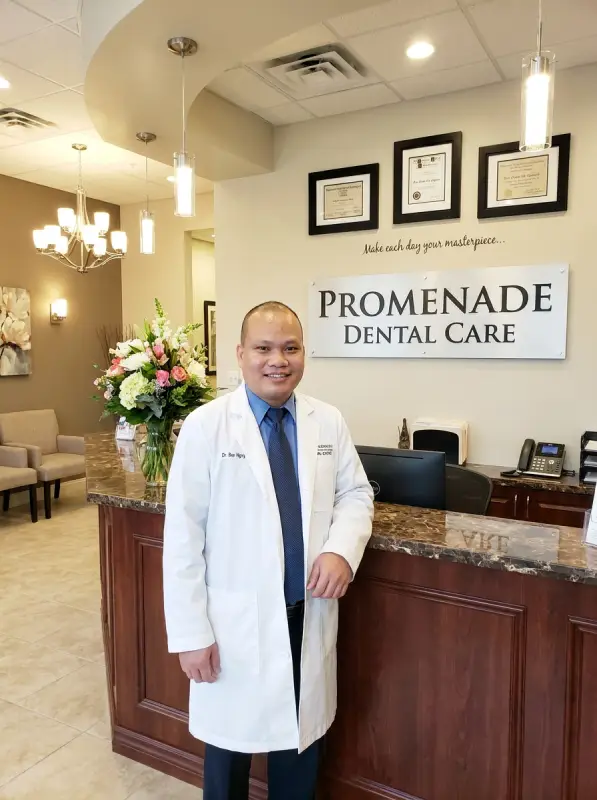
Dr. Bao Nguyen, DDS ā Periodontal Expertise Meets Surgical Precision
Implant outcomes depend on two things: how well the post is placed and how healthy the tissue around it stays. Dr. Nguyenās training covers both.
Dr. Bao Nguyen spent more than twenty years in clinical dentistry, beginning with military service that sent him through intensive post-graduate training programs in restorative, surgical, and periodontal dentistry. Military dental clinics process a breadth and volume of cases that suburban practices rarely match ā complex extractions, full-mouth rehabilitations, trauma, and prosthetics in a single rotation.
That range shows up in his implant practice: Dr. Nguyen handles the entire process under one roof ā 3D imaging, guided surgical planning, bone grafting, implant placement, crown fabrication, and long-term periodontal maintenance ā without referring you to an outside oral surgeon or periodontist. One clinician, one chart, one plan. For patients, that continuity means fewer appointments, lower total cost, and a dentist who sees the complete picture at every step.
He is also, by the consistent testimony of 200+ five-star reviews, gentle and honest. Anxious patients ā and implant consultations draw a lot of them ā are treated with sedation options, a no-rush pace, and a team (Edith and Yessica up front, the clinical staff in back) that patients name personally in their reviews a decade running.

What Patients Actually Worry About
Why Murrieta Patients Choose Promenade for Dental Implants
Online forums and local discussions repeat the same four worries about choosing an implant provider: upselling, poor communication, painful recovery, and unpredictable long-term results. Here is how Promenade Dental Care answers each one.
Comfort
Guided surgery means a smaller incision, less tissue disruption, and faster healing. Local anesthesia keeps the procedure pain-free, and sedation is available for patients who need it. Most implant patients are back to normal activity within a day or two ā and many tell us the procedure was easier than the extraction that preceded it.
Communication
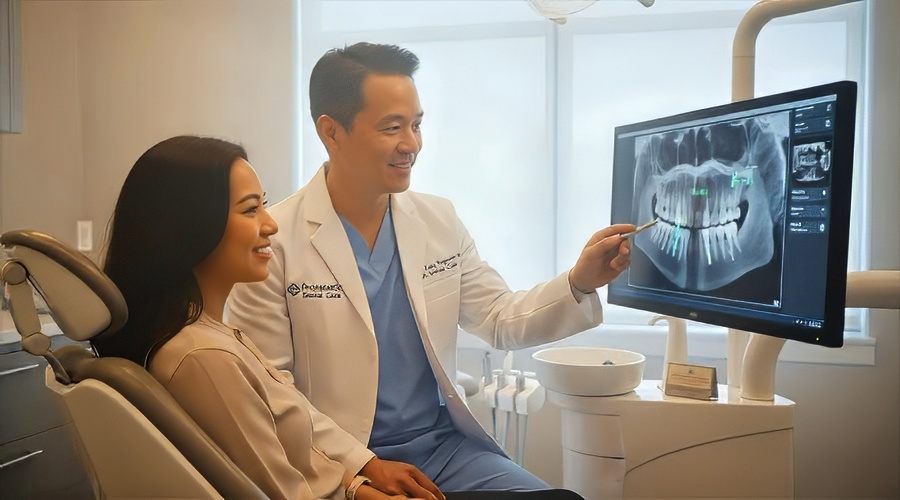
You see the 3D scan on screen, watch the virtual implant positioned in your bone, and receive a written plan with timeline and cost before anything begins. Questions get answered in the chair, not at the front desk after the fact. The treatment plan is yours ā take it home, think about it, come back when youāre ready.
Honest Recommendations
If a bridge serves your mouth better than an implant, Dr. Nguyen says so ā even though the implant is the larger sale. If your bone needs grafting before an implant can succeed, he wonāt skip the step to close faster. Independent ownership means the recommendation matches your mouth, not a corporate production schedule.
Predictable Outcomes
Guided placement, periodontal staging, and long-term follow-up arenāt marketing words here ā theyāre the protocol. The 95-percent implant success rate in the literature holds up when the fundamentals are respected: healthy tissue, adequate bone, precise placement, and consistent maintenance.
Transparent Pricing
No surprise bills. No unbundled fees that surface after surgery. Your written estimate includes every component ā imaging, post, abutment, crown, grafting if needed ā and the number you sign is the number you pay. Cash patients and patients without dental insurance are not an afterthought here; theyāre a substantial share of the practice, and the pricing reflects it.
Where Youāll Find Us
Serving Murrieta, French Valley, and the Temecula Valley
Promenade Dental Care sits at 26957 Date St., Suite B4, Murrieta, CA 92563 ā in the Aldi shopping center just off the Winchester Road and Murrieta Hot Springs intersection, two minutes from the 215. If you live in French Valley, weāre likely the closest full-service implant office to your door; from Temecula down Winchester or Clinton Keith, the drive runs ten to fifteen minutes.
Patients come from across the valley for dental implants:
Saturday hours (9 AMā1 PM) work well for implant consultations and follow-ups ā this valley commutes, and a consultation shouldnāt cost you a vacation day.
Office hours: Mon, Tue, Thu 9ā5 Ā· Fri 9ā3 Ā· Sat 9ā1 Ā· Wed by appointment Ā· Phones answered 24 hours for emergencies.
26957 Date St., Suite B4
Murrieta, CA 92563
In the Aldi plaza off Winchester Rd & Murrieta Hot Springs
Questions We Hear Every Week
Dental Implant FAQs
How much do dental implants cost in Murrieta?
A single implant with abutment and crown typically falls in the mid-thousands; implant-supported bridges and full-arch restorations cost more because they involve multiple posts. Pricing depends on bone condition, imaging needs, and materials. We provide a written, no-pressure quote after the $20 exam. PPO insurance, CareCredit (up to six months no interest), and transparent cash rates are all available.
Does getting a dental implant hurt?
The procedure itself is painless under local anesthesia. Guided placement is minimally invasive, and most patients manage post-operative soreness with over-the-counter medication for two to three days. Sedation options are available for anxious patients. Many tell us the implant appointment was easier than the extraction that came before it.
How long do dental implants last?
The titanium post can last a lifetime with good oral hygiene and regular checkups. The crown on top typically lasts 15 to 25 years before it may need replacement from normal wear. Longevity depends on periodontal health, hygiene habits, and professional maintenance ā which is why Dr. Nguyen evaluates gum and bone status before placement.
Am I a candidate for dental implants?
Most adults missing teeth are candidates. The key requirements are adequate jawbone to anchor the post, healthy gum tissue, and overall health sufficient for minor surgery. Bone grafting can rebuild sites that have lost volume. A $20 exam with digital X-rays gives Dr. Nguyen the data to tell you definitively.
What is the difference between an implant and a bridge?
A bridge anchors to the neighboring teeth, which must be reshaped and crowned. An implant replaces the root itself, leaving neighbors untouched and preserving bone. Bridges are faster and avoid surgery; implants last longer and protect the jawbone. Our dental bridges page lays out the full comparison.
Can I get same-day dental implants?
When the jawbone is dense enough for immediate stability, the implant and a temporary crown can be placed in a single visit. Guided surgery planning makes same-day protocols safer and more predictable. Not every patient qualifies ā thin bone or active infection may require staging ā but the exam will tell you whether same-day is realistic for your case.
What happens if a dental implant fails?
Failure is uncommon but not impossible. The most common causes are peri-implantitis (infection around the post), insufficient bone integration, and uncontrolled bite forces. When caught early, a failing implant can sometimes be saved. When it cannot, the post is removed, the site heals, and a new implant can usually be placed after grafting rebuilds the bone.
Does insurance cover dental implants?
More PPO dental plans cover implants now than before, though benefit structures vary. Some cover the post, some only the crown, and many apply a bridge-equivalent allowance. We verify your exact benefits before treatment and put the out-of-pocket number in writing. Patients without insurance receive clear cash pricing and CareCredit options.
How long is recovery after an implant?
Most patients return to normal activity within one to two days. Mild soreness and swelling peak around day two and resolve by day five. The deeper healing ā osseointegration ā takes three to six months and happens invisibly while you go about your life with a temporary restoration in place.
Why should I choose an implant dentist in Murrieta instead of a chain?
At Promenade Dental Care, Dr. Nguyen handles the full implant process under one roof: consultation, 3D imaging, guided surgery, grafting, and final crown. One dentist, one chart, one plan ā without referrals across Riverside County. Independent ownership means the treatment recommendation matches your mouth, not a regional production quota. That continuity is why patients drive past corporate offices on Winchester and Clinton Keith to reach our Date Street location.
Ready to Find Out If Implants Are Right for You?
Start with a $20 exam and digital X-rays. Youāll leave knowing whether a single implant, an implant-supported bridge, or a full-arch restoration fits your mouth ā in writing, with no pressure to decide on the spot.
Call (951) 412-0127
Request an Appointment Online
26957 Date St., Suite B4, Murrieta, CA 92563
(951) 412-0127 Ā· Phones answered 24 hours
Mon, Tue, Thu 9 AMā5 PM Ā· Fri 9 AMā3 PM Ā· Sat 9 AMā1 PM Ā· Wed by appointment
Serving Murrieta, Temecula, French Valley, Menifee, Wildomar & Winchester
Murrieta Dental Implants
We anchor artificial tooth roots into
your jaw. This procedure will hold a
replacement tooth or bridge in place.
The benefit of using implants is that
they donāt rely on neighboring teeth
for support. They are permanent and
stable.
(951) 412-0127


Our customers have ranked us the #1 Murrieta and Temecula Dentist with 200 5-Star Google Reviews. Don’t risk choosing a dentist with less satisfied customers. Click Here
Murrieta Dental Implants at Promenade Dental Care
What are One-Day Dental Implants?
- Promenade Dental Care in Murrieta, CA, offers āOne-Day Dental Implants,ā providingĀ a more affordable and efficient solution by placing artificial tooth rootsāoften as part of a dental bridgeāinto the jaw in just one appointment.
- These implants serve as permanent replacements for missing teeth, restoring both function and aesthetics. The convenience of same-day treatment allows patients to walk out with a reconstructed smile after a single visit.
At a Glance
| Feature | Details |
|---|---|
| Treatment Offered | One-day dental implantsāartificial roots placed in one appointment. |
| Location | Murrieta, California. |
| Benefits | Affordable, efficient, permanent replacement for missing teeth. |
| Broader Service Context | Part of cosmetic & restorative offerings for functional and aesthetic enhancement. |
| Advantages Over Other Options | Long-lasting, stabilizes the jawbone, supports chewing and speech, with a more natural feel. |
Guided dental implant surgery utilizes cutting-edge 3-D imaging technology for the precise placement of implants. It reduces discomfort and minimizes healing time due to less invasive techniques. Computer-assisted planning ensures the ideal position for implants, preventing damage to adjacent teeth and vital structures. Enhanced accuracy offers predictable results and improved patient outcomes. It is especially beneficial for cases involving jawbone loss or complex restorations. The process integrates advanced surgical equipment and software, ensuring a safer, faster dental implant procedure.
What is a Dental Implant?
Our dental office offers affordable dental implants in Murrieta, CA. We insert artificial tooth roots called dental bridges into your jaw. These support a replacement tooth or bridge. Implants are strong and do not require adjacent teeth for support. They are often the best choice for missing teeth. They feel and look like real teeth. If implants are not possible, there are other ways to replace teeth. You may want to consider bridges or removable dentures. Please consult with our dentist to determine what is best for you.
What are one-day dental implants?
A dental implant is a method for replacing a lost tooth. It uses a small titanium screw that is inserted into the bone where the natural tooth was located. Dental implant placement, along with dental implant surgery and placement, especially one-day dental implants, is very popular. They can be put in and fixed in just one day. This makes them a fast and good choice for missing teeth. Implants often need bone substitutes for a strong base. It depends on the existing bone. Dental implants connect to the bone, which provides strong support for the replacement teeth. They work nicely for both the upper and lower jaws. Murrieta Dental offers same-day implants to replace one or more missing teeth. This is a helpful choice for anyone wanting to restore their smile quickly.
How do dental implants work?
Dental implants work like fake roots for teeth. A unique surgery places them into the jawbone, sometimes on the jaw for specific cases. The most common kind of implants is made of a variety of materials, like titanium and natural bone. Over time, they connect with the jawbone in a process called osseointegration. This creates a strong base for new artificial teeth, which look and work like real ones.
Getting dental implants requires several essential steps. First, visit a dentist for a comprehensive dental exam. This exam checks your mouth to see if you can get implants. You may need special tests, such as X-rays and 3D images, to assess your jawbone for the risk of complications, including an allergic reaction to the implant material. If a tooth extraction is necessary, it will be discussed during the consultation. Next, you will meet the oral surgeon. They will discuss the strength of your bones and explain the surgery. You may need grafts if your jawbone is too weak to support the implant. After surgery, it is essential to floss daily. This will help you maintain a clean mouth and achieve the best results from your dental work. After you choose dental implants, the next step is the surgery. This surgery involves placing the artificial root into the jawbone. Typically, these implants utilize safe materials, such as titanium. This helps them stick to the jawbone and create a strong base.
The dentist may use your bone or artificial materials to create new bone during surgery. A sinus augmentation or sinus floor lift may also happen if needed. This step is essential. It takes several months to ensure the implant remains strong and functions appropriately. After the implant is placed, it requires several months to heal. During this time, the implant connects with the jawbone to make it strong and steady. You can use temporary replacement teeth while they heal. This helps keep a good look and works nicely.
Once osseointegration is complete, we attach a restoration to the implant, ensuring it integrates with the bone of the jaw. This could be crowns, bridges, or dentures that fit the patient properly. Each piece is carefully crafted to match the patient’s teeth in terms of color, shape, and size. This ensures the new teeth look right and helps the smile look and function better. The final restoration is essential. It completes the implant process and ensures everything looks natural.
What can I expect during the dental implant procedure?
The dentist must perform surgery to place the implant. This will place the implant, which connects the artificial tooth to your jawbone. He used a local numbing medicine during this time. The process begins with an incision (cut) in your gums. Then, your gum is placed over the implant and left in place until it fuses with the bone. After this, the dentist removes the cover and attaches a part called an abutment. If certain teeth change, there may be one more step. Murrieta dental implants offer a simple solution. The dentist can place the abutment and implant together, making things quick and easy. This way, it removes the need for an extra step. Finally, the dentist attaches an artificial tooth or a same-day crown to the implant post. Patients should understand this process before surgery, particularly regarding the surgical procedure.
Common issues faced with conventional implant techniques
For patients, usual dental implant methods can cause a lot of pain during and after the surgery. Many times, doctors need to use anesthesia or sedation because the process is invasive and involves making deep cuts. Even though sedation helps a little, the recovery after surgery can still hurt and take a long time with swelling.
Also, without good tools to see inside, traditional implant surgery relies on surgeons to place implants manually. This makes it easy for them to miss the best spots, which can hurt nearby tissues and nerves. Pain management is crucial during this time, further complicating the treatment process.
Furthermore, the results of conventional methods can be unpredictable. Patients may need to go through surgeries again if the implants are placed incorrectly or if they make important parts unstable. Newer techniques, focusing on accuracy and comfort, could help solve these common problems.
The Solution: Guided Dental Implant Surgery
Guided dental implant surgery changes the way we do things by using 3-D images and computer programs. This technique enables surgeons to plan and place implants with greater accuracy. It ensures that the implants are placed in the correct location, resulting in better outcomes for everyone.
This modern method reduces the number of cuts during the procedure. It also lessens pain and helps people heal faster. If someone has jawbone loss or needs complex repairs, guided surgery gives reliable results. With a focus on precision, this technique improves the overall process and safety of dental implant placement. It represents a significant step forward in oral healthcare.
How guided surgery enhances accuracy
The accuracy of guided dental implant surgery is enhanced by using 3-D imaging. This imaging maps the patient’s jaw and nearby tissues. It gives essential details that help the surgeon find the ideal position for the implants. Instead of making cuts or exploring the area manually, the dentist uses specially designed tools for implant placement.
By seeing the jaw’s shape before surgery, this method removes the guesswork. Surgeons can minimize risks, such as complications near teeth or nerves, making the treatment safer.
Also, the advanced software helps plan every step of the surgery. With fewer changes to the plan, guided surgery offers highly accurate and attractive results. This gives patients confidence in their dental implant restorations.
Benefits of using 3-D technology and computer software
Guided dental surgery utilizes advanced 3D technology and computer software to enhance the process of implant placement. Cone Beam CT scans create clear images of the jaw. These images show bone density, nerve locations, and soft tissue thickness. The information helps create a virtual surgical guide tailored to each patient’s unique needs.
With computer-assisted planning, surgeons can work with great precision. This helps them avoid important oral structures when placing implants in optimal locations. As a result, the procedure is less invasive, which means patients experience less pain and recover more quickly.
Additionally, by simulating different outcomes and planning, this method eliminates the risk of errors. This makes surgery smoother and safer. As a result, patients get lasting implants with fewer issues. Surgeons can also achieve higher success rates in implant dentistry.
Detailed Steps in the Guided Dental Implant Process
The guided dental implant process focuses on being accurate and efficient. It starts with a detailed consultation. This includes 3-D imaging to check the jaw structure and any bone loss.
Then, a custom surgical guide is made to outline the procedure. This helps make the implant placement less invasive. These actions make guided surgery safer. They simplify complex cases and allow for accurate placement. Ultimately, this results in aesthetically pleasing and functional restorations.
Why Choose Us for Your Guided Dental Implant Surgery in Temecula?
Our dental clinic in Temecula combines skill and the latest technology to offer guided dental implant surgery with excellent results. Our expert implant surgeons use advanced imaging and software to ensure precise procedures.
What sets us apart is our focus on our patients. We strive to exceed your expectations. Many happy patients share positive reviews, showing how we help them regain confidence and improve their oral health. When you choose us, you can be confident that you will receive the best care for guided dental surgery.
Our expertise and advanced technology usage
At our clinic in Temecula, we perform guided dental implant surgery using the latest imaging technology and planning techniques. Our implant surgeons focus on precise procedures that yield safe and predictable results tailored to each patientās needs.
We invest in modern surgical equipment and software, which helps us easily handle complex cases. Whether we address jawbone loss or intricate restorations, our team carefully creates surgical guides and processes to ensure greater accuracy.
Itās essential to trust skilled experts who utilize the most effective techniques to achieve lasting and beautiful results. Our commitment to innovation makes your dental implant surgery safe and stress-free. This strengthens our reputation as a leader in implant dentistry.
How long does the full-mouth dental implant process take?
It can vary depending on each person’s needs. Healing and planning usually take about six to eight months.
The implant process may take up to nine months. Every patient heals at their own pace, typically over a period of about six months. The healing time for fitting replacement teeth typically ranges from two to four months. A general dentist can fit posts and replace teeth in one visit if the bone quality is good.
What is the success rate of dental implants in Murrieta?
The success rate for dental implants in Temecula is very high. These implants, including prosthetic teeth, are a dependable and long-lasting way to replace missing teeth, mainly depending on the patient’s overall health. They have a 95% success rate for full-mouth dental implants. This means that most patients who undergo dental implants in Temecula typically achieve good results. Whether a patient needs one tooth or full-mouth implants, the success rate stays high. Dental implants offer many benefits. They help with oral health, improve your appearance, and restore function. These implants can last many years with proper care and regular dentist visits. This makes them an excellent choice for a long-term fix for missing teeth.
How do I care for implants?
Taking care of your Murrieta dental implants is crucial to their longevity and optimal function. Here are some essential tips on looking after your dental implants near you:
- Keep Your Mouth Clean:
- Dental implants crave care, just like your natural teeth do. Please treat them with daily brushing and tender flossing for a lasting smile. Keep your implants happy and healthy with a routine they’ll love!
- This practice helps keep them clean and prevents plaque from forming. Use a soft toothbrush and gentle toothpaste to brush around the implant and gumline. Flossing is crucial for removing any food that may be stuck between the implant and adjacent teeth.
- Visit Your Dentist Regularly: It is essential to visit your dentist regularly to maintain the health of your dental implants. Your dentist will inspect your implants, clean them, and assess your oral health. Finding problems early can help stop more significant issues later. Smoking and drinking too much can harm your dental implants. These habits can slow down the healing process and increase the risk of failure. It’s best to stop smoking and cut back on alcohol for the good care of your implants.
- Watch What You Eat: A healthy diet is crucial for your dental implants to function correctly. Avoid chewing hard foods, such as ice or candy, as they can damage the implant or nearby tissues. You should also limit your intake of sugary foods and drinks, as they can contribute to tooth decay and gum disease.
These tips will enhance your Murrieta dental implants and help maintain the health of your smile. If you need care advice, talk to your dentist.
Are Tooth Replacement Options Different for Older Adults or Seniors?
Yes ā tooth replacement options can differ for older adults and seniors because of ageārelated factors such as jawbone density, overall health, healing capacity, budget considerations, and functional needs. Dental professionals consider these variables when recommending dentures, bridges, dental implants, or hybrid solutions for older patients.
Key Differences in Senior Tooth Replacement
1. Dental Implants and Bone Health
Dental implants are often a viable option for many seniors, and age alone is not a contraindication for implant treatment. Senior patients can experience high success rates with implants, provided their medical status and bone condition are suitable. Implants also help preserve jawbone and facial structure better than removable options. Learn more about dental implants for seniors. :contentReference[oaicite:0]{index=0}
2. Multiple Implant Strategies
Seniors with multiple missing teeth may be offered implantāsupported solutions such as bridges or fullāarch systems like Allāonā4. These approaches can provide a fixed, stable restoration that improves chewing function and comfort. Read about implant choices tailored to seniors. :contentReference[oaicite:1]{index=1}
3. Dentures as Accessible Alternatives
Traditional dentures remain one of the most common and accessible options for seniors, particularly those who:
- have significant bone loss,
- cannot undergo surgery, or
- prefer nonāsurgical treatment.
Modern dentures are adjusted for comfort and can be worn while healing or when implants are not feasible. Explore denture options for seniors. :contentReference[oaicite:2]{index=2}
4. Hybrid Solutions: ImplantāSupported Dentures
Seniors who wear dentures but want more stability may benefit from implantāsupported dentures (also known as overdentures). These snap onto implant anchors for greater retention, reducing slipping and improving chewing ability compared with traditional dentures. About implantāsupported overdentures. :contentReference[oaicite:3]{index=3}
5. Cost, Coverage, and Planning
Because dental implants involve surgery and diagnostic planning, cost and insurance coverageāespecially for those on fixed incomesācan influence the treatment choice. Dentures typically cost less upfront, while implants may offer better longāterm value and function. Discuss financial options and coverage before deciding. Cost comparisons and considerations for seniors. :contentReference[oaicite:4]{index=4}
Commonly Used Tooth Replacement Options for Seniors
- Traditional Dentures ā Removable and typically the most affordable option.
- Dental Implants ā Fixed, longāterm solution that preserves bone and function.
- ImplantāSupported Dentures ā Hybrid option combining removable dentures with implants for stability.
- ImplantāSupported Bridges ā Fixed bridge anchored on implants for multiple missing teeth.
- Allāonā4 Full Arch Implants ā Full mouth replacement using a limited number of implants for seniors missing most or all teeth.
Useful Google Search Keywords
Here are highāvalue keywords you can use to find more information and optimize content for SEO:
- tooth replacement options for seniors
- dental implants for older adults
- best dentures for elderly patients
- implant supported dentures seniors
- Allāonā4 implants for seniors
- cost of dental implants for seniors
- senior dentistry tooth replacement
- aging jawbone bone loss solutions
Temporary Tooth Replacement Solutions
Yes ā there are several temporary tooth replacement solutions designed to restore appearance, function, and comfort while you wait for a more permanent option. These are generally less invasive, faster, and lower-cost than implants or fixed bridges.
1. Removable Partial Dentures (Flippers)
- Lightweight acrylic appliance that replaces one or more missing teeth.
- Easily removable for cleaning.
- Quick to fabricate and relatively inexpensive.
- Ideal for short-term aesthetics or while waiting for an implant.
2. Temporary Dental Bridges
- Also called provisional bridges.
- Bonded to adjacent teeth for short-term support.
- Protects surrounding teeth and maintains space for permanent restoration.
3. Essix or Clear Retainer-Type Dentures
- Clear plastic removable appliance that snaps over existing teeth.
- Provides an aesthetic solution for missing front teeth.
4. Immediate Dentures
- Placed immediately after tooth extraction.
- Allows healing while keeping your smile complete.
- Typically adjusted or replaced with permanent dentures later.
5. Fluoride or Composite-Based Temporary Crowns
- For single tooth loss due to fracture or extraction.
- Provides temporary function and protection until a permanent crown or implant is placed.
Key Considerations
- Temporary solutions are not designed for long-term chewing efficiency.
- They may require careful maintenance to avoid staining or damage.
- They can help maintain bone and gum contours before permanent restoration.
Choosing the Right Tooth Replacement Option
Choosing the right tooth replacement option requires evaluating clinical, financial, functional, and long-term considerations. The best solution depends on your oral health status, bone structure, lifestyle, and treatment goals. Below is a structured framework to guide decision-making.
1. Number and Location of Missing Teeth
The treatment approach differs significantly depending on whether you are replacing:
- Single tooth: Typically a dental implant or dental bridge
- Multiple teeth: Implant-supported bridge or partial denture
- Full arch (all teeth): Complete dentures or full-arch implant restoration
Posterior (back) teeth require higher chewing force resistance than anterior (front) teeth, influencing material and structural selection.
2. Jawbone Health and Density
Adequate bone volume is critical for dental implants. If bone resorption has occurred due to prolonged tooth loss, you may require:
- Bone grafting
- Sinus lift procedure (upper jaw)
If you are not a candidate for implant surgery due to insufficient bone or medical contraindications, removable dentures or bridges may be recommended.
3. Longevity and Durability
Different options have different life expectancies:
- Dental implants: 20+ years with proper care
- Dental bridges: 10ā15 years
- Removable dentures: 5ā10 years (may require relining)
If long-term durability and bone preservation are priorities, implants generally offer superior outcomes.
4. Bone Preservation
Dental implants stimulate the jawbone and prevent bone loss. Traditional dentures and bridges do not replace the tooth root, which can lead to gradual bone resorption over time.
If maintaining facial structure and preventing premature aging are concerns, implants provide structural advantages.
5. Cost and Budget
Treatment cost varies significantly:
- Dental implants: Higher upfront cost but long-term value
- Bridges: Moderate cost
- Dentures: Lower initial investment
You should evaluate insurance coverage, financing options, and long-term maintenance costs. Short-term savings may not equal long-term value.
6. Surgical vs. Non-Surgical Preference
Dental implants require a minor surgical procedure. Alternatives if you prefer to avoid surgery include:
- Fixed dental bridge
- Removable partial denture
- Complete denture
Medical conditions such as uncontrolled diabetes, smoking, or certain medications may influence eligibility for surgery.
7. Aesthetics
Consider:
- Natural appearance
- Gum contour integration
- Stability while speaking and eating
Implants generally provide the most natural look and feel. Modern high-quality dentures can also be very aesthetic but may lack the same stability.
8. Function and Comfort
Key questions:
- Do you want maximum chewing strength?
- Do you want a fixed (non-removable) option?
- Are you comfortable removing dentures nightly?
Implants function most like natural teeth. Removable dentures may require an adaptation period.
9. Maintenance Requirements
Each option carries different maintenance needs:
- Dental Implants: Brush and floss like natural teeth; routine professional cleanings
- Bridges: Special floss threaders required
- Dentures: Daily removal and cleaning; periodic relining or adjustments
Lifestyle and dexterity should be considered.
10. Treatment Timeline
- Dental implants: Several months (due to osseointegration)
- Bridges: 2ā3 weeks
- Dentures: Several weeks including fittings
If you need a faster cosmetic solution, a bridge or denture may be preferable.
11. Overall Oral Health
Conditions that may influence decision:
- Periodontal disease
- Tooth decay in adjacent teeth
- TMJ issues
- Bruxism (teeth grinding)
For example, placing a bridge requires altering adjacent healthy teeth, which may not be ideal in some cases.
12. Long-Term Oral Health Goals
Ask yourself:
- Is this a temporary or permanent solution?
- Do I want the most conservative treatment?
- Am I prioritizing cost, function, or aesthetics?
Implants are often considered the gold standard for permanent tooth replacement due to longevity and bone preservation.
Quick Comparison Overview
| Factor | Dental Implant | Dental Bridge | Denture |
|---|---|---|---|
| Surgery Required | Yes | No | No |
| Longevity | 20+ years | 10ā15 years | 5ā10 years |
| Bone Preservation | Yes | No | No |
| Cost | Higher upfront | Moderate | Lower upfront |
| Stability | Excellent | Good | Variable |
Final Recommendation
The best tooth replacement option depends on a comprehensive dental evaluation, including X-rays and a clinical exam. A personalized consultation allows your dentist to assess bone density, gum health, occlusion, and overall systemic health before recommending treatment.
Promenade Dental offers a full range of cosmetic dental solutions in Murrieta to help you achieve a confident, beautiful smile. Our cosmetic services include:
- InvisalignĀ® clear aligners for straighter teeth without metal braces.
- Dental implants to replace missing teeth with natural-looking, permanent restorations.
- Porcelain veneers to correct chips, stains, gaps, and uneven teeth.
- Professional teeth whitening for a brighter, whiter smile in less time.
Whether you’re looking for subtle enhancements or a complete smile makeover, our team focuses on comfort, precision, and personalized care.
Guided surgery enables efficient placement of multiple implants, and immediate loading protocols may allow temporary teeth to be placed on the same day. It really depends on the strength of the jawbone in the area requiring the implant.
Guided implant surgery is minimally invasive, often resulting in less pain and swelling compared to traditional implant placement. We also provide sedation options for patient comfort.
While guided surgery may have a higher initial cost due to technology and planning, the improved accuracy often reduces complications, saving time and money in the long run.
With proper care, dental implants can last decades or even a lifetime. Their success depends on factors like bone health, oral hygiene, and professional maintenance.
YesāPromenade Dental Care offers CareCredit, with up to 6 months of no interest for qualified applicants. We also accept all PPO insurance plans and are networked with them.
Promenade Dental Care delivers premium cosmetic dentistry in Murrieta, including veneers, implants, bridges, teeth bonding, dentures, and All-On-4 implants. We specialize in complete smile makeovers using advanced technology and personalized treatment plans to transform your smile with natural-looking results.
While some dentists may dislike purely cosmetic cases due to their complexity or the emphasis on aesthetics over health, many find them rewarding. Cosmetic dentistry enhances smiles and boosts confidence. It’s essential to balance artistry with function, ensuring that treatments both look great and maintain oral health.
Dental crowns are artificial teeth that help fix and protect damaged ones. Many people refer to them as dental caps. This is because they cover the visible part of a tooth above the gums. Dental crowns are designed to look like natural teeth in shape, size, and color, blending in well. They are usually made from porcelain, ceramic, or other materials. This choice depends on the patientās preference. Since they can be pricey, crowns are typically used only when other treatments fail. They tend to last longer than most other dental work. A crown can usually be placed in just one visit as part of a custom treatment plan.
Promenade Dental Care is Murrietaās top choice for cosmetic dental solutions, offering advanced treatments designed to create confident, beautiful smiles. Whether youāre interested in dental implants to restore missing teeth, or professional teeth whitening for a radiant, polished look, our skilled team delivers outstanding results with a gentle touch. We combine modern technology with personalized care to ensure every patient receives the best aesthetic outcome possible. At Promenade Dental Care, artistry meets precision ā helping Murrieta smile brighter every day.
Promenade Dental Care in Murrieta offers a strong set of cosmetic dental solutions, including implants It does not matter the complexity, budget, or aesthetic goals; we provide the services people generally look for in cosmetic dentistry.
Implant-supported dentures differ from regular dentures in that they are anchored directly to dental implants placed in the jawbone, offering more stability and preventing slippage. Regular dentures rest on the gums and may require adhesives, while implant-supported dentures provide a more secure and natural-feeling fit.
If you are considering dental implants as an alternative, it’s important to discuss potential risks or complications such as infection, implant failure, nerve damage, and gum recession. Your dentist can help assess your oral health and address any concerns to minimize these risks.
Standard cosmetic dentistry procedures include teeth whitening, full bonding, prepless veneers, traditional veneers, snap-on smile, and implants. There are different methods of how to implement each process. This depends on which is the best treatment for you. Cosmetic dentistry can help you to look and feel your best.
The cost of a dental implant is like replacing a tooth with a fixed bridge. Sometimes, dental implants qualify for insurance coverage. Every dental insurance policy is different. The cost varies based on the patient’s needs. Issues include bone quantity and region. Dr. Bao will provide a quote for your dental implants near me based on your needs.
Humans are āblessedā with both baby teeth and adult/permanent teeth. When you lose teeth due to dental decay or gum disease, dental implants can replace them. Dental implants are made of titanium and can never get dental decay! Dental implants can last a lifetime. They improve your appearance, confidence, and ability to eat the foods you like. They allow you to have an active lifestyle without worrying about your teeth. Ask Dr. Bao about one day dental implants near me.
Anyone missing teeth is a candidate for dental implants. Talk to a prosthodontist about your case.
A dental implant by itself is not a tooth! A dental implant is a prosthesis used to replace missing teeth. Essentially, it is a small titanium post/fixture. It can be installed into the jawbone, on top of which a single crown (cap), a fixed bridge, a partial denture, or a full denture can be attached. A structure called an abutment is connected to the implant. Then the artificial tooth/teeth are attached. There are 3 parts to an āimplant toothā: 1) the dental implant itself, 2) the abutment, and 3) the artificial tooth.


How long does the full-mouth dental implant process take?