
Interesting Facts About Dentists and Teeth That Will Surprise You
From ancient tooth worms to modern laser technology — the history of dentistry is stranger than fiction.
Dentistry stretches back more than 5,000 years, and the journey from barber-surgeons to board-certified specialists is packed with bizarre remedies, remarkable firsts, and fun dental facts most people never hear. Whether you are curious about why people fear the dentist, how many dentists work in the US, or what the Mayans used for dental implants, this guide from Promenade Dental Care covers it all.

From Ancient Egypt to Modern Murrieta: 5,000 Years of Dental Care
If you think dentistry is a modern profession, think again. The oldest known dentist was an Egyptian named Hesi-Re, who practiced around 2600 B.C. His tomb inscription reads: “the greatest of those who deal with teeth, and of physicians.” That makes organized dental care older than the Great Pyramid of Giza.
But the story of dentistry goes back even further. A Sumerian text from roughly 5000 B.C. blamed tooth decay on “tooth worms” — tiny creatures that supposedly burrowed into enamel and caused pain. That theory persisted in parts of Europe all the way into the 1700s. Today we know the real culprits are bacteria, acids, and sugar — but the ancient concern for oral health shows dentistry has always been essential to human well-being.
Landmark Firsts in Dental History
The first dentistry book was published in 1530, titled “The Little Medicinal Book for All Kinds of Diseases and Infirmities of the Teeth.” Pierre Fauchard, a French surgeon, is often called the “Father of Modern Dentistry” for his 1728 publication The Surgeon Dentist, which described cavity fillings and dental prosthetics in detail.
Lucy Beaman Hobbs became the first female dentist in 1866, opening a private practice despite being rejected from dental school. And in 1905, Irene Newman became the first dental hygienist, establishing a profession that now employs more than 214,000 people across the United States.
Barbers, Blacksmiths, and Dentists
During the Middle Ages, barbers doubled as surgeons — performing tooth extractions alongside haircuts. If you needed a tooth pulled in 1400s Europe, you visited your barber. Blacksmiths also filled in as dental practitioners in the 1800s American frontier, using the same tools they forged horseshoes with.
Today’s dentists like Dr. Bao Nguyen at Promenade Dental Care are UCLA-trained professionals with years of postgraduate and military specialty training — a far cry from the barber-surgeons of old.
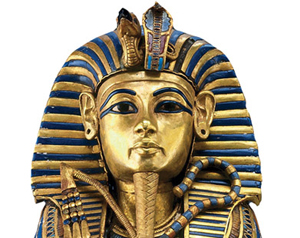
George Washington’s Teeth Were Not Wooden
One of the most persistent dental myths is that George Washington had wooden teeth. In reality, his dentures were made from ivory, gold, lead, human teeth, and even hippopotamus tusks. They were so uncomfortable that they changed the shape of his lips — which you can actually see in his later portraits. Dentistry in colonial America was painful, and Washington reportedly lost his first tooth at age 24.
The Evolution of Toothpaste and Toothbrushes
Ancient Greeks used crushed coral, pumice stone, and iron rust as toothpaste. Ancient Romans even used urine as a mouth rinse because urea acted as a whitening agent. The Chinese invented the first bristle toothbrush around 1498, using boar hairs attached to bamboo handles. Modern toothpaste as we know it only appeared about 100 years ago.
Strange and Surprising Facts About Dentists and Teeth
Dentistry is full of fascinating trivia that most people never encounter in a routine dental exam. Here are some of the most interesting facts about dentists and teeth from around the world.
Teeth Across the Animal Kingdom
A typical adult human has 32 teeth. Dogs have 42, cats have 30, and the armadillo has 104. But the real champion is the humble garden snail — it has more than 25,000 microscopic teeth arranged on a ribbon-like tongue called a radula. That is why snails can devour an entire garden overnight.
Tooth Enamel: The Hardest Substance in Your Body
Tooth enamel is harder than steel on the Mohs hardness scale. It is the only part of the human body that cannot repair itself once damaged, which is why your dentist emphasizes preventive care and why services like white composite fillings exist to repair what enamel cannot.
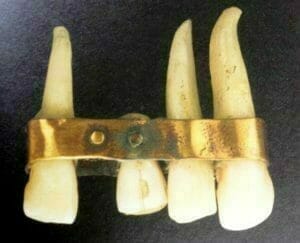
Dental Implants Are 1,400 Years Old
Dental implants date back to roughly 600 A.D., when Mayan women had pieces of carved shell hammered into their jawbones to replace missing teeth. Archaeologists have found evidence that bone actually fused around these shell fragments — a primitive version of the osseointegration used in modern dental implants today.
More Strange Facts You Probably Never Knew
The most valuable tooth in history belonged to Sir Isaac Newton. In 1816, one of his teeth was sold in London for $3,633 — equivalent to about $35,700 today. The buyer set it in a ring.
Cotton candy was co-invented by a dentist. In 1897, dentist William Morrison and confectioner John C. Wharton patented the first machine to spin sugar into fine, fluffy strands — originally called “fairy floss.”
Americans buy more than 14 million gallons of toothpaste and more than 3 million miles of dental floss every year. Yet the average adult spends only 38.5 total days brushing their teeth across an entire lifetime.
Hippocrates recommended a toothpaste made from three mice and a hare’s head around 400 B.C. Modern dentists have much better options.
If you are right-handed, you tend to chew your food on the right side. Left-handed people tend to chew on the left side.
In 1945, Grand Rapids, Michigan became the first city in the world to add fluoride to its public water supply — a public health measure the American Dental Association still endorses as one of the greatest achievements of the 20th century.
Archaeologists in Slovenia found a 6,500-year-old jawbone with a cavity filled with beeswax — making it one of the oldest known dental fillings in the world.
King Tut’s wisdom teeth helped scientists determine he was about 19 years old when he died, demonstrating how teeth serve as a biological clock even thousands of years later.
Why People Fear the Dentist — And What Has Changed
Dental anxiety is far more common than most people realize. A 2025 study published in the Journal of the American Dental Association found that nearly 73% of U.S. adults experience some level of dental fear, with about 27% reporting extreme fear. Globally, an estimated 36% of people experience clinical dental anxiety, and 5–10% suffer from full dental phobia — fear so severe it prevents them from seeking any dental care at all.
The most common reasons people fear the dentist include fear of pain (39%), the smell of chemicals (24%), the sound of the drill (21%), and memories of past traumatic dental experiences. These fears often begin in childhood and can persist for decades if left unaddressed.
How Modern Dentistry Has Reduced Pain
Before 1903, there was no Novocain. Every dental procedure — extractions, fillings, even drilling — was felt in full. Today, sedation dentistry and advanced local anesthetics have transformed the experience. At Promenade Dental Care, Dr. Bao Nguyen offers nitrous oxide sedation and a compassionate, anxiety-free approach specifically designed for patients who have avoided the dentist for years.
Foot-Pedal Drills and No Anesthesia
Before electric dental drills, dentists used drills powered by foot pedals — similar to sewing machine treadles. Patients gripped the armrests and endured. George Washington reportedly powered an early prototype using his mother’s spinning wheel. Considering this history, it is no wonder dental anxiety became so deeply rooted in our culture.
How Many Dentists Are in the US — And Other Key Statistics
According to the American Dental Association’s 2025 workforce report, there are more than 202,000 practicing dentists in the United States, which works out to roughly 60 dentists per 100,000 people. About 80% are general practitioners like Dr. Bao Nguyen, with the remaining 20% specializing in areas such as orthodontics, oral surgery, pediatric dentistry, and endodontics.
The workforce is also changing. More than 38% of U.S. dentists are now female — a number that has more than doubled since 2001. The profession consistently ranks among the top careers for job satisfaction, salary, and work-life balance, and the unemployment rate for qualified dentists stands at just 0.2%.
Despite these numbers, the Health Resources and Services Administration (HRSA) identifies more than 10,000 Dental Health Professional Shortage Areas across the country, affecting nearly 59 million Americans who lack adequate access to dental care. Rural areas are hit hardest, with only about 33 dentists per 100,000 residents compared to 65 per 100,000 in urban communities.
These shortages make community-based practices like Promenade Dental Care especially important. Serving Murrieta, Temecula, Menifee, Fallbrook, and surrounding Riverside County since 2010, Dr. Bao Nguyen provides the full scope of general, cosmetic, and emergency dentistry — including same-day CEREC crowns, root canals, and ultrasonic teeth cleaning.
Dental Care at Promenade — Murrieta, CA
Whether these interesting facts about dentists inspired you to schedule a checkup or you have a dental concern that needs attention, Promenade Dental Care offers a full range of services.
Dental Exam & X-Rays
A comprehensive exam with digital X-rays for just $20. Early detection saves teeth, time, and money.
Sedation Dentistry
Nitrous oxide and a gentle approach for patients with dental anxiety or a history of traumatic dental visits.
Same-Day CEREC Crowns
No messy impressions, no temporary crown, no second visit. A precision ceramic crown in about two hours.
Dental Implants
Modern titanium implants that fuse with your jawbone — a permanent, natural-looking replacement for missing teeth.
Emergency Dentist
Same-day emergency appointments for toothaches, broken teeth, knocked-out teeth, and abscesses.
Kids Dentist
Gentle, child-friendly dental care that helps build healthy habits and positive dental experiences early.
What Our Patients Say About Promenade Dental Care
Every testimonial below is a verbatim published Google review. We are proud of our 200+ five-star reviews and the trust our Murrieta community places in Dr. Bao Nguyen and his team.
“Good Day, My name is Debby and I have been a patient of Dr. Nyugens now for over a decade at Promenade Dental. Doctor and staff, which includes Edith are incredibly wonderful, so kind, caring and compassionate, yet professional. They go above and beyond to care for their patients which includes painless treatments in a calming atmosphere. Dr. Nyugen met me at his office for an emergency visit during the height of covid and I will forever be thankful for it! I refer family and friends who have a pleasant experience also.”
“Absolutely the best care! I became a patient in July of last year and needed some emergency dental work. I was able to get in the same day and have a crown and root canal done with zero pain! I recently had another toothache and was again provided a prompt same day appointment. Hands down the best dental experience I’ve had! Zero pain, zero wait time and very quick care. Pricing is always up front and affordable also.”
“Dr. Nguyen is extremely knowledgeable and professional. His most fantastic quality though is that he cares about his patients. I would highly recommend him.”
“First visit with Dr. Nguyen, and it was a great experience! Yes, really. He kept me informed, he was accommodating, and he listens. Best experience getting a crown that I’ve ever had. If you’re looking for a spa-like atmosphere you won’t find it here, but if you need competent, quality dental care, performed using state of the art equipment, all at a reasonable price, this is the place.”
[FTC Disclosure: Additional testimonial slots reserved for future verbatim published Google reviews. Testimonials reflect individual patient experiences and are not guarantees of treatment outcomes.]
Ready to Experience Pain-Free Dentistry?
Whether you need a routine checkup or have been avoiding the dentist for years, Promenade Dental Care welcomes you with transparent pricing, gentle care, and zero judgment.
FAQs About Interesting Facts About Dentists and Dental Care
Who was the first dentist in recorded history?
Is tooth enamel really harder than steel?
Did George Washington really have wooden teeth?
How many dentists are currently practicing in the United States?
Why are so many people afraid of the dentist?
Who was the first female dentist?
What is the oldest dental filling ever discovered?
How long should I brush my teeth each day?
When was fluoride first added to public water supplies?
Is it true that a dentist invented cotton candy?
What animals have the most teeth?
Does Promenade Dental Care offer care for patients with dental anxiety?
We often forget how amazing some things are simply because they are easy to access. One example is our dentists; we tend to overlook their importance due to their accessibility. There are several interesting facts about dentists and our teeth. Here are a few facts that people often overlook regarding dentists and dental health.
Dental Implants: Dental implants have existed for many years. A lot has changed since they first appeared in 600 AD. A long time ago, Mayan women had pieces of shell shaped like teeth placed into their jaws. Luckily, we have much better options today.
Enamel: The enamel on our teeth is the hardest part of our body. It is also more complex than steel. However, it can break more easily than steel.
Brushing Your Teeth: Studies say that one in four adults do not brush their teeth the right way. It is best to brush your teeth for 45 to 70 seconds. Research shows that the average American adult brushes their teeth for about 38.5 seconds.
The Number of Teeth: The number of teeth varies across animals. A typical adult human has 32 teeth. Dogs have 42 teeth, while cats have 30. The armadillo has 104 teeth. You might think snails do not have teeth, but that isn’t true; they do! Snails have more than 25,000 teeth! This is why they can cause problems for people who grow gardens. They can eat more than the weight of your garden plants when they get the chance.
The First Dentist: Egypt has a long history and is known for being an early civilization. That’s why it makes sense that the first dentist was Egyptian. His name was Hesi-Re, and he lived more than 5,000 years ago. Lucy Beaman Hobbs was the first female dentist, who started practicing in 1866. It’s also interesting that the first dental hygienist was a woman named Irene Newman, who began her work in 1905.
President George Washington: It was untrue that George Washington had wooden teeth. His dentures were actually made from ivory, gold, and other human teeth. This caused him a lot of discomfort. As you can imagine, dentists were not favored at that time. In George Washington’s era, people often lost their teeth.
Toothpaste: The new type of toothpaste has been around for almost 100 years. A long time ago, people in ancient Greece used coral powder as toothpaste. Others used soft stones, talc, pumice, and even rust from iron.
All in all, there are many fun things to know about dentists and teeth. The facts mentioned in this article interested us. At your next visit to Dr. Bao, we would love to hear the fun trivia you know about dentists and teeth.