What Is the Difference Between a Dental Bridge and a Dental Implant?
If you are missing one or more teeth, two of the most recommended tooth replacement options are a dental bridge and a dental implant. Both restore your smile, improve chewing function, and prevent teeth from shifting. However, they differ significantly in structure, longevity, cost, and long-term oral health impact.
At Promenade Dental Care in Murrieta, we help patients choose the best solution for their needs, budget, and long-term goals. Below is a comprehensive comparison to help you make an informed decision.
What Is a Dental Bridge?
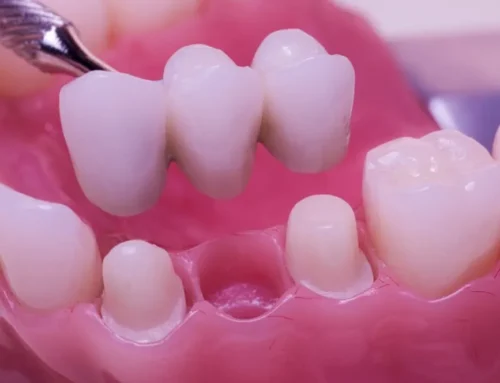
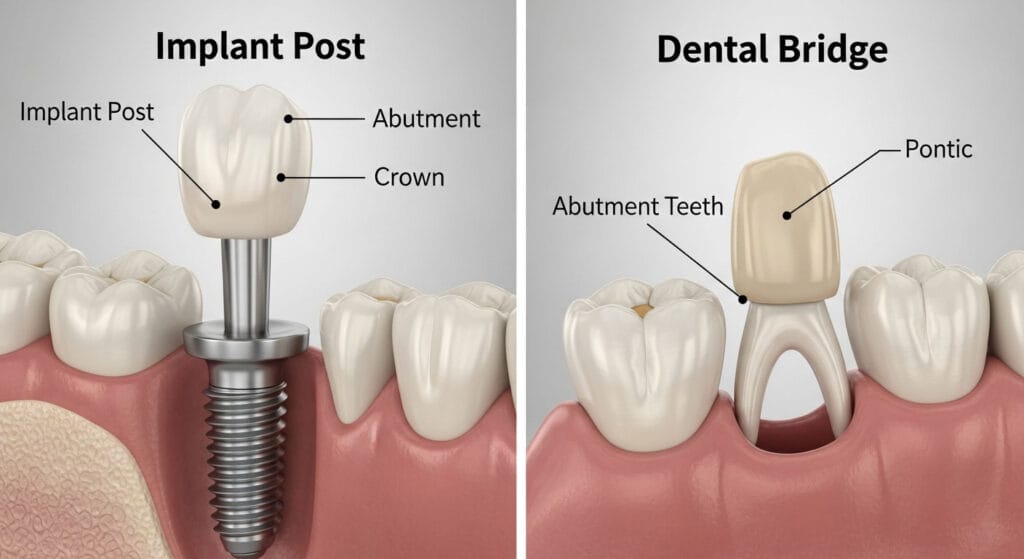
 A dental bridge is a fixed dental restoration that replaces one or more missing teeth by anchoring an artificial tooth (pontic) to adjacent natural teeth. These neighboring teeth are prepared and fitted with dental crowns that support the bridge.
There are several types of dental bridges:
- Traditional dental bridges
- Cantilever bridges
- Maryland (resin-bonded) bridges
- Implant-supported bridges
Dental bridges are a reliable and cost-effective solution when the surrounding teeth are strong and healthy.
For an overview of dental bridges, visit the American Dental Association:
What Is a Dental Implant?
A dental implant replaces the entire tooth structure, including the root. A small titanium post is surgically placed into the jawbone, where it fuses with the bone through a process called osseointegration. After healing, a dental crown is attached to the implant.
Dental implants are widely considered the gold standard for tooth replacement because they:
- Preserve jawbone density
- Do not require altering adjacent teeth
- Provide superior stability
- Offer long-term durability
Learn more about dental implants from the American Academy of Implant Dentistry.
Key Differences Between a Dental Bridge and a Dental Implant
1. Structure and Support
Dental Bridge:
- Supported by adjacent natural teeth
- Requires reshaping healthy teeth for crown placement
- Does not replace the tooth root
Dental Implant:
- Anchored directly into the jawbone
- Functions as an artificial tooth root
- Independent of neighboring teeth
Implants provide structural integrity similar to a natural tooth, while bridges rely on surrounding teeth for stability.
2. Bone Preservation
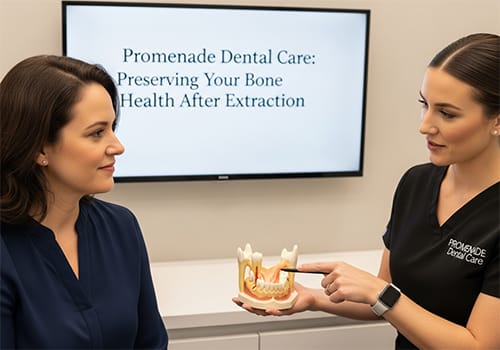 When a tooth is lost, the bone in that area begins to shrink (bone resorption). A dental bridge does not stimulate the bone beneath the missing tooth, which can lead to gradual bone loss and facial changes.
A dental implant stimulates the jawbone like a natural tooth root, helping preserve bone density and facial structure.
Click here for more information on bone health and implants:
3. Longevity and Durability
Dental Bridge Lifespan:
- Typically lasts 7–15 years
- May need replacement over time
- Dependent on the health of supporting teeth
Dental Implant Lifespan:
- Can last 20+ years or even a lifetime
- High long-term success rate
- A crown may require replacement after many years
While implants generally cost more upfront, they often provide greater long-term value due to their durability.
4. Procedure and Treatment Time
Dental Bridge Procedure:
- Usually completed in 2–3 visits
- No surgery required
- Faster overall treatment timeline
Dental Implant Procedure:
- Requires minor oral surgery
- Healing period of several months for osseointegration
- May require bone grafting in some cases
If you need immediate tooth replacement and prefer to avoid surgery, a bridge may be appealing. An implant might be a better option if long-term stability and bone preservation are your top priorities.
5. Cost Considerations
In general:
- Dental bridges have a lower initial cost
- Dental implants have a higher upfront cost but longer lifespan
Insurance coverage varies. At Promenade Dental Care, we provide detailed treatment plans and discuss financing options to help you make a confident decision.
6. Oral Hygiene and Maintenance
Dental Bridge Care:
- Requires special flossing tools to clean underneath
- Higher risk of decay around supporting teeth
Dental Implant Care:
- Brushed and flossed like a natural tooth
- No risk of decay, though gum health remains critical
Proper oral hygiene is essential for both options.
Which Is Better: Dental Bridge or Dental Implant?
The best solution depends on:
- Jawbone density
- Condition of adjacent teeth
- Overall health
- Budget considerations
- Long-term goals
A Murrieta dental implant is often recommended when bone quality is sufficient and patients want the most natural, long-lasting solution. A Murrieta dental bridge may be ideal when neighboring teeth already require crowns or when a patient prefers a non-surgical option.
Dental Bridge vs Dental Implant in Murrieta
If you are searching for a Murrieta dental bridge, dental implants, tooth replacement options, or the best dentist for dental implants in Murrieta, Promenade Dental Care offers comprehensive restorative dentistry tailored to your needs.
Learn more about our services:
Final Thoughts
Both dental bridges and dental implants effectively restore missing teeth, improve chewing ability, enhance smile aesthetics, and prevent shifting teeth. The primary difference lies in how they are supported and their long-term impact on oral health.
Dental bridges are quicker and more affordable initially, while dental implants provide superior stability, bone preservation, and longevity.
Call (951) 412-0127 to schedule a consultation at Promenade Dental Care in Murrieta to determine which tooth replacement option is right for you.