
A Patient Guide from Dr. Bao Nguyen, DDS
Sedation Dentistry: What to Expect Before, During & After Your Visit
A calm, judgment-free walkthrough of what the appointment actually feels like.
If a rough experience, a stubborn gag reflex, or plain dread has kept you out of the chair, knowing what happens next takes most of the fear out of it. I wrote this to walk you through the whole visit: how you will feel, what to do the day before, how long recovery takes, and how we decide which option fits. When you are ready to book, start on our Murrieta sedation dentistry page.
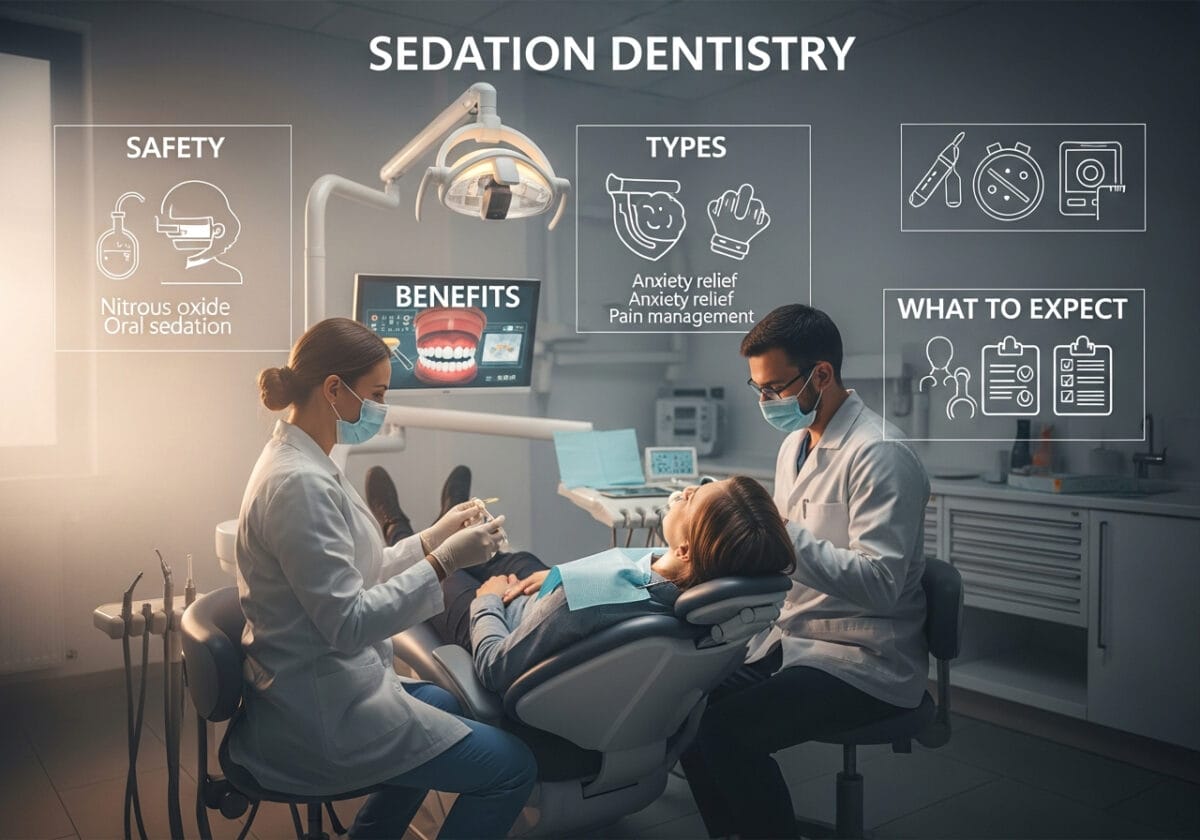
Most people who ask me about sedation are not afraid of the drill. They are afraid of not being in control.
Almost every week someone sits down across from me and opens with an apology. It has been six years. Eleven years. They say it the way people confess something. I stopped being surprised by that a long time ago, and what I usually say back is that the tooth does not care how long it has been, and neither do I. We start from where you are.
Sedation dentistry is medication, carefully dosed, that takes the edge off so a cleaning or a filling or something bigger feels manageable instead of overwhelming. It is not a personality test and it is not a last resort. Plenty of my patients use nitrous oxide for a routine cleaning and drive straight back to work.
What follows is the appointment itself, in order. Patients drive in from Temecula, Menifee, and French Valley for this kind of unhurried visit, and the line I hear most often on the way out is that the buildup was worse than the visit. If you would rather just talk it through, call the office at (951) 412-0127 and ask for me.
1 in 3
adults report real anxiety about dental visits
~5 min
for nitrous oxide to reach full effect
Since 2010
treating nervous patients here in Murrieta
First, The Question Everyone Asks
Is Sedation Dentistry Safe?
Yes, and the reason is boring: preparation. Before I recommend anything, I read your full medical history, your medication list, and your supplements, because the interactions that matter usually hide in the supplements people forget to mention. Then I pick the lightest option that will actually get you through the appointment. During treatment a pulse oximeter stays on your finger and I watch your heart rate and oxygen the whole time.
Light and moderate sedation, which is nearly all of what happens in a general dental office, sits at the low-risk end of medicine. The Cleveland Clinic describes it as controlled medication that relaxes you while you stay responsive, and that is exactly the experience. When side effects show up at all, they are usually mild and gone by evening.
The Side Effects Are Usually Minor
Most patients feel nothing worse than grogginess. When effects do occur, they tend to be:
Drowsiness that fades within the day
Dry mouth
A mild headache
Brief nausea
Minor bruising at the IV site (IV sedation only)

There are situations where I slow down. Obstructive sleep apnea, significant heart or lung disease, pregnancy, and a few common daily medications all change the calculation. That is not a reason to avoid treatment. It is a reason to have the conversation before the appointment instead of in the chair.
Making The Decision
Which Type of Sedation Is Right for You?
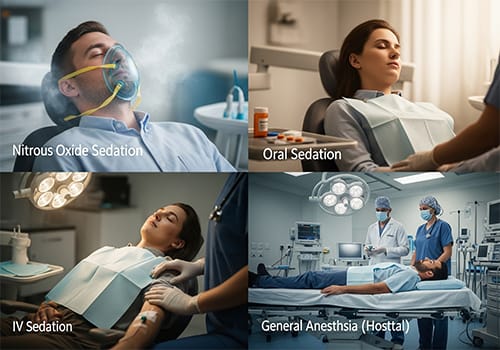
There is no single best sedation. The right pick depends on how anxious you are, what is being done, and your health. I start with the lightest option that will keep you comfortable and step up only when the procedure genuinely calls for it. Here is how the four levels compare, so you can walk in already knowing which conversation you want to have.
| Sedation type | How it feels | Wears off in | Driver needed |
|---|---|---|---|
| Nitrous oxide | Awake, alert, pleasantly floaty | 15–30 minutes | No |
| Oral sedation | Heavy, drowsy, often dozing | 6–8 hours | Yes |
| IV sedation | Deeply relaxed, little memory | 12–24 hours | Yes |
| General anesthesia | Fully unconscious | A full day or more | Yes |
Nitrous Oxide (Laughing Gas)
Breathed through a soft nose hood. It takes about five minutes to settle in and clears just as fast once I switch you to oxygen. You stay awake and talkative and you can drive yourself home. Best for mild nerves and for anyone who wants to test the water.
Oral Sedation
A pill taken before the visit brings a deeper, whole-body calm. Most patients feel heavy and doze lightly. It lasts several hours, so you need a driver and a quiet afternoon. A good fit for moderate anxiety or a longer appointment.
IV Sedation
Delivered into a vein, so it works quickly and can be adjusted during treatment. Many patients remember almost nothing. Reserved for severe anxiety or long procedures like oral surgery and wisdom tooth removal, and it takes a full day to clear.
General Anesthesia
Full unconsciousness, kept in reserve for complex surgical cases and delivered in a surgical setting with an anesthesia provider. It is not part of routine dentistry, and I will tell you plainly if I think a case belongs somewhere other than my chair.
How We Match the Method to You
In a short consultation we weigh your comfort level against the treatment itself and agree on a plan together. Nothing is decided for you, and you can change your mind on the day. Full options and pricing for your specific case live on our Murrieta sedation dentistry service page. If you want the clinical version, the National Library of Medicine keeps a detailed overview of dental sedation.
The Day Before
How to Prepare for Your Appointment
Prep is simple, and getting it right is most of what makes the day go smoothly. For nitrous oxide there is almost nothing to do. Show up the way you would for any visit. For oral or IV sedation, a little planning matters. You will get written instructions when you book, but here is the short version.
Line up a responsible adult to drive you for oral or IV sedation
Wear comfortable, loose-fitting clothing
Follow your fasting instructions, usually an empty stomach for a few hours
Bring every medication and supplement you take, including doses
Keep the rest of the day open so you can rest after deeper sedation
Bring headphones or music if that helps you settle
One more thing, and it is the item people skip: bring the actual bottles or a photo of the labels. A list written from memory misses doses, and doses change what I can give you.
Start To Finish
What to Expect During Your Visit
Here is the appointment in four parts. None of it moves faster than you want it to.
1You arrive
We confirm your health history one more time and the sedation level you picked. If you want to change your mind, this is the moment, and nobody will make it awkward.
2Sedation begins
The nose hood goes on, or the pill has already been taken, or the IV is placed. Then we wait. You will feel your shoulders drop before you notice anything else.
3Treatment
Local anesthetic goes in alongside the sedative, so what you notice is pressure and movement, not pain. With lighter sedation you can still answer me. With deeper sedation you may remember very little.
4Going home
We check that you are steady, go over aftercare with you and your driver, and send written instructions home. Nobody gets walked to the door still wobbly.
Sedation also raises your comfort threshold, which is why a long appointment stops feeling long. That is useful in a practical way: it means we can often finish a filling, a root canal, or several small repairs in one sitting instead of spreading them over three visits you have to psych yourself up for each time.
The goal is not just the completed treatment. It is that you leave without a new bad memory attached to it.
Afterward
How Long Sedation Takes to Wear Off
Plan your day around the option you choose. These are the ranges I give patients when they ask whether they can go back to work.
- Nitrous oxide
- Clears in about 15 to 30 minutes. You breathe pure oxygen for a few minutes at the end, and most people feel completely normal before they stand up. Driving and working the same day are both fine.
- Oral sedation
- Drowsiness for roughly 6 to 8 hours. Expect to nap. No driving, no work, and someone should be around for the first few hours.
- IV sedation
- Full recovery takes 12 to 24 hours. Take the day off, skip anything that needs judgment, and pick up normal life the next morning.
- What to eat
- Something soft and easy once the numbness is gone. Skip alcohol for 24 hours after any sedation, and skip it entirely if you have been given a pill to take at home.
When to Call Us Back
Ongoing nausea, dizziness that has not eased by the next morning, or pain that is climbing rather than fading all deserve a phone call. So does anything that simply does not feel right. Reaching us at (951) 412-0127 costs you nothing, and I would much rather hear from you early.
Planning Your Budget
How Much Does Sedation Dentistry Cost?
Cost tracks with the sedation type and how long you are in the chair. The ranges below are typical U.S. figures meant to set expectations. They are not a quote for your treatment. For exact pricing and a benefits check, see our sedation dentistry service page or call the office.
$50–$100
Nitrous Oxide (Laughing Gas)
per visit
$150–$500
Oral Sedation
typical range
$500+
IV Sedation
varies by length
Ready to Get the Care You Have Been Putting Off?
You do not have to white-knuckle your next appointment. Talk to me about the option that fits, and get a straight answer before you commit to anything.
(951) 412-0127 Explore Sedation DentistryReal Patients
What Patients Say About Comfortable Care
We found our new dentist! We were visiting family in Temecula a couple of weeks ago when my husband’s tooth pain became unbearable. When we arrived I explained that the anesthetics that typically work on most patients do not work on my husband. Dr. Bao Nguyen reassured us and explained that he has a computer guided needle that ensures the patient is completely numb and will not feel pain. He DID NOT lie. His work was amazing and completely pain free. After this experience we knew we found our new family dentist despite having to drive over an hour to get there.
— Aj O., Google Review
A very professional and friendly dentist. They go out of their way to make you comfortable and pain free. No upselling, and also easy to make an appointment. Great dentist!!!
— David C., Google Review
Since starting with Promenade Dental Care I have had cleanings, fillings, teeth replaced, root canal and crown replacement yesterday. I have never gone to a more gentle caring dentist. Love my dentist!
— Lucille L., Google Review
I had a dental emergency and the dentist called me immediately and was able to get me in within an hour of speaking to him. The front desk was extremely welcoming and kind. They went over options with me and without having dental insurance they were very affordable. Would recommend to everyone!
— Brittani M., Google Review
Explore More
Related Services at Promenade Dental Care
Dental Anxiety Care
A safe haven for nervous patients, built around patience rather than pressure.
Common Questions
Sedation Dentistry FAQs
Is sedation dentistry safe?
Yes. Sedation dentistry has a strong safety record when a trained dentist reviews your medical history first and monitors you throughout the appointment. At Promenade Dental Care in Murrieta, Dr. Bao Nguyen checks your health history, every medication and supplement you take, and your vital signs, including heart rate and blood oxygen, before and during treatment. Mild effects such as drowsiness, dry mouth, or brief nausea are common and pass the same day. Serious problems are rare with the light and moderate sedation used in a general dental office.
How do I prepare for a sedation dentistry appointment?
For nitrous oxide, no preparation is needed. For oral or IV sedation, arrange a driver, follow your fasting instructions, and bring a full list of your medications. Wear loose, comfortable clothing and keep the rest of the day open so you can rest. Tell the office about every prescription, supplement, and over-the-counter medicine you take, including anything you started recently. Promenade Dental Care gives you written instructions specific to your sedation type when you book, so nothing is left to guesswork.
Does sedation dentistry hurt?
No. Sedation is always paired with local anesthetic, so you feel pressure and movement rather than pain. The sedative itself is delivered comfortably: nitrous oxide through a soft nose hood, oral sedation as a pill, and IV sedation through a small needle in the arm or hand. Dr. Bao Nguyen also uses computer-guided anesthesia, which releases the numbing agent slowly and evenly instead of in one push. That matters if numbing has not fully worked for you in the past.
Can I eat or drink before my sedation appointment?
It depends on the sedation type. Nitrous oxide usually requires no fasting, while oral and IV sedation often require an empty stomach for several hours. Fasting lowers the chance of nausea while you are sedated. You can normally take essential daily medications with a small sip of water unless you are told otherwise. Promenade Dental Care confirms your exact eating and drinking instructions when your appointment is scheduled.
Will I be unconscious during sedation dentistry?
No. The sedation used in general dentistry is conscious sedation, which means you stay awake and able to respond while feeling deeply relaxed. Nitrous oxide keeps you calm and fully alert. Oral sedation makes you drowsy enough that many patients doze lightly. IV sedation often leaves little or no memory of the appointment. Full unconsciousness under general anesthesia is reserved for complex surgical cases and is not part of routine dental care.
How long does dental sedation take to wear off?
Nitrous oxide wears off in about 15 to 30 minutes, oral sedation in roughly 6 to 8 hours, and IV sedation in 12 to 24 hours. Because nitrous oxide clears so quickly, most patients feel completely normal before they leave the office and can drive themselves home. Oral and IV sedation both require a driver and a quiet rest of the day. After IV sedation, plan on no driving, no work, and no important decisions until the following morning.
Can I drive myself home after sedation dentistry?
You can drive yourself home after nitrous oxide, but not after oral or IV sedation. Nitrous oxide is out of your system within about 15 to 30 minutes, and you are monitored in the office until it is. Oral and IV sedation affect coordination, reaction time, and judgment for hours afterward, so a responsible adult has to drive you and stay with you. Promenade Dental Care confirms your transportation plan before any moderate sedation appointment.
Will I remember the procedure?
It depends on the sedation type. You will remember most of a nitrous oxide visit, part of an oral sedation visit, and often none of an IV sedation visit. For patients with dental anxiety, that reduced recall is a genuine benefit, because an appointment you barely remember cannot reinforce the fear. Many long-term avoiders find that one sedated visit is enough to make the next one feel ordinary.
How do I choose the right type of sedation?
You choose it together with your dentist, starting from the lightest option that will keep you comfortable. In a short consultation, Dr. Bao Nguyen weighs your anxiety level, your medical history, and the length and type of treatment you need. Mild nerves usually call for nitrous oxide, moderate anxiety for oral sedation, and severe anxiety or long procedures for deeper sedation. Nothing is decided for you, and the plan is agreed on before treatment begins.
How much does sedation dentistry cost?
Nitrous oxide typically costs about $50 to $100 per visit, oral sedation about $150 to $500, and IV sedation roughly $500 to $1,000 or more. The price varies with the sedation type and how long the appointment runs. Dental insurance sometimes contributes when sedation is medically necessary. Call Promenade Dental Care at (951) 412-0127 for exact pricing on your treatment and a check of your benefits before you commit to anything.
Does dental insurance cover sedation dentistry?
Dental insurance sometimes covers sedation, most often when it is medically necessary rather than chosen for comfort. Plans are most likely to contribute for nitrous oxide during a covered surgical procedure, for patients with a documented medical or developmental condition, or for oral surgery that needs deeper sedation. Coverage for anxiety on its own is uncommon. Promenade Dental Care checks your specific plan and gives you the out-of-pocket number in writing before treatment is scheduled.
Is sedation dentistry safe for children?
Yes, when it is dosed for the child's weight, monitored closely, and kept to the lightest effective level. Nitrous oxide is the most common choice for children and is well tolerated. Dr. Bao Nguyen reviews each child's health history and goes through the plan with a parent before any treatment begins. When sedation is not the right fit, a slower behavioral approach or a referral for hospital-based care is a better answer than pushing ahead.
Can I have sedation dentistry while pregnant?
Elective sedation is usually postponed during pregnancy, although urgent treatment can often go ahead safely with local anesthetic alone. Nitrous oxide is generally avoided in the first trimester, and oral and IV sedatives are rarely used at any stage. If you are pregnant and in pain, call rather than wait, because an untreated dental infection carries its own risk. Dr. Bao Nguyen coordinates with your physician or OB before treating you.
Who is a good candidate for sedation dentistry?
Sedation dentistry suits patients with dental anxiety, a strong gag reflex, difficulty sitting still, a poor response to numbing, or several procedures to complete in one visit. It also helps patients with sensory sensitivities or special needs. Some conditions call for extra caution, including pregnancy, obstructive sleep apnea, significant heart or lung disease, and certain daily medications. A short consultation with Dr. Bao Nguyen at Promenade Dental Care confirms the safest option for your situation.