


Murrieta Root Canal
Root canal therapy (endodontic therapy)
removes infections from the tooth. This
effective way of treatment removes the
decayed pulp, followed by cleaning and
fixing it. Our doctor has advanced training
and addresses your comfort during these
procedures.
(951) 412-0127


Our customers have ranked us the #1 Murrieta and Temecula Dentist with 200 5-Star Google Reviews. Don’t risk choosing a dentist with less satisfied customers. Click Here
Affordable Solutions: Cheap Root Canals for Everyone.
Everyone is concerned about a dentist recommending root canals. Here is a detailed description of everything you should know about root canals.
What is a Murrieta Root Canal?
 “Root canal” means two different things. First, it is a part inside your tooth. This part has nerve tissue, blood vessels, and pulp. Second, a root canal is a cavity that is found inside your tooth, which is relevant information for your dental care. If you are wondering about the cost of a root canal with a dentist in Murrieta, prices generally range from $700 to $1,500 depending on the tooth’s location and the complexity of the case. It is best to contact local dental offices in Murrieta for an exact quote based on your specific needs.
Root canal therapy helps eliminate infections in your natural teeth for your entire family. In this gentle care treatment, the dentist will remove the decayed pulp from inside of your tooth. After that, the tooth is cleaned well and filled with a biocompatible material. Our doctor has special training in root canal procedures. They will help you feel at ease while you complete it, especially if you are dealing with any potential dental issues. To find a reputable root canal specialist in Murrieta, CA, look for dentists who are specially trained in endodontic procedures, read online reviews, and ask for referrals from friends or your general dentist. Choosing a specialist with experience and positive patient feedback can help ensure a comfortable and successful root canal experience.
What causes the infection that requires a Murrieta root canal dentist (endodontic therapy)?
Common causes include:
- If you have tooth decay, it can cause problems with your teeth.
- Going through repeated dental procedures on the tooth can be tough for it.
- A crack in the tooth can also be a reason for problems.
What are the symptoms leading to a root canal?
The need for a root canal is not determined solely by the presence of pain in your teeth, especially if you have a cracked tooth. A dental checkup is essential for maintaining your dental health if you notice these signs that may affect the actual cost of the procedure and treatment in more complex cases.
- You may feel pain in the teeth.
- There can be swelling in the tissues.
- Teeth may feel sensitive to hot or cold.
- You might notice discoloration of the tooth.
What is involved in a root canal procedure?
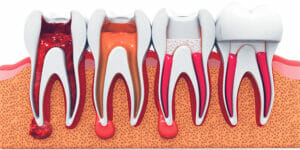 Dr. Bao Nguyen is the most skilled dentist for root canal procedures in Murrieta. He has performed more root canal treatments in this area than any other dentist. He has performed the root canal procedure many times so that you can trust his work. Before starting the root canal, Dr. Bao will look at the infection closely. He will use X-rays and a comprehensive oral examination to assess everything thoroughly. He also does pulp tests. He ensures that the shape and size of the root canal are checked using several methods before he begins. This helps him give the best care to you.
- Initially, the dentist administers local anesthetic to numb the area where the problem is located in your tooth, ensuring your oral health is prioritized. A small hole is made in the tooth. A dental dam is put on. This dam covers the tooth. It keeps things dry. This helps the dentist’s approach to work better during general dentistry procedures.
After the dam is set, the dentist cleans out decayed pulp, bacteria, and other debris inside the tooth. When the decay is removed, the dentist fills the space inside the tooth to help preserve your natural smile. A special material is used to seal this area. Most patients in Murrieta typically recover from a root canal within a few days, although mild soreness or sensitivity may last for a week. Following your dentist’s post-procedure instructions can help ensure a smooth and speedy recovery.
Many dental insurance plans, including major dental insurance plans and a dental plan, do cover root canal treatment costs, but coverage amounts vary. With a high success rate, insurance may cover 50% to 80% of the procedure after you meet your deductible, leaving you with some out-of-pocket costs. It’s a good idea to check with your provider for exact details, as your portion can range from a few hundred to over a thousand dollars depending on your plan and the complexity of the root canal.- When the decay is removed, the dentist fills the space inside the tooth. A special material is used to seal this area.
- The tooth is now weaker because it no longer has pulp. The pulp is used to feed and protect the tooth. A crown, shaped like a tooth, is placed over it. The crown helps keep the tooth strong, maintain its shape, and protect it.
How can someone get a root canal if they can’t afford it?
- If someone needs a root canal but can’t afford it, they can explore options like dental financing plans, payment plans offered by dentists, or seeking assistance from dental schools. Additionally, community health centers may provide low-cost dental services, including affordable root canals, ensuring necessary care is accessible.
- When the decay is removed, the dentist fills the space inside the tooth. A special material is used to seal this area.
- The tooth is now weaker because it no longer has pulp. The pulp is used to feed and protect the tooth. A crown, shaped like a tooth, is placed over it. The crown helps keep the tooth strong, maintain its shape, and protect it.
When Is Root Canal Therapy Necessary?
When the tooth pulp is injured and bacteria enter the infected tissue, it cannot repair itself. So, the tissue in the pulp dies. Bacteria continue to spread and break down the pulp. If left untreated, infections can spread to the bone. Decay can cause the tooth to become loose and weak. This often leads to bad pain.
If the treatment for a natural tooth is not done on time, the treated tooth cannot be saved. You may need to have the tooth removed. Some people believe that tooth extraction might be a better option, but the best thing you can do is to undergo root canal therapy as soon as possible. A root canal is a way to save your natural tooth.
Benefits Of “Root Canal Therapy” Over Extraction
 Several reasons demonstrate why root canals are preferable to extracting a tooth.
Root canal therapy is essential because it keeps your natural tooth. If you have severe tooth pain and the extracted tooth pulled out due to excessive decay, you will need something to replace it. A root canal removes the infection and alleviates the pain, especially when using modern techniques like electric handpieces, making it possible to pursue a permanent restoration afterward. You get to eat the food you like. The work also helps you keep your own smile. At times, you may need emergency endodontic care nearby.
- A root canal gives you less pain than getting a tooth pulled out.
- A root canal takes less time to finish.
- Getting a tooth pulled costs a lot more than a root canal. You will need something to replace your natural tooth, and this can be very costly.
- Pulling a tooth can weaken your other teeth. It can also make it tough for you to chew your food.
No other treatment can give all the benefits that root canal therapy gives. Keep in mind that Dr. Bao, the emergency endodontist near me, offers affordable root canal treatments.
To prevent these infections, one should:
- Brush their teeth twice a day, in the morning and at bedtime.
- Use a toothbrush and toothpaste that your dentist suggests.
- Change toothbrushes often.
- Get regular dental checkups and teeth cleaning.
- Floss every day and at any time if something gets stuck between your teeth.
For emergency endodontists or affordable root canals nearby, call us at (951) 412-0127. We help with root canals and offer assistance with other oral surgeries as well. For more information, please visit our website at http://promenadedentalcare.com. Our Murrieta root canal dentist strives to make your visit as easy and comfortable as possible.
Emergency endodontist near me—Cheap root canals near me—Murrieta root canals—Adult Braces

Yes—but choosing the cheapest dentist for a root canal carries some risks. The key factor is quality and experience, not just price. A low price alone does not guarantee poor care, but it requires careful evaluation.
The main risk: higher failure rates
Root canals require precision. Specialists called endodontists have success rates of about 95–97%, compared to 85–90% for general dentists, largely due to more training and specialized equipment. Lower-cost providers may:
- Use less advanced imaging or magnification
- Have less experience with complex canals
- Miss hidden infection or anatomy
- Increase the risk of retreatment, infection, or tooth loss
If a root canal fails, fixing it can cost much more than doing it correctly the first time.
When choosing the cheapest option, it can be safe
It is usually safe if the dentist:
- Has strong reviews and verified credentials
- Performs root canals frequently
- Uses modern equipment (digital X-rays, microscopes, or 3D imaging)
- Provides a clear treatment plan and warranty or follow-up
Many excellent general dentists offer affordable root canals, especially for simpler teeth like front teeth.
When you should avoid the cheapest option
Be cautious if:
- The price is far below the local average
- The dentist rarely performs root canals
- It’s a molar (more complex anatomy)
- The office lacks modern diagnostic technology
Best strategy: balance cost and experience
The safest approach is to choose the most experienced provider within your budget, not automatically the cheapest. Saving $200–$400 upfront is not worth the risk of losing the tooth.
Yes, most dental insurance plans cover root canal treatment because it is considered a medically necessary procedure to save a natural tooth. However, the amount covered and your out-of-pocket cost depend on your specific plan.
Typical dental insurance coverage
Most PPO dental insurance plans categorize root canals as a major procedure, which usually means:
- Insurance covers: 50% to 80%
- You pay: 20% to 50% out of pocket
- Annual maximum limits often apply (typically $1,000 to $2,000 per year)
Some premium plans cover up to 80%, while basic plans may only cover 50%.
Average root canal costs and out-of-pocket estimates
| Tooth type | Total cost | With insurance (50%) | With insurance (80%) |
|---|---|---|---|
| Front tooth | $600–$1,000 | $300–$500 | $120–$200 |
| Premolar | $700–$1,200 | $350–$600 | $140–$240 |
| Molar | $900–$1,500 | $450–$750 | $180–$300 |
These numbers are typical — all insurance plans are different.em>
Molars cost more because they have more canals and are harder to treat.
Important additional costs
Insurance often covers these at different rates:
- Exam and X-rays: usually 80–100% covered
- Crown after root canal: typically 50% covered
- Specialist (endodontist): may cost more than general dentist
Waiting periods and limitations
Some plans require a 6–12 month waiting period before covering major procedures. Also, if you have already reached your annual maximum, you must pay the full cost.
Best-case and worst-case scenarios
- Best case: $150–$400 total with good insurance
- Average: $300–$700 out of pocket
- No insurance: $600–$1,500 total
Lowest-cost charity and sliding-scale options for root canals (best for under $500)
These are often cheaper than private clinics:
- Riverside University Health System Community Health Centers (sliding scale)
- Neighborhood Healthcare (Temecula)
- Loma Linda University School of Dentistry (student-performed, supervised)
Typical cost at dental schools: $300–$700
Cheapest overall option (if eligible)
- Medi-Cal (Denti-Cal): root canals may cost $0–$200 total
- Dental schools: usually lowest cash price without insurance
Finding the cheapest root canal in Murrieta, CA usually involves comparing general dentists, dental chains, and endodontists that offer payment plans, insurance acceptance, or discount programs.
Ask your dentist at Promenade Dental Care about affordable options to consider.
To get the lowest price, ask for a cash discount, payment plan, or membership savings plan. Also compare general dentists versus specialists, since general dentists are often less expensive. Expect root canal costs in Murrieta to range from about $600 to $1,400 depending on the tooth, complexity, and whether insurance is used.
Laser-Assisted New Attachment Procedure (LANAP) is an FDA-cleared, minimally invasive laser treatment designed to address moderate to severe periodontal (gum) disease. Unlike traditional gum surgery, LANAP utilizes the PerioLase® MVP-7™ laser to selectively remove diseased tissue and bacteria while preserving healthy gum tissue. This approach promotes the regeneration of bone and connective tissue, leading to improved oral health outcomes.
Key Benefits of LANAP:
- Minimally Invasive: The procedure does not require cutting or suturing, resulting in less discomfort and faster healing times compared to conventional surgery.
- Reduced Bleeding and Swelling: The laser’s precision minimizes trauma to the gums, leading to less bleeding and swelling during and after the procedure.
- Preservation of Healthy Tissue: LANAP targets only diseased tissue, leaving healthy gum tissue intact, which helps maintain the natural appearance of your gums.
- Bone Regeneration: The treatment stimulates the regeneration of bone and connective tissue, potentially saving teeth that might otherwise be lost to periodontal disease.
Mild soreness or sensitivity for a few days is common and can usually be managed with over-the-counter pain relievers. Most people return to normal activities the same or next day.
After the procedure, a temporary filling may be placed. Most patients need a dental crown or permanent restoration filling to fully restore strength and appearance to the tooth.
A root canal typically takes 1–2 visits, depending on the severity of the infection and the tooth being treated. Each appointment typically lasts between 60 and 90 minutes.
Modern root canals are not painful. With local anesthesia and advanced techniques, most patients experience little to no discomfort—similar to getting a filling.
Common symptoms include:
– Severe toothache when chewing or biting that may indicate a cracked tooth.
– Lingering sensitivity to hot or cold.
– Swelling or tenderness in the gums.
– Tooth discoloration.
– A small bump or abscess on the gums.
A root canal is a dental treatment that removes infected or damaged pulp (soft tissue) inside a tooth. The canal is then cleaned, disinfected, and sealed to save the natural tooth.
A tooth’s pulp or nerve endings are damaged from tooth decay. Tooth decay is the result of microorganisms within the tooth. This interaction causes the excretion of acidic substances. This happens when patients do not brush their teeth regularly. This leaves food particles. These particles feed the microorganisms. The bacteria excrete acidic waste products that damage the tooth and cause decay.
Root Canals are carried out when the damage is intense and painful. There are three alternatives. One is considered radical — pulling the tooth. The second involves dividing a tooth in half. Then the dentist repairs the injured root or removes one or more roots. Intentional replantation may also be performed. This requires the dentist to remove the tooth. When out, the tooth is treated. Finally, it is returning the tooth after the treatment.
The cost of root canals is dependent on the dentist and the type of tooth fixed. For example, molars and premolars are more expensive than canines and incisors. The average prices of molars range from $800-$2,000. Bicuspid root canals are from $700-$1,800. The front teeth are $500 to $1,500.
The nerve tissue or pulp has been damaged by bacteria. This will cause infections within the tooth. It can also lead to pus forming at the end of a tooth root. This swelling may spread to other parts of the body, including the head and neck.
An endodontist is a dentist who specializes in root canals or endodontic treatments. All endodontists are dentists, but not all dentists are endodontists. Endodontists must attend different dental schools and training to become certified to specialize in root canals.