The landscape of modern dentistry is undergoing a revolutionary transformation, driven by the rapid integration of artificial intelligence (AI) and advanced digital technologies. Among the many areas experiencing this shift, dental filling procedures stand out as a field where innovation is making a profound impact. From diagnosis to treatment planning and execution, AI is reshaping how dentists approach cavities and restorations. As patients demand more precise, comfortable, and efficient care, the dental industry is responding with cutting-edge solutions that combine machine learning, robotics, and digital design tools. These solutions not only streamline procedures but also enhance long-term outcomes, reduce procedural errors, and offer personalized treatment pathways tailored to each individual’s oral health needs. This article explores how AI is transforming dental filling procedures, the benefits it brings to patients and practitioners alike, and what the future holds for this exciting convergence of technology and oral healthcare, highlighting innovations that are redefining the standard of care across every aspect of restorative dentistry.
Modern Composite Dental Fillings: Tooth-Colored Fillings, Bulk-Fill Composites & Durable Dental Restorations
The journey from silver amalgam to modern composite resins has been one of dentistry’s most significant evolutions. Today’s composite materials are engineered with a precision that earlier generations of dentists could only dream of. Contemporary composites combine a resin matrix with filler particles that have been refined to deliver superior strength, aesthetics, and durability. The result is a material that not only restores function but also contributes to the overall health of the tooth and surrounding tissues.
The latest generation of bulk-fill composites, for example, allows dentists to place thicker layers in a single application, dramatically reducing chair time while maintaining exceptional structural integrity. At Promenade Dental Care, we have embraced these advances enthusiastically, integrating them into comprehensive treatment plans that focus on patient comfort and efficiency. Bulk-fill composites are particularly advantageous for treating larger cavities, as they maintain mechanical stability while reducing the number of steps and materials needed.
Beyond simple aesthetics, modern composites are now being engineered to better mimic the optical properties of natural enamel, including translucency and fluorescence. Researchers are also developing composites with enhanced wear resistance, addressing one of the long-standing criticisms of tooth-colored restorations and extending the lifespan of these fillings. Additionally, newer composite formulations are designed to minimize shrinkage during curing, improving adhesion and preventing micro-gaps that could lead to secondary decay.
For more on composite materials, click here.
Self-adhesive composites have further simplified the bonding process, reducing the risk of microleakage — a primary cause of secondary decay beneath fillings. This innovation allows dentists to achieve stronger, longer-lasting restorations with fewer procedural steps, ultimately benefiting patient outcomes and enhancing the predictability of treatments.
Nanotechnology in Dental Fillings: Nanofilled Composites, Antibacterial Fillings & Remineralization Technology
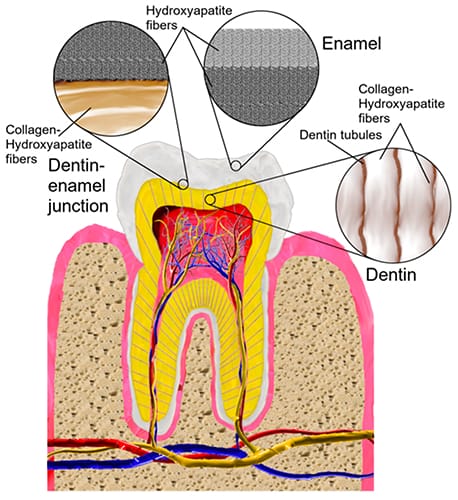
Perhaps no field has had a more transformative impact on dental materials science than nanotechnology. By engineering materials at the molecular and atomic level, researchers have unlocked properties that are impossible to achieve with conventional manufacturing methods. This microscopic precision enables fillings that are stronger, more wear-resistant, and capable of interacting positively with the surrounding dental tissues in ways previously unimaginable.
Nanofilled and nanohybrid composites represent the current pinnacle of this technology. These materials achieve a surface smoothness that resists staining and bacterial adhesion more effectively than their predecessors, maintaining both function and appearance over longer periods. Their enhanced polishability and optical properties also help restorations blend seamlessly with natural teeth, satisfying patients’ aesthetic demands.
Beyond aesthetics, nanoparticles are being used to incorporate antimicrobial agents directly into filling materials. Silver nanoparticles and zinc oxide nanoparticles have demonstrated potent antibacterial properties, reducing the risk of secondary decay by actively inhibiting bacterial growth at the restoration site. Calcium phosphate nanoparticles are another exciting development, as they can release ions that promote remineralization of the surrounding tooth structure, helping to repair early enamel lesions and improve overall tooth strength.
Learn more about nanotechnology in dentistry.
3D Printed Dental Fillings: Digital Dentistry, CAD/CAM Restorations & Same-Day Dental Fillings
Three-dimensional printing is rapidly transitioning from a novelty to an essential tool in modern dental practice. Currently, the technology primarily focuses on crowns and guides, but it is advancing toward direct restorative applications. The ability to print dental restorations with micron-level precision ensures a perfect fit and reduces post-operative complications, such as gaps or uneven contact points.
Using intraoral scanning combined with CAD/CAM technology, dentists can already create highly accurate inlay and onlay restorations in a single visit. This approach reduces patient inconvenience, minimizes the need for temporary restorations, and ensures that the final restoration integrates smoothly with surrounding teeth.
As 3D printing materials continue to improve, direct-printed fillings that perfectly match a patient’s tooth anatomy may become routine. Future developments could allow biocompatible resins with antimicrobial properties or remineralizing agents to be printed directly into the tooth, merging the advantages of nanotechnology, AI-guided design, and advanced restorative techniques.
Explore digital dentistry advancements.
Biocompatible Dental Fillings: BPA-Free Fillings, Bioactive Materials & Safe Tooth Fillings
Biocompatibility has always been a consideration in dental materials selection, but it is now taking center stage. The debate over mercury-containing amalgam fillings has accelerated research into safer, bioactive alternatives. Patients are increasingly aware of material safety, prompting dental providers to adopt solutions that minimize systemic exposure while maintaining optimal restorative outcomes.
Glass ionomer cements release fluoride ions that strengthen tooth structure over time, providing both immediate restoration and ongoing preventive benefits. New bioactive composites release calcium, phosphate, and fluoride ions in a sustained manner, encouraging natural remineralization and reducing susceptibility to future decay.
Ceramic-based materials like zirconia and lithium disilicate offer exceptional strength and aesthetics, mimicking natural tooth enamel while resisting fractures and wear. Their durability, combined with biocompatibility, makes them an ideal choice for long-term restorations in both anterior and posterior teeth.
Learn about safe dental materials from a trusted source.
Stem Cell Dental Fillings: Regenerative Dentistry, Tooth Regeneration & Biological Tooth Repair
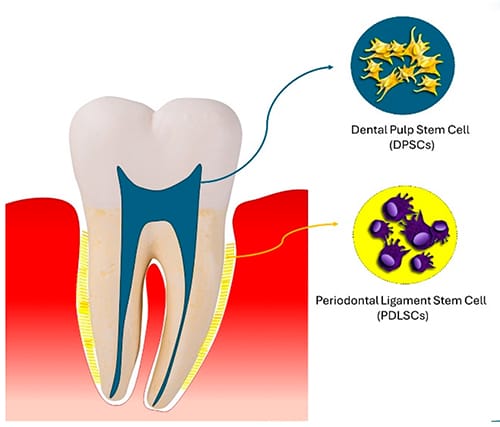
Perhaps the most revolutionary frontier is the application of stem cell biology to tooth regeneration. The concept of a filling that stimulates the tooth to heal itself represents a paradigm shift. Instead of merely filling a cavity, regenerative therapies could restore the tooth’s natural architecture, improving structural integrity and long-term oral health.
Dental pulp stem cells have shown the ability to regenerate dentin. Researchers are developing bioactive scaffolds that recruit these cells to repair damaged tooth structure. These scaffolds can be engineered to release growth factors in a controlled fashion, guiding tissue regeneration in a predictable manner.
Clinical trials have demonstrated promising results using growth factors and dentine matrix proteins. Future fillings, if refined, could serve as temporary scaffolds, eventually replaced by natural tooth tissue. Such regenerative strategies have the potential to reduce the need for repeated restorative work, preserving natural dentition throughout a patient’s lifetime.
Smart Dental Fillings: Self-Healing Fillings, pH-Responsive Materials & AI-Driven Dentistry
The concept of “smart” materials is finding exciting applications in dental filling technology. These materials can respond dynamically to changes in the oral environment. By integrating sensors or reactive compounds, smart fillings can actively participate in maintaining oral health, rather than being passive restorations.
pH-responsive fillings may release antimicrobial agents when acidity rises, countering bacterial activity that causes decay. Shape-memory polymers could improve sealing in response to mechanical stress, while self-healing materials repair microcracks automatically
The landscape of modern dentistry is undergoing a revolutionary transformation, driven by the rapid integration of artificial intelligence (AI) and advanced digital technologies. Among the many areas experiencing this shift, dental filling procedures stand out as a field where innovation is making a profound impact. From diagnosis to treatment planning and execution, AI is reshaping how dentists approach cavities and restorations. As patients demand more precise, comfortable, and efficient care, the dental industry is responding with cutting-edge solutions that combine machine learning, robotics, and digital design tools. These solutions not only streamline procedures but also enhance long-term outcomes, reduce procedural errors, and offer personalized treatment pathways tailored to each individual’s oral health needs. This article explores how AI is transforming dental filling procedures, the benefits it brings to patients and practitioners alike, and what the future holds for this exciting convergence of technology and oral healthcare, highlighting innovations that are redefining the standard of care across every aspect of restorative dentistry.
Future of Dental Fillings: Long-Lasting Fillings, Advanced Restorative Dentistry & Next-Generation Dental Care
The future of dental filling technology holds extraordinary promise. Advances across nanotechnology, regenerative medicine, and smart materials are redefining restorative dentistry.
At Promenade Dental Care in Murrieta, California, our commitment is to remain at the cutting edge, offering the most effective and innovative treatments available.
From nanotechnology-enhanced composites available today to stem cell-based regenerative fillings on the horizon, the direction is clear: toward restorations that are longer-lasting, biologically integrated, and smarter than ever before.
The revolution in dental restoration is well underway—and the best is yet to come.