Dental Sealants for Kids: A Parent’s Comprehensive Guide
Dental sealants are a highly effective preventive dental treatment used to protect children’s teeth from cavities by sealing deep grooves on the chewing surfaces of molars and premolars where food and bacteria collect. Sealants act as a physical barrier against tooth decay and are recommended soon after permanent molars erupt. Children without sealants are almost three times more likely to develop cavities in their back teeth.
What Are Dental Sealants?
Sealants are thin, plastic, or resin coatings applied to the chewing surfaces of back teeth. They fill pits and fissures that toothbrush bristles often cannot reach, making it much harder for plaque and bacteria to cause decay. Sealant material bonds directly to the enamel and typically cures quickly, allowing normal eating and drinking right after placement.
Unlike fillings that restore teeth after decay has occurred, sealants are preventive and help stop cavities before they start. They are widely recommended by pediatric dentists as part of routine childhood dental care.
Benefits of Dental Sealants for Kids
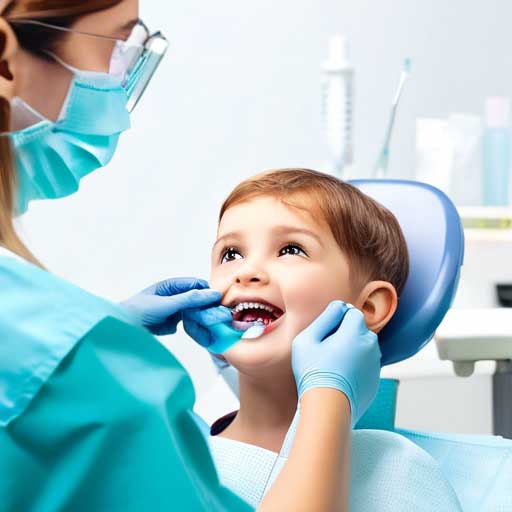 High Cavity Protection: Sealants can reduce cavity risk on molars by up to 80% in the first two years and continue to protect teeth for years.
Painless, Quick Procedure: Application takes only minutes per tooth with no drilling or anesthesia.
Cost-Effective: Sealants are significantly less expensive than treating cavities with fillings or other restorative work.
Long-Lasting Protection: Sealants can last up to 5–10 years with proper care and regular dental check-ups.
Easy Maintenance: Once placed, sealants require no special care beyond normal brushing and flossing.
When Should Kids Get Dental Sealants?
Children should receive sealants soon after their permanent molars erupt, typically
- First permanent molars: around ages 6–7
- Second permanent molars: around ages 11–14
Some dentists may also recommend sealants on baby teeth if they have deep grooves or the child is at high risk for cavities.
How Dental Sealants Are Applied
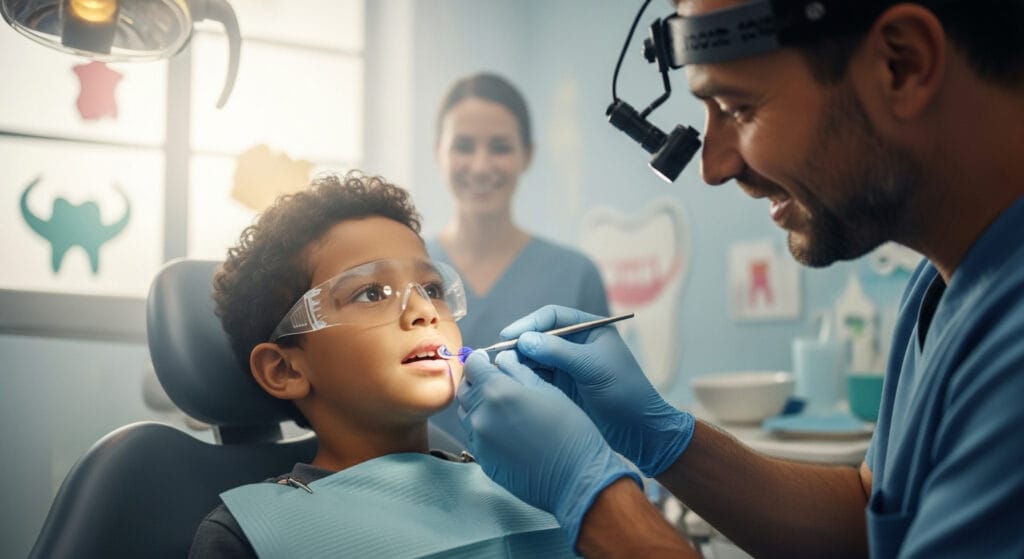
The sealant application process for children is quick and comfortable: Teeth are cleaned and dried.
An etching solution is applied to help the sealant adhere.
Sealant material is painted onto the tooth surface.
A curing light hardens the sealant.
Children can eat and drink normally right after the procedure.
Pros of Dental Sealants
- Effective Decay Prevention: They significantly reduce the risk of cavities on biting surfaces.
- Painless Application: No needles, drills, or anesthesia needed.
- Long-Term Value: Can last many years and prevent future dental costs.
- Insurance Coverage: Many dental plans cover sealants as preventive care.
Cons of Dental Sealants
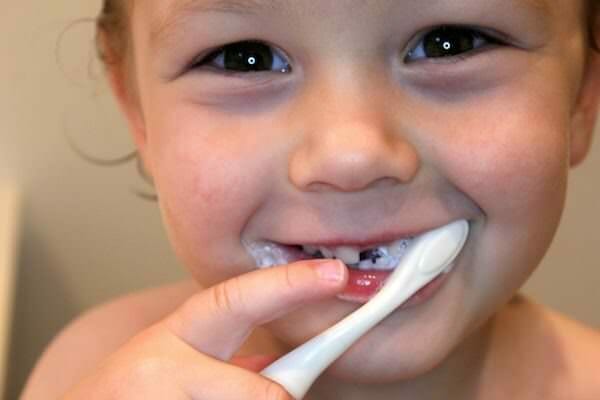 Sealants protect only chewing surfaces, not between teeth where cavities can also form.
They may wear down over time and require reapplication.
In rare cases, sealants might trap early, undiagnosed decay beneath them if not properly assessed.
Some sealants contain trace amounts of BPA (bisphenol A), though levels are well below safety standards and considered safe.
Side Effects and Safety
Major dental organizations endorse dental sealants as extremely safe. Most side effects are minimal and uncommon, including very temporary sensitivity or slight discomfort as the mouth adjusts. Allergic reactions are extremely rare. Sealants may discolor slightly over time, but the result is typically cosmetic. Regular dental visits help monitor sealant conditions.
Dental Sealants for Adults
Adults can benefit from dental sealants, particularly if they have deep grooves in their molars that trap food and bacteria. Although sealants are most commonly applied in children, they can help protect adult teeth from cavities when there is no existing decay or large fillings present. Sealants create a protective barrier that reduces plaque buildup and enamel damage. If you are prone to tooth decay, ask your dentist whether dental sealants are a suitable preventive option for your oral health needs.
Maintaining Sealants and Oral Health
Sealants provide excellent protection, but they work best combined with strong daily oral care:
- Brush twice daily with fluoride toothpaste
- Floss daily to clean between teeth
- Eat a balanced diet low in sugary snacks
- Attend regular dental cleanings and exams
Sealants reduce the chance of cavities but do not replace proper oral hygiene. Regular visits help catch and repair any worn or damaged sealants.
Learn More About Dental Sealants
For detailed, authoritative information on dental sealants, visit the CDC’s dental sealants page, the National Institutes of Health guide to dental sealants, and the HealthyChildren.org overview. These resources explain sealant benefits, application timelines, safety, and insurance considerations.
Protecting your child’s smile with dental sealants is a proven, cost-effective way to reduce cavities, support lifelong oral health, and provide peace of mind for parents. Consult your dentist to determine the best preventive plan for your family.