


General Dentist vs. Specialist:
What’s the Difference, and Which Do You Need?
For most people, visiting the dentist is an essential part of maintaining a healthy smile. But dentistry isn’t a single profession—it includes multiple types of oral healthcare providers, each with different levels of training, specialties, and treatment focus. While general dentists handle the majority of everyday oral care, dental specialists receive additional years of advanced training to treat more complex or specific conditions.
Understanding the difference between a general dentist and a specialist helps you make confident decisions about your treatment plan and decide when to seek specialized care.


Same Day Crown
Promenade Murrieta Emergency Dentist replaces damaged or decayed teeth with a crown in one visit.

Air Polishing Teeth Cleaning
This method uses a special handpiece to send a controlled stream of compressed air, water, and fine abrasive particles (usually traditional sodium bicarbonate) toward the tooth surface. The pressurized mixture effectively dislodges and removes surface stains, soft deposits, and gum tissue bacterial biofilm with remarkable efficiency.
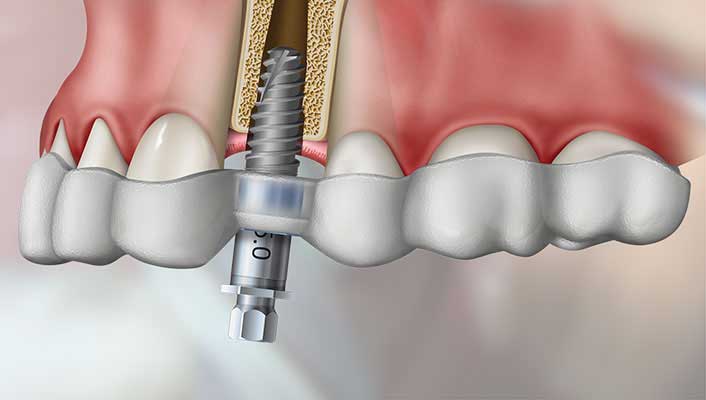
Guided Implant Surgery
Computer-guided dental implants utilize advanced 3D imaging and custom surgical guides to ensure precise, safe, and efficient implant placement, improving outcomes and patient comfort significantly.
How General Dentists Differ from Specialists
General dentists, often referred to as family dentists or primary dental care providers, offer a wide variety of services, including temporary crown placements, that cover most routine dental needs. These general dentistry services make them the first stop for patients seeking convenient, comprehensive dental care.
- Provide broad, comprehensive dental care for most oral health needs
- Treat patients of all ages as a full-service family dentist
- Manage routine oral health needs like exams, cleanings, and cavity treatment
- Perform many everyday procedures (cleanings, fillings, crowns, etc.) without requiring a dental specialist
- Refer patients to specialists when advanced, complex, or highly specific treatment is needed
Dental specialists, on the other hand, go through extra training focused on a specific area of dentistry—like endodontics, orthodontics, periodontics, or oral surgery—and usually use special tools or techniques that are unique to their field
General Dentistry Training
General dentists complete rigorous education and clinical training before providing general dental services to patients. Their education typically includes:
- A bachelor’s degree (optional in some cases)
- Four years of dental school earning a DDS or DMD degree
- National and state licensing exams required to practice dentistry
While general dentists, like Promenade Dental Care in Murrieta, do not complete a specialty residency, many pursue continuing education in areas such as cosmetic dentistry, dental implants, and CEREC same-day crowns. This allows general dentists to offer patients modern, technology-enhanced care without needing a specialist referral.
Services Provided by General Dentists
General dentists commonly offer a wide range of general dentistry services designed to maintain, restore, and enhance your oral health. These services may include:
- Teeth cleanings & exams for preventive dental care
- Dental fillings for cavities and tooth decay
- Crowns & bridges for restoring damaged or missing teeth
- Root canals on non-complex cases
- Outpatient surgery for extractions, including simple tooth removal
- Children’s dentistry, oral development, and child-specific dental care are also provided. Common treatments: child cleanings, behavior management, early orthodontics, and pediatric dental exams.
- Dentures, partials, and tooth replacement options
- Gum disease treatment for early to moderate periodontal issues
- Teeth whitening and other cosmetic dentistry treatments
- Veneers for cosmetic smile enhancement
- Oral cancer screenings during routine exams, especially for individuals with a history of periodontal disease.
- Dental implants (training-dependent) and implant restorations
- CEREC same-day crowns using advanced digital dentistry
- Emergency dental care for urgent issues like broken teeth or pain
Modern general dentists often provide services that previously required a dental specialist, thanks to advancements in technology, digital dentistry, and continuing education. However, certain cases—especially complex surgical, gum, or root-related issues—still require the expertise of a trained dental specialist.
Understanding the difference between a general dentist and a specialist helps you make confident decisions about your dental treatment plan.
What Is a Dental Specialist?
Specialized Training
A dental specialist first becomes a general dentist, then completes an additional 2–6 years of advanced residency training in a specific area of dentistry. These skilled professionals concentrate on complicated dental work, advanced oral surgery, specific treatments for teeth and gums, unusual dental issues, or procedures that may require additional appointments for advanced technology and expert knowledge.
The American Dental Association (ADA) recognizes the following specialty areas:
Endodontists
Experts in root canal therapy and diseases of the dental pulp.
Common treatments: root canals, apicoectomies, retreatments, and complex root canal procedures.
Periodontists
Periodontists are specialists in treating gum disease, maintaining periodontal health, and providing bone support around teeth.
Common treatments: gum disease therapy, gum grafts, scaling and root planing, dental implant placement, and periodontal surgery.
Prosthodontists
Experts in full-mouth reconstruction, tooth replacement, and advanced restorative dentistry.
Common treatments: crowns, bridges, dentures, dental implants, complex restorative cases, and smile rehabilitation.
Oral and Maxillofacial Surgeons
Surgical specialists for mouth, jaw, and facial procedures.
Common treatments: tooth extractions, wisdom teeth removal, jaw surgery, bone grafting, dental implant surgery, and facial reconstruction.
Orthodontists
Specialists in bite alignment, tooth straightening, and correcting jaw position.
Common treatments: braces, clear aligners (such as Invisalign), retainers, and orthodontic appliances.
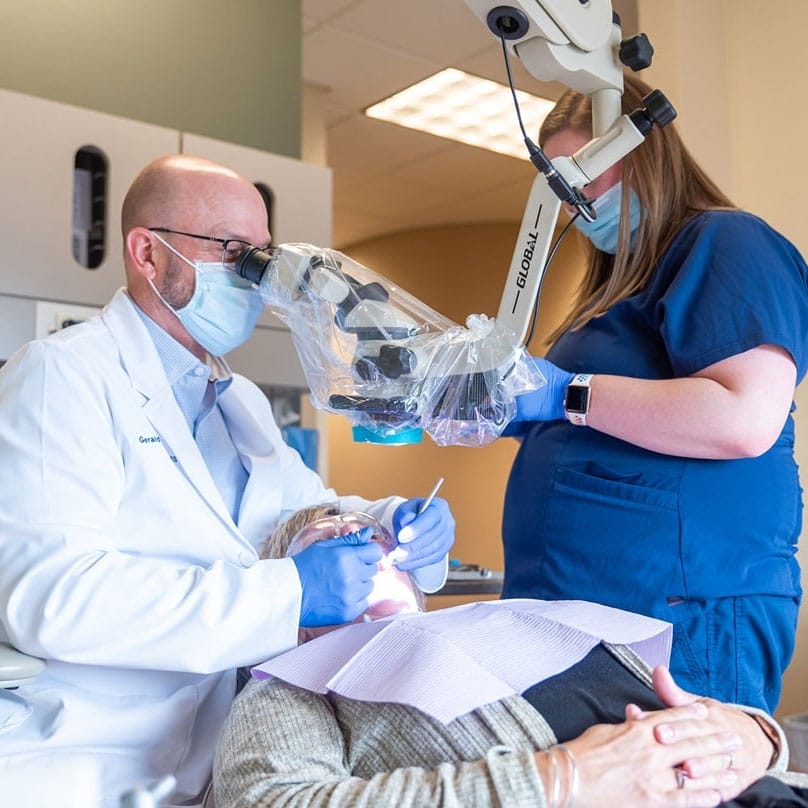
Endodontists
Experts in root canal therapy and diseases of the dental pulp. Common treatments: root canals, apicoectomies, retreatments, and complex root canal procedures.
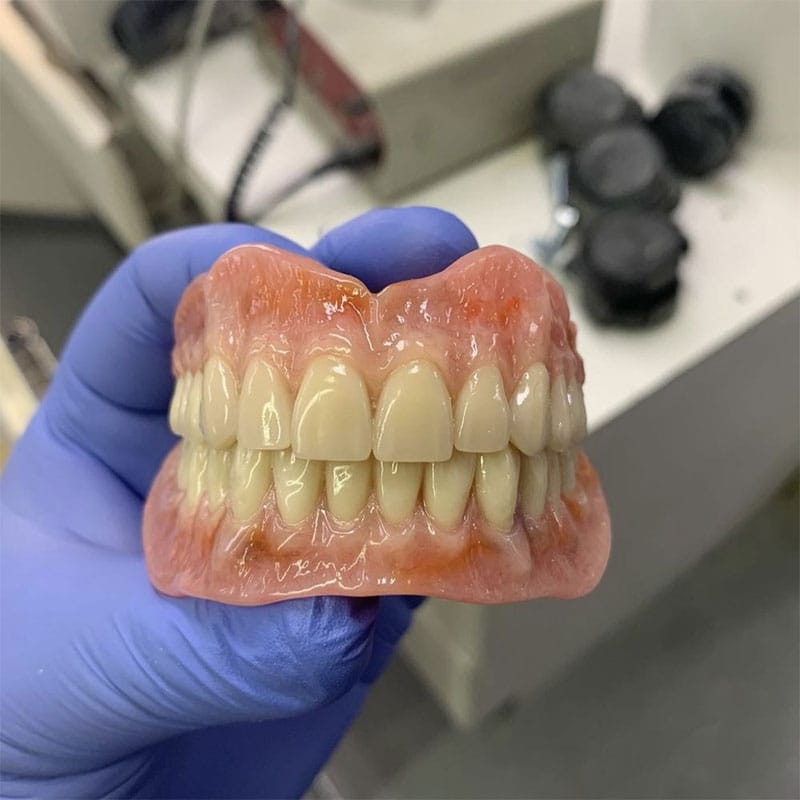
Prosthodontists
Experts in full-mouth reconstruction, tooth replacement, and advanced restorative dentistry.

How General Dentists and Specialists Work Together
When to See a General Dentist
Visit a general dentist for routine or common dental needs, including essential preventive dental care and everyday general dentistry services, such as:
- Cleanings and preventive checkups
- Cavities and tooth decay treatment
- Tooth repair and restorative dentistry
- Mild to moderate gum disease therapy
- Cosmetic improvements and smile enhancement
- Crowns or bridges for tooth restoration
- Non-complex root canals
Your general dentist is your “dental home,” providing ongoing care, patient education, and coordinating treatment with specialists when needed.
When to See a Specialist
Your dental team may refer you to a dental specialist if you need:
- Complex root canal therapy requiring an endodontist
- Advanced gum disease treatment from a periodontist
- Jaw surgery or oral surgery procedures
- Full-mouth reconstruction or advanced restorative care
- Complicated extractions, including wisdom teeth removal
- Specialized pediatric dental care
- Orthodontic correction with braces or clear aligners
Specialists focus on cases requiring advanced techniques, specialized dental equipment, and years of additional training beyond general dentistry.
Which One Is Right for You?
Knowing the difference between a general dentist and a specialist helps you understand your treatment plan and choose the right provider for your needs. In most cases, a general dentist can handle the majority of routine procedures, while specialists step in for more complex or highly specific treatments.
Your general dentist is your partner in maintaining lifelong oral health—and when specialized care is needed, they will guide you to the right expert.